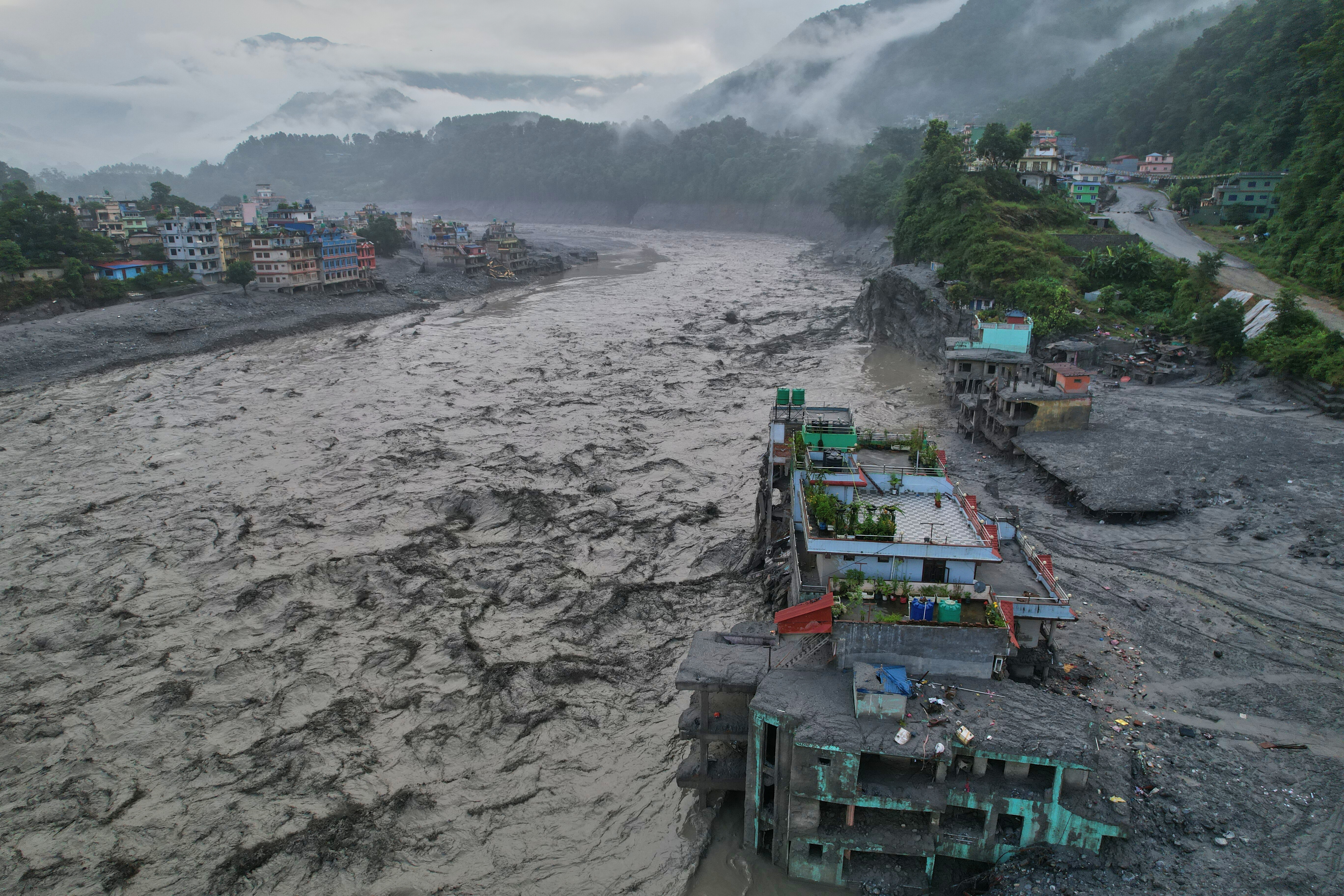
The mainstream media loves a simple script. When disaster strikes the Himalayas, the narrative writes itself: helpless locals, rising waters, and the noble West rushing in with checkbooks, helicopters, and foreign experts to save the day. When Kathmandu hesitates to open the floodgates to international rescue syndicates, the editorial boards clutch their pearls. They scream about bureaucracy. They pen weeping op-eds about human suffering and institutional stubbornness.
They are entirely wrong.
Nepal’s reluctance to roll out the red carpet for every foreign NGO and emergency relief cluster isn’t a failure of governance. It is a calculated, hard-earned defense mechanism forged from decades of watching well-meaning outsiders turn localized crises into permanent dependencies. I have watched international aid machinery roll into disaster zones with millions in pledged funding, only to spend ninety percent of it on administrative bloat, luxury lodging for coordinators, and high-altitude consultants who cannot tell a monsoon flood from a snowmelt surge.
Stop buying the standard critique. Refusing unconditional foreign intervention during a crisis is not callousness. It is sovereignty in action.
The Myth of the Unconditional Lifeline
Let us dismantle the core premise driving the scrutiny: the idea that foreign assistance is a pure, unadulterated good.
When international actors swoop in, they bring a distinct set of priorities. They operate on external timelines, answer to donors back home who demand glossy photo opportunities, and prioritize standardized global templates that routinely ignore local topography and socio-political realities.
Imagine a scenario where a foreign search-and-rescue team lands in a remote district of Nepal. They arrive with millions of dollars in high-tech gear optimized for flatland urban disasters or Western infrastructure. They cannot navigate the terraced slopes, they do not speak the local dialects, and they bypass local municipal leaders who actually know where the riverbeds shifted three decades ago. Meanwhile, local youth clubs, decentralized community forestry groups, and indigenous mutual-aid networks are already digging out neighbors with hand tools and local knowledge.
The foreign team captures the headlines. The local infrastructure gets ignored. And once the cameras turn off, the outsiders pack up their gear, leaving behind a distorted local economy where inflation spikes on bottled water and fuel while permanent recovery stalls.
International relations scholar David Mosse spent years documenting how aid systems function as institutional rituals rather than simple charity. The goal of international aid organizations during a crisis is often self-preservation and bureaucratic expansion, not rapid localization. Nepal knows this. The country has the scars to prove it.
The Cost of Compliance
Look back at the 2015 earthquake response. Billions poured into the country. Did it accelerate reconstruction? Not uniformly. Much of that money became trapped in a maze of international oversight boards, bureaucratic red tape imposed by donor nations, and foreign consulting fees. Local contractors were sidelined for multinational firms that subcontracted back to locals at a fraction of the cost.
When Nepal places hurdles in front of foreign emergency teams, officials are performing triage on the nation’s institutional integrity. They are asking a vital question: Who actually pays the price when the foreign check clears?
The price is self-reliance. Every time an external actor takes over disaster response, local capacity shrinks. Municipal governments stop building their own resilience because they assume the international cavalry will arrive. It creates a moral hazard on a national scale.
Admitting this truth comes with a heavy dose of candor. There are real costs to delay. Lives are measured in hours during a flood, and cutting through red tape—even domestic red tape—is essential. Slower relief hurts. But rushing to accept every external offer creates a different kind of long-term disaster: the erosion of national agency and the institutionalization of helplessness.
The Alternative Blueprint for Disaster Resilience
If the foreign-led model is broken, what replaces it? Nepal’s survival depends on decentralization, not internationalization.
- Empower Municipal Cohesion: Direct capital straight to ward offices and local cooperatives instead of channeling it through international nongovernmental organizations. Local leaders mobilize labor faster than any United Nations cluster system.
- Invest in Indigenous Logistics: Build regional stockpiles of dry goods and rescue tools managed by regional municipal bodies, cutting out the transit lag of international shipping lanes.
- Enforce Strict Accountability Audits: Any foreign entity wishing to operate must integrate entirely under local command structures, subordinating their logistics to national incident commanders rather than setting up parallel power structures.
The Western press calls this hesitation. The bureaucrats call it obstruction.
Call it what it actually is: independence.
Let the pundits complain from their air-conditioned newsrooms. Nepal is done trading its long-term sovereignty for short-term photo ops.