The convergence of consumer optical hardware and cloud-based artificial intelligence has systematically invalidated legacy public privacy models. When Norway proposed a temporary administrative ban on camera- and microphone-equipped smart glasses in public spaces, the action exposed a fundamental structural failure in contemporary surveillance regulation. The core tension does not stem merely from the presence of lenses in public view, but from the asymmetry of data acquisition. Traditional handheld capture devices create behavioral cues that signal intent to record; ambient head-worn systems eliminate these friction points, shifting the cost of privacy defense entirely onto the unconsenting bystander.
The Asymmetry of Notice
To evaluate why current regulatory frameworks fail, one must analyze the physical signaling mechanisms of wearable computing. Standard consumer electronics rely on active user manipulation: lifting a smartphone, framing a shot, and maintaining a posture of recording. Bystanders observe these kinetic steps and adjust their behavior or withdraw from the field of view.
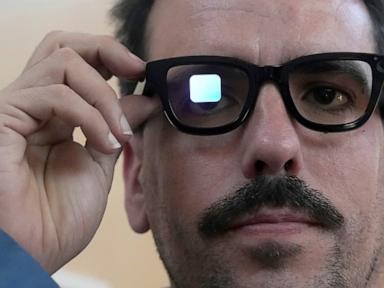
Smart glasses internalize this hardware into standard corrective or fashion eyewear form factors. The notification apparatus—typically a micro-LED adjacent to the lens housing—operates under constraints that render it functionally insufficient for ambient awareness:
- Luminance Deficit: Daylight ambient light washes out indicator lights, making them invisible at standard conversational distances.
- Visual Vector: The signal relies on direct line-of-sight between the indicator and the observer's retina. If an individual is viewed from the side or rear, the indicator provides zero evidentiary value of recording status.
- Habituation: As millions of units circulate in the market, minor visual anomalies on frames become normalized, training the public to ignore potential recording cues.
This creates a structural market failure. The manufacturer and wearer capture asymmetric utility: the wearer extracts continuous contextual data and automated indexing, while the bystander absorbs an uncompensated, non-consensual loss of conversational and spatial privacy.
The Regulatory Jurisprudence Gap
European data protection regimes, anchored by frameworks such as the General Data Protection Regulation, hinge on the doctrine of informed consent and lawful processing grounds. Ambient recording technology violates the foundational parameters of these statutes in three distinct ways.
[Continuous Environment Scan]
       │
       ├──> [Unobtrusive Optics] ──> [Zero-Notice Bystander Capture]
       │
       └──> [Cloud-Linked AI Processing] ──> [Persistent Biometric Indexing]
First, valid consent requires a positive, unambiguous affirmation prior to data collection. In public corridors, transit networks, and retail centers, obtaining granular consent from every individual entering an optical sensor's field of view is logistically impossible.
Second, the integration of local machine learning models with cloud synchronization transforms casual observation into permanent, searchable datasets. When smart glasses pair visual capture with biometric identification software or multimodal AI query engines, they transition from passive optical tools to active surveillance nodes. The regulatory gap widens because current laws penalize malicious actors post-hoc, whereas consumer wearables automate pre-crime levels of data accumulation by default.
The Economic and Operational Impact of Moratoriums
A temporary prohibition acts as a regulatory circuit breaker. By halting commercial availability and public deployment within designated zones—such as educational institutions, healthcare clinics, and transit hubs—jurisdictions achieve three specific outcomes