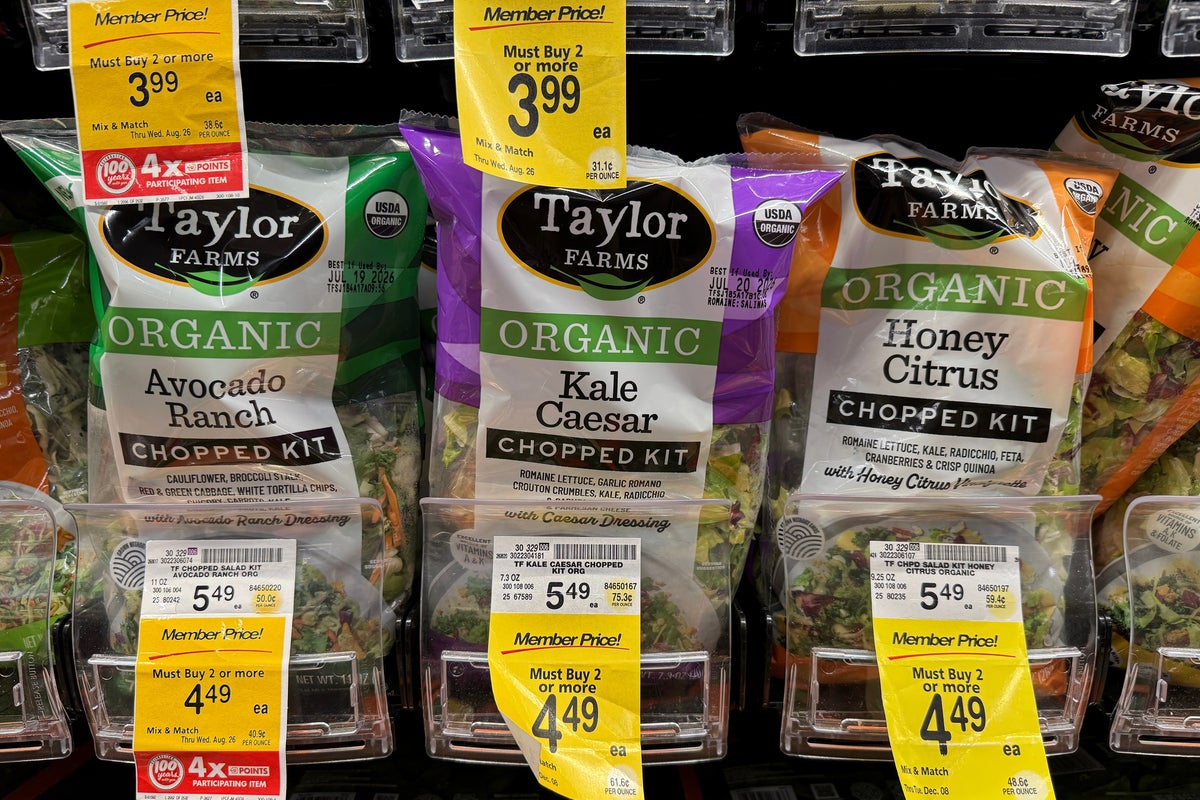
The recent intervention by Taylor Farms into the federal recall process for shredded lettuce signifies a breakdown in the established firewalls between private enterprise and public health oversight. When a commercial entity bypasses standardized regulatory channels to solicit White House mediation, it creates a feedback loop that prioritizes corporate liability management over epidemiological transparency. This event demonstrates how political influence can alter the tempo and framing of public safety communications, shifting the focus from pathogen containment to narrative control.
The Anatomy of Regulatory Intervention
Food safety recalls in the United States operate under a technical framework governed by the Food and Drug Administration (FDA) and the Centers for Disease Control and Prevention (CDC). This process relies on three functional pillars: Discover more on a connected subject: this related article.
- Epidemiological Correlation: CDC investigators aggregate data on foodborne illnesses to identify clusters of infection.
- Traceback Analysis: FDA personnel map the supply chain to isolate the point of origin, typically moving from retail or food service distribution back to the processing plant or farm.
- Public Advisory Issuance: Once a potential hazard is identified and a source is narrowed, the agency issues a public warning to minimize exposure.
In the Taylor Farms case, the firm leveraged direct political channels—specifically by engaging a lobbyist with prior senior White House experience—to contest the timing and culpability framing of the recall. This is not a standard industry action. Standard operating procedure dictates that a company, upon notification of a traceback investigation, coordinates exclusively with technical FDA personnel. The move to involve the executive branch suggests an attempt to introduce a "political filter" into a technical scientific process. By arguing that the government lacked definitive laboratory confirmation and was overstating the company’s culpability, the firm forced the White House to act as a reviewer of the FDA’s investigative methodology.
The Cost of Political Delay
Delaying a public safety announcement carries quantifiable risks. The primary cost is the extension of the "exposure window," the duration during which consumers unknowingly purchase and ingest contaminated goods. In an outbreak of cyclosporiasis, which has already seen thousands of cases in this cycle, every 24-hour delay in public notification potentially maps directly to an increase in morbidity. Further reporting by MarketWatch highlights related views on this issue.
When the White House enters this loop, the risk-benefit analysis shifts from purely epidemiological to geopolitical and reputational. The threat of secondary administrative actions—such as trade tariffs on Mexican produce—serves to cloud the immediate public health mandate. This introduces a "noise factor" that distracts from the core issue: the detection and removal of a specific pathogen from the food supply. When regulatory decisions are subjected to high-level review by non-technical political appointees, the speed of government response becomes a function of political capital rather than clinical necessity.
Mechanisms of Narrative Management
Industry participants often frame voluntary recalls as acts of corporate responsibility, as seen in the "abundance of caution" language used by Taylor Farms. However, when this narrative is preceded by an attempt to delay the government’s own advisory, it indicates a strategic effort to frame the company as a proactive partner rather than a source of contamination.
This reveals a structural bottleneck: the legal protections regarding "trade secrets" often prevent the FDA from naming specific suppliers until a final investigation is complete. Firms exploit this lack of transparency to maintain market presence while they negotiate the terms of their public disclosure. The Taylor Farms case demonstrates that the absence of a confirmed agency leadership—specifically the reliance on acting commissioners and directors—exacerbates this vulnerability. Without permanent, Senate-confirmed agency heads, the political apparatus finds it significantly easier to exert influence over public health communication, as there is less institutional inertia to push back against executive-level interference.
Strategic Implications for Food Safety Governance
The reliance on political lobbying to manage a public health crisis is a failure of institutional design. To restore the integrity of the recall process, the following shifts are necessary:
- Establishment of Fixed Public Health Timelines: Regulatory agencies should adopt a strict, time-bound protocol for disclosing supply-chain links, regardless of industry pushback. This removes the "negotiation" phase from the recall cycle.
- Decoupling Policy from Procurement: Decisions regarding import tariffs and broader trade relations must be strictly cordoned off from ongoing foodborne illness investigations to prevent the weaponization of public health data for commercial or diplomatic leverage.
- Mandatory Disclosure Thresholds: The "trade secret" exemption should be narrowed. If a company is the sole identifiable source in an FDA traceback, the public’s right to actionable safety information must legally supersede the firm’s interest in avoiding brand damage.
Market participants should anticipate increased scrutiny of their supply-chain integration. For firms operating in high-risk categories, the strategy of "political defense" is high-variance and carries significant tail risk, including litigation exposure and permanent reputation erosion. The objective for any organization in this position should be immediate, unilateral transparency that aligns with the speed of the public health threat, rather than the velocity of the political calendar.