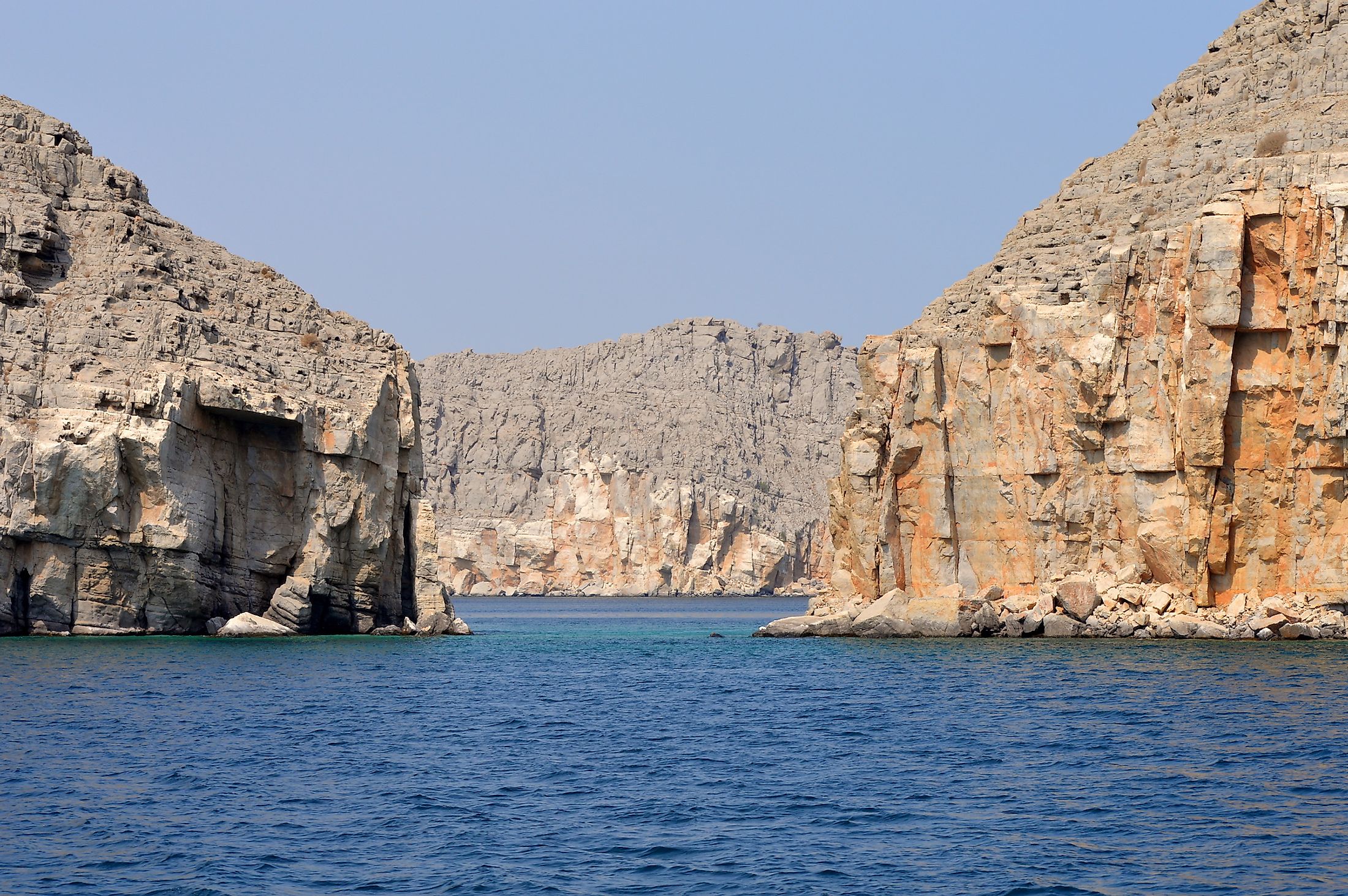
The Pilbara is not a place for the faint of heart. It is a vast, scorched stretch of Western Australia where the dirt is the color of dried blood and the heat feels like a physical weight pressing against your chest. Here, wealth isn't measured in digital digits or flickering stock tickers. It is measured in tonnage. It is measured by the rhythmic, bone-shaking thunder of iron ore trains that stretch two kilometers long, snaking across a landscape that looks like the surface of Mars.
Deep beneath this ancient crust lies the source of a fortune so vast it has fueled a decades-long war between two of Australia’s most powerful dynasties.
For years, Gina Rinehart, the iron magnate at the helm of Hancock Prospecting, has sat atop this empire. But empires are rarely built on clean soil. They are built on handshakes, old maps, and the kind of legal fine print that can lay dormant for forty years before suddenly waking up to demand its due.
The Ghost of a Handshake
To understand why a Western Australian court just ordered Hancock Prospecting to pay hundreds of millions of dollars to the Wright family, you have to go back to a time before the billion-dollar skyscrapers rose in Perth.
In the 1960s, Lang Hancock and Peter Wright were more than just business partners. They were the "iron bushmen," two prospectors who spent their days in cramped Cessnas, flying low over the Hamersley Range, spotting the tell-tale rust-red outcrops from the air. They were a team. They shared the risk, the dust, and the dream.
They signed agreements in an era when the scale of the Pilbara’s riches was still a theoretical marvel rather than a global certainty. One of those agreements involved a specific patch of dirt: the Hope Downs mines.
The legal battle that just reached a fever pitch in the WA Supreme Court wasn't about whether the iron was there. It was about who gets a slice of every single ton pulled out of the ground. The Wright family—descendants of Peter—claimed they were owed a 2.5% royalty on the ore produced at Hope Downs. Rinehart’s camp fought it with every legal weapon available.
They lost. Or, more accurately, they didn't win enough to stop the bleeding.
The Calculus of a Half Victory
Justice Jennifer Smith’s ruling arrived like a hammer blow. It wasn't a total wipeout for Rinehart, but in the world of high-stakes mining, a "partial loss" still costs more than most small nations earn in a year.
The court found that Wright Prospecting is indeed entitled to those royalties. We are talking about a sum that scales into the hundreds of millions. For the average person, a hundred million dollars is an abstract concept, a lottery fantasy. In the Pilbara, it is the price of a legacy.
Consider the math of the red dirt.
If a mine produces 30 million tons of iron ore a year, and the price sits around $100 a ton, the revenue is $3 billion. A 2.5% royalty on that is $75 million. Every. Single. Year.
This isn't a one-time settlement. It is a permanent tap installed into the side of the Hancock Prospecting vault. The court’s decision effectively validates the idea that even when the pioneers are gone, the promises they scribbled on paper decades ago remain tethered to the land.
The Invisible Stakes
It is easy to look at this as a squabble between billionaires, a "rich person problem" that has no bearing on the lives of people working 12-hour shifts in the heat. But the implications ripple outward.
This case was never just about the money. It was about the definition of ownership.
Rinehart’s legal team argued that the rights to certain areas had lapsed or been restructured through complex subsidiary movements over the decades. They tried to prove that the "old" agreements didn't cover the "new" reality of modern mining.
Imagine you and a friend find a derelict house. You agree to fix it up and split the rent. Forty years later, your friend’s children show up and point out that you’ve turned that house into a luxury hotel. You argue that the "hotel" isn't the "house" you talked about in 1970. The court just told Gina Rinehart that it doesn't matter how many floors you added—the foundation still belongs to the partnership.
This ruling sends a shudder through the Australian resources sector. It reinforces a terrifying reality for executive boards: the past is never truly buried. In an industry built on long-term tenements and century-long projections, a "win" that involves paying out nine-figure royalties is a sobering reminder of the power of lineage.
The Human Cost of the Long Game
There is a specific kind of exhaustion that comes with multi-decade litigation.
While the headlines focus on the dollar amounts, the human element is found in the grit of the courtroom. This trial saw the dredging up of private letters, internal memos from the 80s, and the testimonies of people who have spent their entire adult lives defending or attacking a single paragraph of a contract.
The Wright family has spent years in the shadow of the Rinehart juggernaut. To them, this isn't just a paycheck. It’s a restoration of their father’s place in the history of the Pilbara. For Rinehart, who has fiercely guarded her father’s legacy while expanding it into a global powerhouse, every dollar paid to a rival is a perceived dent in the fortress.
The court did give Hancock Prospecting some breathing room. Not every claim the Wrights made was upheld. Some areas remained outside the royalty net. This is why analysts are calling it a "half-win." But in the accounting offices of Perth, no one is popping champagne over a "half-loss" that requires writing a check with eight zeros.
The Weight of the Ore
The machinery doesn't stop because a judge signs a paper.
Right now, at Hope Downs, the massive excavators are still biting into the earth. The dust is still rising in great, orange plumes. The autonomous trucks are still hauling 200 tons of rock at a time to the crushers.
But now, with every rotation of those massive tires, a portion of the value is being diverted. It is flowing away from the Rinehart empire and toward the Wrights.
This legal saga isn't over—appeals are as certain as the sunrise in the desert—but the momentum has shifted. The case has exposed the fragility of the "handshake deal" era. It has shown that in the Australian outback, the dirt holds a long memory.
Wealth in the Pilbara is often described as "generational." We usually mean that in the sense of passing it down. But this trial has shown that "generational" also applies to the debts. The sons and daughters are still paying for the decisions made by men in sweat-stained shirts who flew Cessnas over a red desert, dreaming of a future they wouldn't live to see.
The iron continues to move. The trains continue to howl across the plains. And the red dirt, indifferent to the names on the contracts, simply waits for the next claimant to try and tame it.