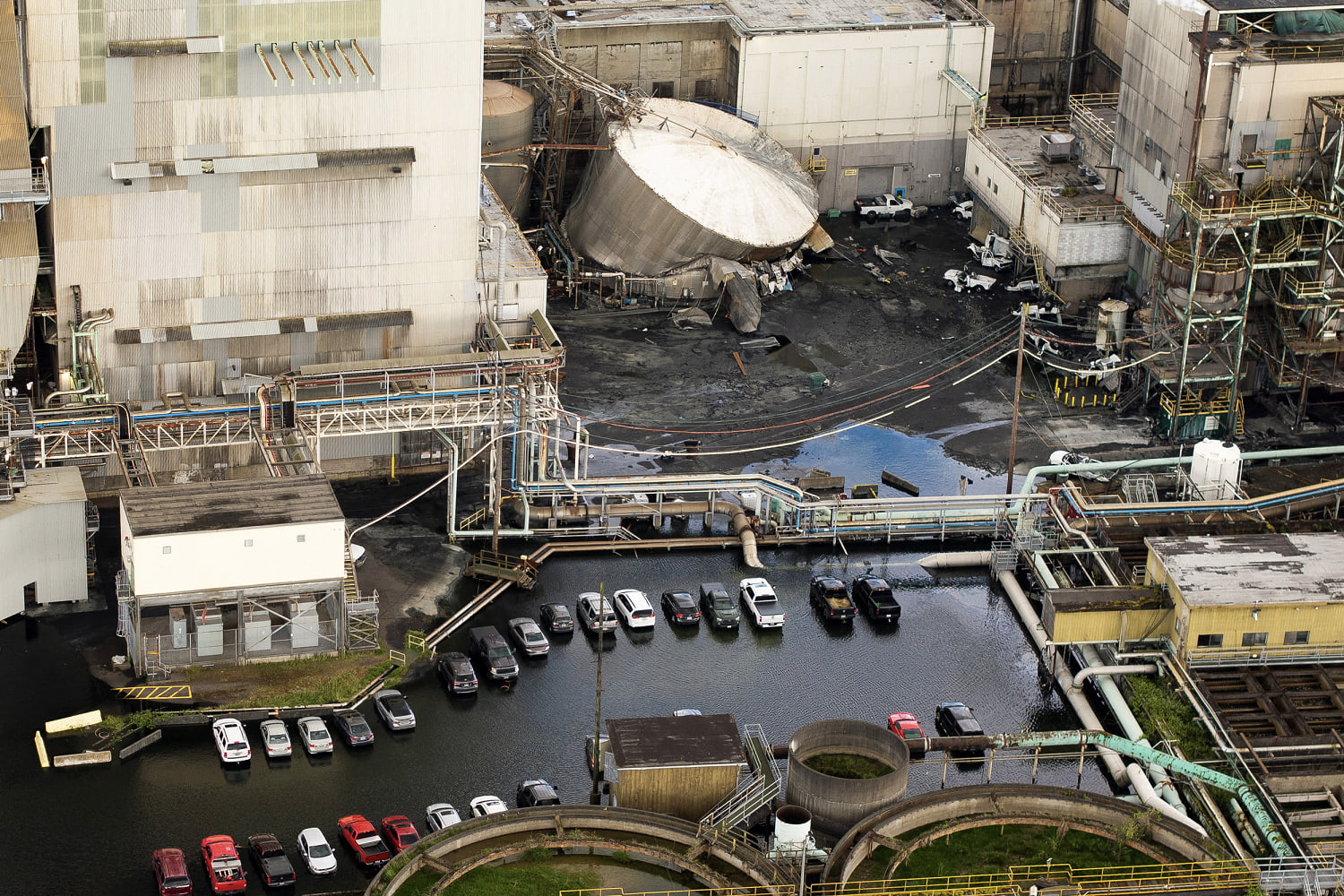
A massive industrial tragedy just unfolded in Washington state, and honestly, the sheer scale of it is hard to process. On Saturday, May 30, 2026, rescue teams finally recovered the ninth and final missing worker from the rubble of the Nippon Dynawave Packaging facility in Longview.
The recovery marks a grim milestone. Combined with the two workers who died at area hospitals shortly after Tuesday's disaster, the total death toll stands at 11.
Governor Bob Ferguson didn't mince words when he braced the public for the reality. This is the deadliest industrial accident in modern Washington state history, a catastrophic event that has completely upended a tight-knit Pacific Northwest community.
When you look past the cold headlines, the actual mechanics of the disaster and the harrowing recovery effort show a deeply troubling reality about American industrial infrastructure.
What Actually Happened Inside the Nippon Dynawave Plant
The disaster struck on Tuesday morning, May 26, 2026, right around 7:15 AM. It was shift change.
That timing is exactly why the loss of life was so devastating. Six of the victims were recovered in a central workers' area where employees naturally gather to hand off duties, grab coffee, and talk about their upcoming assignments.
Local officials used several words to describe the event—explosion, implosion, structural failure, rupture. Longview Fire Chief Brad Hannig and Cowlitz Fire and Rescue Chief Scott Goldstein basically summarized it as a violent, catastrophic blast.
The source was a massive, 900,000-gallon industrial tank. It was sitting at roughly two-thirds capacity, holding hundreds of thousands of gallons of a highly hazardous, corrosive mixture known as white liquor.
The Toxic Reality of White Liquor
For those unfamiliar with the pulp and paper industry, white liquor isn't some mild chemical. It's a heavy-duty, highly caustic solution made primarily of:
- Sodium hydroxide (lye)
- Sodium sulfide
Paper mills use this mixture under intense heat and pressure to dissolve the bonds holding wood chips together, separating the lignin from the cellulose fibers to create strong kraft paper. On skin, it causes immediate, horrific chemical burns. If you breathe in the vapors, it destroys lung tissue.
When that tank failed, it didn't just leak. It sent a violent, tidal wave of boiling, caustic chemicals tearing through the building. The force of the surge was powerful enough to flip heavy pickup trucks outside and literally blow out the structural walls of the facility.
The Names We Discovered Behind the Statistics
It's easy to look at a number like 11 and treat it as a data point. But the town of Longview, a community of 40,000 people built entirely on the backbone of the timber and paper industries, is currently grieving a massive cross-section of its community.
Cowlitz County Coroner Dana Tucker officially identified the victims. They ranged from young parents with their whole lives ahead of them to seasoned tradesmen who spent decades mentoring others.
Among the dead were brothers Tyler Covington, 29, and Bradley Covington, 27, who worked side-by-side at the facility. Tyler leaves behind a wife and three young children.
Then there was Gilbert Bernal, a 52-year-old grandfather and instrument technician. He spent years taking brutal night classes while working a full-time job just to secure his career at the mill. His family is now left trying to reconcile how the job he sacrificed so much to get is ultimately what took his life.
The other victims include Robert Wilson, 48; Dale Miller, 54; Jared Ammons, 35; Braydon Finkas, 38; Clinton "CJ" Doran, 26; John Forsberg, 51; Norman Barlow, 58; and Dillon Miller.
Eight other people, including a responding firefighter, were injured in the initial blast, suffering severe chemical burns and inhalation trauma. Several remain in critical condition at specialized regional burn units in Portland.
Why the Recovery Process Took So Long
A lot of people watching the news asked a simple question: Why did it take nearly five days to find everyone?
The answer comes down to how terrifyingly unstable the disaster site remained. This wasn't a standard search-and-rescue operation; it was a hazardous materials nightmare.
[The Blast Zone]
       │
       ├─► 25,000 Gallons of White Liquor Leaking Slowly
       ├─► Exposed Live Electrical Wiring (High Voltage)
       ├─► Collapsed Structural Steel & Unstable Concrete
       └─► Extreme pH Contamination requiring Military Decontamination
Longview Fire Department Battalion Chief Matt Amos explained that teams were dealing with a tangled maze of collapsed steel, concrete, and live, exposed high-voltage wiring.
On top of the physical hazards, the ruptured tank still held an estimated 25,000 gallons of toxic sludge that was slowly leaking into the immediate area. Responders couldn't just walk in. Crews had to wear heavy hazmat suits, work in short, highly controlled rotations, and go through an intense decontamination process managed by the Washington National Guard's 10th Homeland Response Force every single time they stepped out of the hot zone. Even the recovered remains of the victims had to be painstakingly decontaminated before they could be safely turned over to the coroner's office.
The Environmental Fallout and Public Safety Realities
Whenever a massive chemical tank ruptures right next to a major waterway like the Columbia River, environmental panic sets in.
Initial reports confirmed that the caustic liquid rushed into a complex system of drainage ditches surrounding the plant. Wild carp were found dead along nearby dikes, and the early pH levels in the immediate waterways spiked.
The US Environmental Protection Agency (EPA) and the state's Department of Ecology quickly stepped in to manage the damage. Crews deployed vacuum trucks and used hundreds of feet of high-capacity hoses to flush the ditches with fresh water, diluting the white liquor before it could create a permanent ecological dead zone in the river.
Is the Drinking Water Safe?
If you live in or near Longview, this is the most critical question. Longview Public Works Director Chris Collins explicitly stated that the city's drinking water remains safe.
The municipal groundwater wells are deeply protected and structurally isolated from the surface ditches where the spill occurred. To be absolutely sure, the city has been drawing down water levels in nearby lakes to keep flushing the area, and local pH readings have already stabilized back to normal levels.
Air quality monitoring also looked for hydrogen sulfide gas—a highly toxic byproduct of pulp mill chemicals—but thankfully, detectors haven't picked up dangerous levels in the surrounding residential areas.
The Hard Questions Nippon Dynawave Must Answer
Now that the recovery phase is complete, the focus shifts entirely to accountability. The US Chemical Safety and Hazard Investigation Board (CSB) and state regulators are launching a full-scale investigation into what caused a 900,000-gallon steel tank to spontaneously fail.
Let's look at the company's track record, because this didn't happen in a vacuum.
Nippon Dynawave Packaging, a subsidiary of the Tokyo-based Nippon Paper Group, employs about 1,000 people in Longview. While the company's support services director, Brian Wood, noted that they work in a "highly hazardous industry" and claim to approach it with care, recent regulatory filings suggest otherwise.
Records show the mill has faced repeated scrutiny over the last few years:
- July 2023: A massive wood chip pile caught fire, burning for days and blanketing parts of the region in toxic smoke.
- 2025: Another fire broke out on the property.
- Safety Citations: The state Department of Labor and Industries fined the company for minor health and safety violations. More troubling, in 2025, they were cited for illegally moving heavy equipment before inspectors could finish looking into an accident that resulted in an employee's finger amputation.
- Recent Complaints: Anonymous safety complaints were filed against the facility as recently as March and May of 2026. Regulators claim these weren't tied to the specific tank that failed, but it paints a clear picture of an environment where workers felt unsafe.
Nippon Dynawave has shut down the vast majority of the mill, keeping only minimal staff on site to run critical infrastructure. The company has committed to paying the idle workforce for the time being, but the long-term future of the facility is completely up in the air.
Next Steps for Industrial Operations and Regulatory Oversight
This disaster should serve as a massive wake-up call for the entire manufacturing sector. If you run, manage, or work in an industrial facility utilizing bulk chemical storage, there are immediate actions that need to happen to prevent another Longview.
1. Mandate Non-Destructive Testing (NDT) on Aging Tanks
Visual inspections aren't enough. Storage tanks holding highly corrosive materials like white or black liquor require regular ultrasonic testing and radiographic inspections to detect internal wall thinning, stress corrosion cracking, and weld degradation before a catastrophic rupture occurs.
2. Re-evaluate Shift Change Protocols
The fact that six people died because they were congregating in a single zone during a shift handoff is a structural flaw. Industrial facilities need to decentralize meeting spaces or move shift-briefing rooms completely outside the blast radius of high-pressure or high-volume chemical storage units.
3. Review Secondary Containment Structures
A storage tank failure is devastating, but proper secondary containment—like reinforced concrete dikes or catch basins—should completely isolate the spilled fluid. The fact that hundreds of thousands of gallons of caustic liquid bypassed containment and flooded local drainage ditches highlights a widespread failure in secondary safety design that facilities nationwide need to audit immediately.


