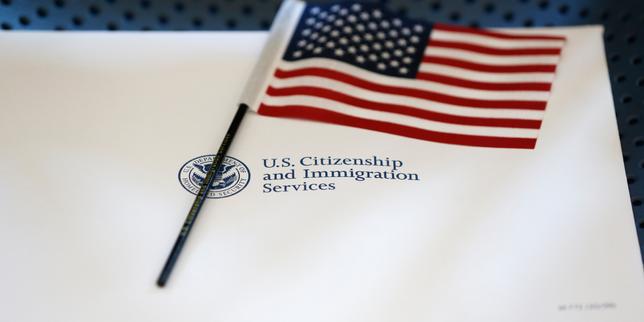
The Trump administration abruptly abandoned its sweeping directive requiring temporary visa holders to return to their home countries to complete their green card applications. The policy, which would have dismantled a half-century of immigration precedent by forcing hundreds of thousands of legal residents to undergo consular processing abroad, was quietly hollowed out by the Department of Homeland Security just days after its initial rollout. Official statements framed the retreat as a mere "clarification," but the reality is far more transactional. A fierce, behind-the-scenes revolt from corporate allies, combined with the catastrophic realization that U.S. consulates are fundamentally incapable of handling the surge, forced the administration to blink.
To understand how the administration backed itself into a corner, one must look at the sheer mechanics of the modern American economy. When U.S. Citizenship and Immigration Services announced that adjustment of status—the administrative process allowing people to transition from temporary visas to permanent residency while remaining in the United States—would be restricted to "extraordinary circumstances," it sent shockwaves through corporate boardrooms.
More than half of all green cards issued annually are granted to individuals already living, working, and paying taxes within American borders.
In 2024 alone, roughly 820,000 of the 1.4 million green cards issued were processed entirely inside the United States. Forcing those individuals onto airplanes would not just disrupt families; it would freeze the American tech, engineering, and healthcare pipelines.
The Quiet Corporate Ultimatums
Behind closed doors, the backlash from the business community was immediate and severe. Silicon Valley executives and major industrial employers recognized the threat to their workforce retention. If an H-1B engineer or an L-1 corporate executive is forced to travel back to New Delhi, London, or Tokyo to stand in line at a U.S. consulate, they do not just face a minor travel inconvenience. They enter an administrative black hole.
The primary mechanism of danger for these employees is the legal trigger known as the unlawful presence bar. Consider a hypothetical scenario: a foreign national enters the United States on a temporary student visa, overstays the expiration date by several months while awaiting an employment sponsorship, and eventually qualifies for a green card. Under decades-old practice, this individual could pay a fine, adjust their status internally, and continue working. Under the proposed rule, that same individual would be forced to depart the United States to interview at a consulate abroad. The moment they cross the border to leave, federal law automatically triggers a three-year or ten-year ban on re-entry for their prior overstay. The employer loses the worker instantly, and the worker is barred from returning to the country where they built their career.
Faced with the prospect of losing key personnel mid-project, corporate lobbying groups delivered a blunt message to the White House. High-skilled legal immigration is the lifeblood of American tech competitiveness. The administration, which prides itself on economic nationalism, was suddenly confronted with an policy that would drive global talent directly into the arms of Canada, Western Europe, and Australia.
The Consular Collapse That Averted the Crisis
While corporate pressure provided the political leverage, a stark operational reality provided the final blow to the policy. The U.S. Department of State, which manages embassies and consulates around the world, was utterly unprepared to inherit the caseload of the domestic immigration apparatus.
The global consular network is already bucking under massive backlogs, protracted security screenings, and localized visa freezes. The administration had already suspended or heavily restricted visa processing in dozens of countries due to expanded travel bans and enhanced vetting procedures. Requiring hundreds of thousands of domestic applicants to suddenly book appointments at these overwhelmed facilities would have collapsed the system entirely.
An applicant from an unstable region, or a country with a frozen U.S. diplomatic presence, would find it literally impossible to comply. They would be ordered to return to a country where no operational U.S. embassy exists to hand them a visa.
The administration realized that rather than creating an orderly exit of temporary residents, the policy would generate a legal and logistical nightmare, choking the State Department with lawsuits and gridlocking diplomatic posts.
The Discretionary Trap That Remains
The formal retreat by the Department of Homeland Security on Friday did not kill the policy; it merely repositioned it. By stating that there is no "broad policy change" and that immigration officers will continue to evaluate cases on a case-by-case basis, the administration shifted its tactics from a blunt legislative hammer to bureaucratic friction.
The authority to demand that an applicant undergo consular processing abroad has always existed within the discretionary toolkit of USCIS officers. What has changed is the administrative signal from the top. Frontline adjudicators are now actively questioning applicants during domestic interviews, demanding to know why they cannot simply return home to apply.
Furthermore, the administration is weaving secondary enforcement mechanisms into these routine interviews. Officers are reviving strict screening standards regarding financial self-sufficiency. Applicants are now being handed requests for evidence demanding extensive financial records, bank statements, and tax returns to prove they will not become a financial burden on the state.
By weaponizing the existing discretionary powers of individual officers, the administration achieves a similar chilling effect without the political liability of a formal, blanket ban. The uncertainty alone is enough to deter risk-averse corporations from sponsoring new applicants, accomplishing the restrictionist goals through quiet administrative erosion rather than a loud executive decree.
A System Managed by Fear
This tactical retreat exposes the core methodology of modern immigration restrictionism. The objective is frequently not the successful implementation of clear, legally sound regulations. The objective is the projection of risk.
When federal agencies release sweeping, severe policy announcements only to walk them back days later under the guise of clarifications, the resulting fog serves a distinct purpose. It creates a high-stakes environment of fear for visa holders and immense financial unpredictability for employers. Immigration attorneys are currently advising clients to avoid any international travel whatsoever, even if their paperwork is perfectly legal.
The administration learned that a total, immediate ban on domestic green card adjustments creates too much collateral damage among its own corporate allies. By backing off the mandatory requirement but leaving the door wide open for individual officers to enforce it arbitrarily, the White House has constructed a system where the rules are rewritten on the fly, case by case, interview by interview.