The collapse of the June 17 peace memorandum between Washington and Tehran was not caused by an accidental tactical miscalculation. It was the predictable consequence of a fundamental flaw in the agreement itself: both sides signed a truce while holding irreconcilable definitions of who owns the world’s most critical energy chokepoint. Following fresh American airstrikes over the weekend targeting hundreds of Iranian military installations, and Tehran’s subsequent retaliation against neighboring Gulf states, the illusion of a diplomatic resolution to the 2026 Iran war has shattered completely. The Strait of Hormuz is once again a live combat zone.
This escalation exposes the empty rhetoric of modern crisis diplomacy. For weeks, officials in Washington and various regional capitals spoke of a permanent mechanism to stabilize global oil markets. Yet beneath the public handshakes lay an unresolved, violent dispute over international law, maritime customs, and raw survival.
The Fatal Flaw of the June Accord
When the Memorandum of Understanding was signed last month, it was hailed by some western commentators as a masterstroke of pragmatic diplomacy. The deal was supposed to create a 60-day window to transition from active warfare to a durable regional settlement. Washington agreed to lift its strict naval blockade, allowing Iranian crude to flow back into international markets. In return, Tehran promised to halt its drone and missile attacks on commercial shipping.
It sounded simple. It was unworkable.
The text of the accord left a gaping hole regarding the daily administration of the Strait of Hormuz. The United States and its allies view the strait as an international waterway governed by the UN Convention on the Law of the Sea, which guarantees the right of transit passage for all vessels. Iran, which has never ratified that specific treaty, views the narrow waters as its territorial sea. To Tehran, "peace" did not mean returning to the old status quo. It meant implementing a new regime of sovereign oversight over every commercial hull passing through the chokepoint.
Washington wanted to freeze the conflict. Tehran wanted to formalize its gains. These two ambitions could not coexist for long. The moment commercial vessels returned to the waterway, the underlying contradictions of the truce forced a violent correction.
The Invention of the Persian Gulf Strait Authority
Within days of the signing, Iran moved to exploit the ambiguity of the agreement. It established an entirely new bureaucratic entity called the Persian Gulf Strait Authority. This was not merely a symbolic agency. Armed with fast-attack craft and coastal radar installations, the newly formed authority began demanding that international merchant ships submit manifest records, pay arbitrary transit fees, and request formal permits before entering the strait.
This move was a calculated test of western resolve. By reframing its military control as administrative regulation, Iran attempted to establish a legal precedent. Commercial shipping firms, desperate to avoid the staggering insurance premiums that had paralyzed them earlier in the year, initially tried to comply.
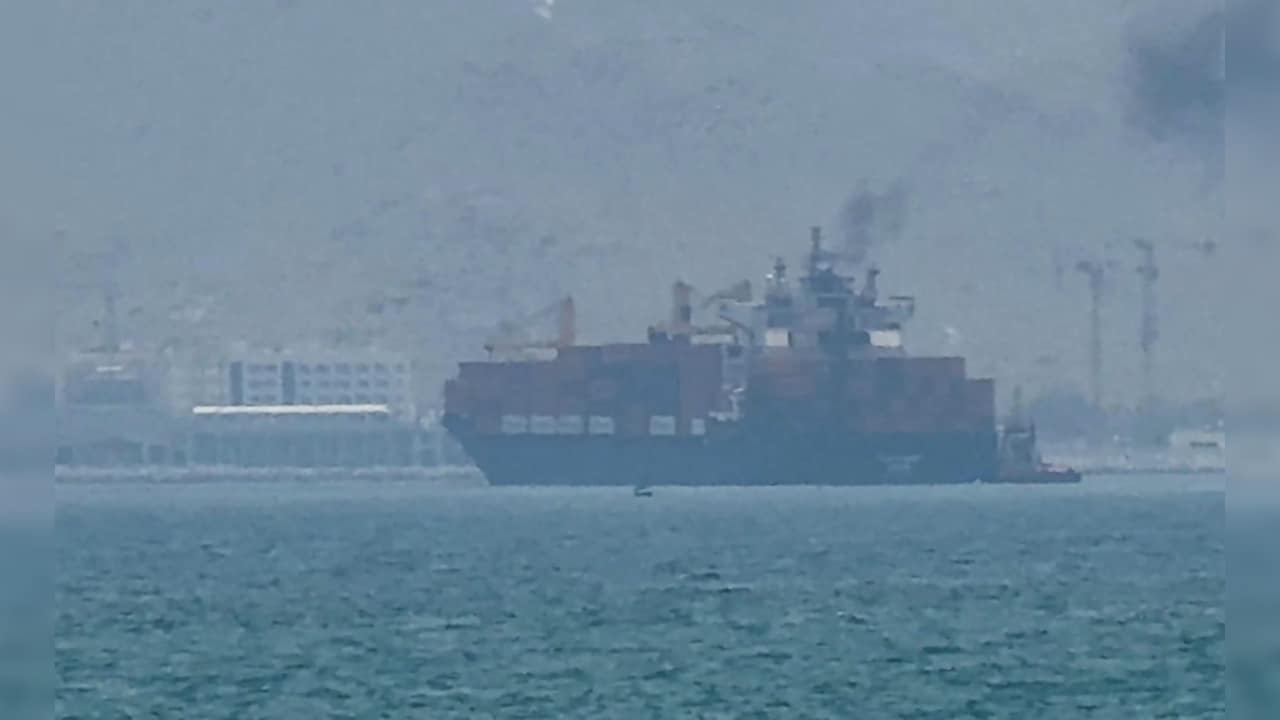
The crisis reached a tipping point during the first week of July. Iranian forces targeted several commercial vessels that refused to recognize the authority’s jurisdiction, culminating in an attack on a major container ship over the weekend. For the White House, this crossed an explicit red line. The administration could not tolerate a reality where an American-sanctioned truce effectively signed away control of a waterway through which 20 percent of the world’s petroleum transits.
The American response was swift and heavy. Over the course of several nights, United States Central Command directed more than 300 airstrikes against Iranian positions. Missiles struck radar hubs, drone storage facilities, and naval installations on Qeshm Island, Bandar Abbas, and Sirik. The objective was clear: to systematically dismantle the physical infrastructure of Iran's new maritime authority.
The Ghost of Operation Epic Fury
To understand why Iran refuses to back down despite facing overwhelming American fire, one must look back to February 28, 2026. On that day, the United States and Israel launched Operation Epic Fury, a massive, unannounced campaign of strikes that decapitated the Iranian regime. The attack killed Supreme Leader Ali Khamenei and dozens of senior commanders in the first few hours.
The tactical execution was flawless, but the strategic assumptions were deeply flawed. Western planners believed that removing the top tier of the clerical state would cause the system to disintegrate or sue for peace from a position of total weakness. Instead, it triggered a Darwinian restructuring of the Iranian power dynamic.
With the supreme leadership vacant and the traditional political institutions in chaos, the Islamic Revolutionary Guard Corps assumed absolute control over the state apparatus. The IRGC is not a monolithic army; it is a collection of heavily armed factions competing for resources and ideological dominance. In this environment, moderation is equated with treason. No commander can afford to look weak in the face of American aggression.
The current escalation in the strait is fueled directly by this internal pressure. The new military leadership in Tehran views maritime defiance as its sole remaining source of domestic legitimacy and regional leverage. They know they cannot win a conventional battle against an American carrier strike group. However, they also know that they do not need to win. They only need to make the cost of securing the strait unacceptably high for the rest of the world.
The Domestic Pressure Cooking in Washington
While Tehran is driven by institutional survival, Washington is governed by the relentless calendar of domestic politics. President Donald Trump faces critical congressional elections this November. The American electorate has shown deep fatigue over extended foreign military entanglements, yet it is equally sensitive to the economic pain of inflation and rising fuel costs.
The initial war in the spring caused global energy alerts and sent petrol prices soaring. The June ceasefire was supposed to provide a much-needed economic relief valve, bringing prices down and giving the administration a major foreign policy victory to pitch to voters. When Iran began disrupting traffic again, it threatened the entire economic foundation of the administration’s electoral strategy.
This explains the aggressive, almost performative nature of the recent American strikes. The administration needs to demonstrate that it can crush Iranian resistance decisively and keep the shipping lanes open without sliding into a permanent, ground-level occupation of the region.
"We're beating them up," Trump remarked over the weekend, utilizing the blunt rhetoric that characterizes his approach to foreign policy.
But military metrics do not always align with economic realities. You can drop precision ordnance on concrete bunkers and fast-attack boats, but you cannot bomb away the psychological terror that prevents a commercial oil tanker captain from steering a billion-dollar cargo into a warzone. Every time an explosion echoes near Bandar Abbas, the risk algorithms at major marine insurance firms recalibrate, driving up shipping costs and undoing the very economic stability the White House is fighting to preserve.
The Collateral Damage of the New Gulf Calculus
The current fighting has quickly spilled beyond a bilateral conflict between Washington and Tehran. Unlike previous flare-ups where regional states tried to remain on the sidelines, the 2026 conflict has forced an aggressive realignment. Over the last 48 hours, Iran has launched retaliatory missile and drone salvos against nations hosting American military assets, including Jordan, Kuwait, Bahrain, Qatar, and Oman.
This regionalization of the conflict is a deliberate strategy by Tehran. By directly striking the infrastructure of its neighbors, Iran is sending a clear warning to the Gulf Arab states: if you allow your bases to be used as launching pads for American bombers, your own economic engines will burn.
The position of Oman is particularly precarious. For decades, Muscat acted as the quiet, indispensable mediator between the West and Iran. But Oman sits on the southern bank of the Strait of Hormuz. Tehran has intensely pressured the Omani government to jointly manage shipping traffic under the new Iranian framework. The rejection of this arrangement has turned the peaceful sultanate into a target, ending its long-cherished neutrality.
Further complicating the picture is the shifting posture of Iraq. Prime Minister Ali al-Zaydi is scheduled to arrive in Washington this week to formalize a sweeping strategic agreement. Under this proposed deal, the United States would commit billions in economic investments in exchange for Baghdad taking concrete steps to purge pro-Iranian militia figures from senior positions within the Iraqi state apparatus. Iran views this moving alignment as an existential threat to its western flank, giving its commanders even more incentive to project chaotic power in the waters of the Gulf.
The Shipping Crisis That Cannot Be Escorted Away
The international community is now facing a structural crisis that cannot be resolved through standard naval escort missions. Currently, thousands of civilian seafarers remain stranded aboard merchant ships trapped within or just outside the conflict zone. The United Nations has attempted to coordinate evacuations, but these efforts are repeatedly frozen by the threat of incoming anti-ship missiles.
The fundamental problem is one of scale and vulnerability. The United States Navy, even when reinforced by allied vessels, cannot protect every square mile of the narrow strait against the asymmetric tools at Iran’s disposal. A swarm of cheap, explosive-laden drones or a volley of shore-based cruise missiles hidden in the rugged cliffs of the Iranian coastline can bypass traditional carrier air defenses to strike a slow-moving merchant ship.
International shipping relies on predictability. When predictability disappears, the global supply chain fractures. Some commercial fleets are already taking the drastic step of rerouting vessels entirely around the African continent, a detour that adds weeks to transit times, burns millions of barrels of extra fuel, and drastically reduces global shipping capacity.
Diplomats at the UN continue to issue urgent statements calling for an immediate return to the negotiating table. But these appeals ignore the grim reality on the ground and in the water. You cannot negotiate a stable peace when one side requires total maritime control to justify its internal existence, and the other side requires absolute freedom of navigation to protect its domestic economy. The June ceasefire failed because it tried to paper over this fundamental contradiction with ambiguous legal prose.
The latest salvos over the Strait of Hormuz have stripped away that ambiguity, leaving both powers stuck in a cycle of attrition where neither can afford to yield.


