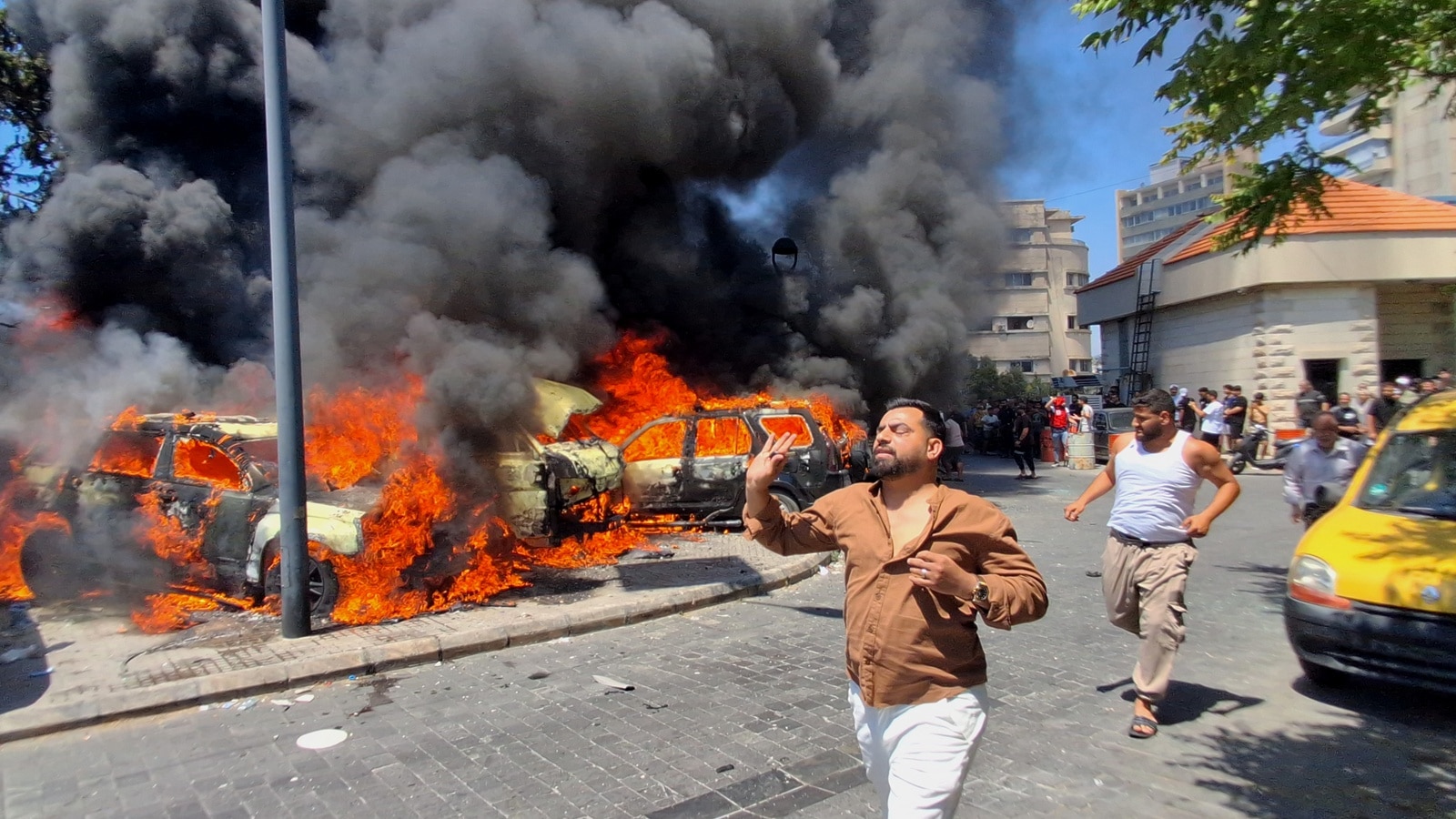
The newly minted deconfliction cell established by the United States and Iran in Bürgenstock, Switzerland, is a diplomatic house of cards designed to fail because it excludes the only country pulling the triggers in southern Lebanon. Operating through a memorandum of understanding brokered by Qatar and Pakistan, the mechanism is intended to enforce a regional ceasefire and protect commercial shipping in the Strait of Hormuz. However, the immediate reality on the ground makes the diplomatic text look completely detached from the conflict. Israel is not a signatory to the agreement, and its military is maintaining a buffer zone in southern Lebanon while continuing targeted strikes in Beirut.
By creating a tripartite monitoring group consisting of Washington, Tehran, and the weak government in Beirut, negotiators have built a communication channel that completely bypasses the principal combatants. It is a diplomatic framework trying to manage a war by talking around it. If you enjoyed this piece, you should read: this related article.
The Empty Chair in Switzerland
Diplomacy requires the participation of the entities actually pulling the triggers. The joint statement released by Pakistani and Qatari mediators pointedly avoided mentioning either Israel or Hezbollah, yet these are the two forces engaged in direct combat across the Blue Line.
The structure of the deconfliction cell reveals a deep disconnect. For another look on this development, check out the recent update from Al Jazeera.
- The United States is acting as a proxy negotiator for an Israeli government that refuses to be bound by Washington's diplomatic concessions.
- Iran is negotiating on behalf of Hezbollah, a group currently facing intense military pressure that limits its willingness to compromise.
- The Lebanese Republic sits at the table as a sovereign entity, but it lacks any real authority over the armed state-within-a-state operating inside its borders.
This dynamic leaves the deconfliction cell unable to handle real-time security crises. If an Israeli airstrike hits a target in Nabatieh, the Lebanese government cannot stop it, and the United States cannot retroactively prevent it. The communication loop must travel from Beirut to Switzerland, then through Washington to Tel Aviv, where it confronts an Israeli security cabinet focused on its own operational objectives. By the time a message moves through this chain, the tactical situation on the ground has already changed.
Shifting Leverages and the Energy Factor
The driving force behind Washington's sudden diplomatic flexibility is global energy economics, not a sudden breakthrough in Middle Eastern diplomacy. Surging oil prices following the blockade of the Strait of Hormuz have created a significant political vulnerability for the Trump administration.
[U.S. Economic Pressure] ---> [Urgent Switzerland Talks] ---> [Temporary U.S. Sanctions Waivers]
                                                                        |
                                                                        v
[Unresolved Ground War] <--- [Excluded Combatants (Israel/Hezbollah)] <--- [Fragile Deconfliction Cell]
To secure a temporary opening of the shipping lanes, American negotiators issued comprehensive waivers on Iranian crude and petrochemical exports through August 2026. This move provided Tehran with immediate financial relief and a major economic victory.
Iran entered the Switzerland talks with clear leverage. By demonstrating its ability to disrupt a fifth of the world's daily oil supply, Tehran forced the United States to address the fighting in Lebanon as a core requirement for keeping the shipping lanes open. Iranian Foreign Minister Abbas Araghchi made it clear that the deconfliction cell is the first real test of the entire framework. If the cell fails to stop Western-backed operations against Hezbollah, Iran retains the ability to restrict commercial traffic through the Hormuz choke point.
The Operational Reality in Southern Lebanon
While negotiators in Switzerland discuss maps and communication protocols, the Israeli military is pursuing an entirely separate strategy. Prime Minister Benjamin Netanyahu’s government is running an independent track of negotiations with Lebanon, completely separated from the U.S.-Iran channel.
Israel’s strategic objectives are fundamentally at odds with the diplomatic language drafted in Bürgenstock. The Israeli military remains deeply skeptical of international monitoring mechanisms, pointing to the historical failure of UN Resolution 1701 to keep armed groups away from its northern border. Tel Aviv will not withdraw from its newly established buffer zone or stop its intelligence-driven strikes based on an agreement signed by its primary geopolitical rival in Tehran.
This creates a dangerous mismatch in expectations. The Iranian delegation left Switzerland believing they had secured an American commitment to halt the campaign against Hezbollah. Meanwhile, U.S. intelligence agencies are openly warning that Israel is highly likely to continue its military operations regardless of the diplomatic roadmap. The deconfliction cell cannot bridge this gap; it merely documents the breakdown of the ceasefire in real time.
An Interconnected Security Crisis
The Bürgenstock framework attempts to separate the nuclear issue, regional sanctions, and local border conflicts into distinct, manageable categories. This approach ignores how deeply interconnected these issues really are.
The internal political landscape in Iran adds another layer of instability. The negotiation process has triggered public protests in Tehran, with conservative factions targeting Parliament Speaker Mohammad Bagher Ghalibaf for making concessions to the West. The Iranian leadership needs immediate, visible results from the deconfliction cell to justify their participation in the 60-day roadmap. If Israeli operations continue without a strong American response, the political cost for Tehran's negotiators will become unsustainable, putting the nuclear inspection agreements and shipping access at risk.
The deconfliction cell is less of a peacekeeping mechanism and more of an early-warning indicator for a broader diplomatic breakdown. It lacks enforcement mechanisms, direct lines to the active commanders on the ground, and explicit buy-in from Israel. The framework relies entirely on the hope that Washington can pressure Tel Aviv and Tehran can restrain Hezbollah. If either assumption proves wrong, the deconfliction cell will simply record the return to open conflict.