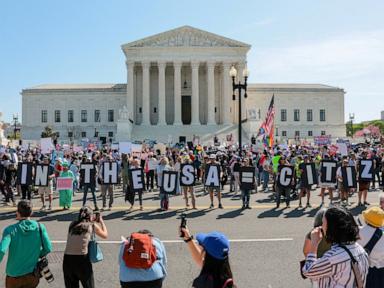
The executive branch cannot rewrite the Constitution by decree. In a decisive 6-3 ruling in Trump v. Barbara, the Supreme Court struck down the administration’s first-day executive order that sought to deny automatic citizenship to children born on American soil to undocumented immigrants and temporary visa holders. Chief Justice John Roberts, writing for the majority, anchored the decision in more than a century of settled legal precedent, effectively dismantling the signature immigration initiative of the president's second term. The ruling preserves the long-held interpretation of the Fourteenth Amendment, maintaining legal status for an estimated 255,000 infants born in the country each year.
This was a defeat the administration saw coming, yet pursued anyway to test the boundaries of executive power. For months, legal scholars across the political spectrum warned that an executive order was an insufficient vehicle to overturn the Citizenship Clause. By forcing the high court's hand, the administration did not just lose a policy battle. It established a hard boundary on presidential authority that will govern immigration enforcement for generations. For an alternative view, see: this related article.
The Line That Broke the Executive Order
The legal battle turned on five words within the Fourteenth Amendment: "subject to the jurisdiction thereof." Ratified in 1868, the amendment was originally designed to guarantee citizenship to formerly enslaved people, overriding the infamous Dred Scott decision. The Trump administration argued that the phrase required a child's parents to owe total political allegiance to the United States, meaning they had to be lawful permanent residents or citizens. Children of tourists, foreign students, or undocumented workers, the government argued, remained under the political jurisdiction of their home countries.
The majority rejected this interpretation as a revisionist reading of history. Chief Justice Roberts traced the concept of birthright citizenship back through English common law, noting that the American system has long recognized territorial birth as the primary qualifier for citizenship. He stated that citizenship was the right to have rights and to participate fully in the political community, a promise extended by the framers of the amendment to every free-born person in the land. Further reporting on the subject has been provided by Al Jazeera.
Government lawyers tried to use the landmark 1898 case, United States v. Wong Kim Ark, to support their position. In that case, the court ruled that a child born to Chinese immigrants was a citizen because his parents had a permanent domicile in the United States. The administration argued this meant permanent residency was a prerequisite. Roberts explicitly batted down this claim, finding no historical evidence that the court intended to restrict citizenship only to those whose parents held specific visas.
Breaking Down the Fourteenth Amendment Debate
The text of the Citizenship Clause is straightforward, yet the administration attempted to treat it as an open statutory question. Under standard legal definitions, anyone physically present in the United States—excluding foreign diplomats or invading armies—is subject to its laws and courts. If an undocumented immigrant commits a crime, they are prosecuted under American law. They are, by definition, subject to U.S. jurisdiction.
The dissenting justices, led by Clarence Thomas, took a different approach. Thomas argued that the Fourteenth Amendment has been misinterpreted for decades and was never intended to cover the children of foreign nationals who entered the country unlawfully. In a sprawling dissent joined by Justice Neil Gorsuch, Thomas wrote that the amendment was designed to secure equal rights for freed Black Americans, not to serve as a blanket mechanism for global birthright citizenship. Justice Samuel Alito added in a separate dissent that the majority’s ruling preserves a powerful incentive for people to enter the country illegally.
The Fragmented Conservative Coalition
The true story of the ruling lies in the breakdown of the court's conservative supermajority. The decision was not a partisan split. Instead, two Trump nominees, Justices Amy Coney Barrett and Brett Kavanaugh, broke ranks with the hard-right flank of the court to join the three liberal justices and the Chief Justice.
Barrett joined Roberts’ majority opinion fully, signaling a commitment to originalist interpretation that values historical context over contemporary political goals. Her vote indicates that the judicial philosophy guiding the court's conservative center is not inherently aligned with sweeping executive overreach, even when packaged as conservative policy.
Kavanaugh took a more technocratic path. While he agreed that the executive order must be struck down, he wrote a separate concurring opinion focusing on federal statutory law rather than the Constitution itself. Kavanaugh argued that the executive order directly conflicted with federal immigration statutes passed by Congress in 1940 and 1952, which codified birthright citizenship into law. According to his reasoning, because Congress has explicit constitutional authority over immigration, the president cannot use an executive order to override existing federal laws. He left open the possibility that Congress could legally alter birthright citizenship through standard legislation, a distinction the president immediately seized upon.
The Real Impact on Hundreds of Thousands of Families
The human cost of the administration’s failed policy would have been immediate. The Migration Policy Institute estimated that roughly a quarter of a million children born each year would have been denied American birth certificates.
A hypothetical example illustrates the bureaucratic chaos the order would have created. A child born in a Texas hospital to a mother on a temporary agricultural visa would not receive a U.S. passport. If the mother’s home country did not automatically grant citizenship to children born abroad, that infant would become legally stateless. They would possess no recognized nationality, no access to travel documents, and no clear legal standing in any nation on earth.
For older Americans, the policy change would have introduced a secondary crisis of documentation. If a birth certificate no longer served as definitive proof of citizenship, millions of citizens would have been forced to prove the immigration status of their parents at the moment of their birth to obtain a passport, qualify for federal benefits, or secure employment. The administrative infrastructure required to verify the decades-old immigration status of tens of millions of parents simply does not exist.
A Strategy Shift Toward Capitol Hill
Defeated in the courtroom, the administration has already shifted its focus toward the legislative branch. Within hours of the decision, the president posted on social media, calling the ruling unfortunate for the country but suggesting that the objective could be achieved through congressional action rather than a long and unwieldy constitutional amendment.
This legislative path faces immense hurdles. Passing a bill to eliminate or restrict birthright citizenship would require overcoming a certain filibuster in the Senate, demanding a level of legislative consensus that does not currently exist. Furthermore, any such statute would immediately face a new round of constitutional challenges, forcing the Supreme Court to rule on whether Congress has the power to restrict a right that the court just affirmed is protected by the Fourteenth Amendment.
The high court has drawn a clear line around the limits of executive fiat, leaving the administration to face the reality that fundamental constitutional change cannot be achieved by the stroke of a presidential pen.


