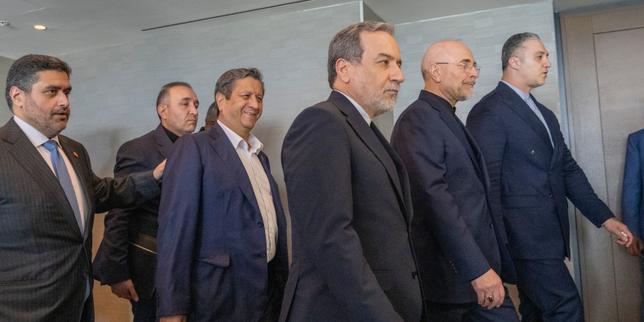
Behind the closed doors of Swiss diplomatic villas, international relations operate on absolute discretion. For decades, Bern has served as the quiet mailbox between Washington and Tehran, a neutral wire through which bitter adversaries pass precise, calculated text to prevent regional friction from exploding into global catastrophe. But when public declarations collide with secret statecraft, the machinery of quiet diplomacy shatters instantly. The recent collapse of high-stakes discussions in Switzerland, triggered by a highly abrasive public message from Donald Trump, exposes a deeper structural flaw in modern geopolitical crisis management.
Public posturing systematically derails private mediation because the two formats serve entirely contradictory masters. Private channels require deniability and compromise. Public messaging demands political dominance and total submission. When a head of state uses social platforms or press briefings to project absolute strength while his envoys are quietly offering terms, the opposing state faces an existential domestic threat. For Iran, continuing negotiations under the shadow of what its leadership termed an insulting public ultimatum is politically impossible, as it signals weakness to both hardline internal factions and regional proxies.
The Swiss channel operates under the formal framework of protecting powers. Since the storming of the US embassy in Tehran in 1979, the Swiss Federal Department of Foreign Affairs has managed the technical details of American interests in Iran. This is not a system built on friendship. It is a sterile, hyper-legal transmission belt designed to remove emotion from high-stakes security calculations. When a message arrives via Bern, it usually carries specific coordinates, red lines, and explicit warnings about military postures.
The breakdown in the current round of talks reveals how modern communication has outpaced traditional diplomatic architecture. Envoys in Geneva were working through a delicate sequence of mutual de-escalation steps regarding regional maritime corridors and proxy activity. The sudden injection of a highly personalized, aggressive public statement from the American executive branch instantly invalidated the authority of the negotiating team. Iranian diplomats could no longer verify if the American negotiators actually spoke for the presidency, or if the secret text was merely a stalling tactic hiding a broader military intent.
The Mechanics of Internal Friction in Tehran
To understand why a single public statement can freeze international diplomacy, one must look at the internal balance of power within the Iranian state. The political structure in Tehran is far from monolithic. It functions as a tense equilibrium between elected reformists or pragmatists who view sanctions relief as vital for economic survival, and the Islamic Revolutionary Guard Corps which views any compromise with the West as an existential betrayal.
When Western leaders publish aggressive public rhetoric during active talks, they inadvertently arm the hardline factions in Tehran with the political ammunition they need to kill the process. The narrative writes itself. Hardliners point to the public statements as proof that the West is untrustworthy and that negotiation is a form of managed surrender. The pragmatic factions are instantly forced onto the defensive, compelled to match the aggressive rhetoric of their rivals just to retain their positions within the supreme council.
This internal dynamic explains the swiftness of the Iranian denunciation. The rejection of the Swiss text was not just a diplomatic snub aimed at Washington. It was a mandatory performance directed at a domestic audience and regional allies in Lebanon, Iraq, and Yemen. In the calculus of Middle Eastern statecraft, projecting vulnerability is far more dangerous than risking the collapse of a diplomatic channel.
The Failure of Two Track Strategy
Foreign policy strategists frequently defend the combination of public pressure and private negotiation as a deliberate strategy. The theory suggests that public threats create the necessary leverage to force an opponent to make concessions behind closed doors. This approach assumes that the adversary operates as a purely rational actor capable of ignoring public humiliation to secure a pragmatic objective.
Historical precedent shows this assumption is frequently incorrect. During the Cuban Missile Crisis, the ultimate resolution required a strictly secret agreement to remove American missiles from Turkey, an accord that was hidden from the public for years to allow both sides to save face. Had either side demanded a public admission of defeat from the other, the backchannel would have collapsed, and military engagement would have followed.
The current strategy fails because it underestimates how much value non-Western states place on formal diplomatic respect. In Persian political culture, the concept of face and national dignity is a core component of security doctrine. An agreement that appears coerced by public bullying is seen as inherently unstable and unenforceable. By treating public insults as a tool of leverage, Western policymakers often close the very exits they are trying to build.
The Neutral Intermediary Under Strain
The Swiss government finds itself in an increasingly difficult position as the utility of neutral spaces declines. Swiss neutrality is not an ideological stance; it is a specialized service industry that requires the absolute cooperation of both disputing parties. When one side uses the existence of the talks as a backdrop for political theater, the credibility of the host nation suffers.
Diplomats in Bern have privately expressed concern that the weaponization of public communication is making the role of protecting power obsolete. If messages passed through the Swiss embassy in Tehran are instantly contradicted or reframed by social media posts, the channel ceases to function as a reliable method to prevent miscalculation. The risk of accidental military engagement rises exponentially when neither side can trust the validity of the other's private words.
The current impasse leaves the region in a dangerous vacuum. Without the Swiss channel functioning as a pressure valve, both Washington and Tehran are forced to read each other's intentions through military movements, radar activations, and proxy deployments. This is a language prone to catastrophic misinterpretation. A routine naval patrol or a scheduled missile test can easily be misread as the opening salvo of a wider conflict when there is no trusted digital wire available to clarify the move within minutes.
The Structural Illusion of Choice
Many analysts argue that the current breakdown is merely a temporary pause, a routine bump in the road that will naturally resolve once the political cycle turns. This view ignores the permanent structural damage done to the diplomatic architecture over the last decade. Trust in international agreements is cumulative, but its destruction is instantaneous.
The problem is not a lack of creative diplomatic solutions or a shortage of backchannel options. The core issue is the fundamental incompatibility between the speed of modern political communication and the deliberate, slow-moving reality of arms control and security guarantees. A single statement can destroy months of careful drafting in seconds, leaving professional diplomats to clear away the wreckage while military commanders prepare for the alternative.
The immediate consequence of this diplomatic failure is an inevitable shift toward harder deterrence measures. When words lose their utility, steel becomes the only medium of communication left. Both sides will now feel compelled to demonstrate their resolve through tangible actions in the Persian Gulf and across the Levant, raising the baseline level of tension to a point where a single tactical error by a low-level commander could trigger a wider mobilization.
The illusion that major powers can simultaneously run an aggressive public campaign and a successful secret negotiation has been thoroughly dismantled. Until international strategy recognizes that public humiliation is a barrier to concession rather than a catalyst for it, the villas of Switzerland will remain empty, and the risk of unmanaged regional conflict will continue to dictate the reality of the Middle East.


