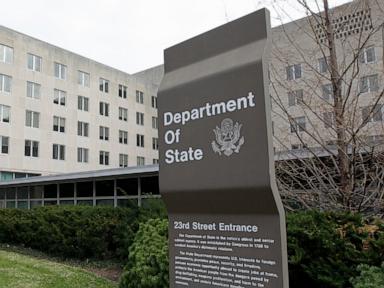
The Foggy Bottom apparatus is quietly undergoing its most radical bureaucratic restructuring in decades, and the early results are disastrous. Seeking to modernize how the United States projects power, the State Department has introduced a new Employee Evaluation Report system meant to introduce corporate-style efficiency to diplomacy. Instead, the initiative has triggered widespread panic, an unfair labor practice filing, and a dangerous exodus of institutional knowledge at a time when global crises are multiplying. By forcing a rigid, data-driven bell curve and political alignment metrics onto the delicate art of international relations, the administration is transforming America’s front-line diplomats from strategic thinkers into risk-averse executioners of paper.
Diplomacy cannot be measured like factory output. The fundamental flaw of the new review process is the assumption that foreign policy outcomes can be quantified on a standardized rubric.
The Forced Curve of Friction
At the heart of the controversy is a newly introduced grading system that implements a strict mathematical bell curve for performance ratings. Under the previous framework, supervisors wrote detailed narratives highlighting a diplomat's specific regional accomplishments, crisis management skills, and language competencies. The new system sharply limits these narrative sections, replacing them with standardized scoring blocks.
The math is breaking department morale. By enforcing a hard cap on how many Foreign Service officers can receive top marks, the system guarantees that highly competent diplomats working in high-stress bureaus are artificially downgraded.
Consider a embassy team operating in a critical conflict zone. Under the new guidelines, a supervisor cannot give superior marks to every officer on that team, even if they successfully prevented a regional escalation. The supervisor is forced to rank some as average simply to satisfy the statistical requirements of the curve.
This mechanical approach creates immediate friction inside embassies. Rather than collaborating to advance American interests, officers find themselves competing against their own colleagues for a finite pool of promotion-eligible scores. The American Foreign Service Association quickly sounded the alarm, pointing out that the form was rolled out more than three quarters through the evaluation cycle without proper negotiation.
The Fidelity Metric and the Death of Dissent
A far more insidious change is the introduction of an explicit evaluation tenet requiring fidelity to current administration policies.
Every administration expects its policy choices to be executed. However, the formal institutionalization of political compliance within the career promotion process fundamentally alters the nature of the Foreign Service. For over a century, the strength of American diplomacy has relied on career professionals offering candid, unvarnished, and often uncomfortable assessments of realities on the ground.
Old System: Evaluated regional expertise, negotiation skills, and analytical accuracy.
New System: Prizes adherence to a predetermined policy line and penalizes alternative viewpoints.
The new review process actively penalizes the dissenting viewpoint. If a career officer in the field observes that a specific sanction regime or military partnership is yielding negative results, documenting that reality now carries immense professional risk. A low score on the fidelity metric effectively stalls a career.
Veteran ambassadors warn that this structural shift is creating a dangerous echo chamber. When diplomats are incentivized to report only what Washington wants to hear, the executive branch loses its early-warning system for geopolitical failure.
Institutional Memory Shoved Out the Door
The rollout of the new evaluation metrics coincided with aggressive reductions in force that have decimated the middle and senior ranks of the department. Over the past year, hundreds of experienced Foreign Service officers and civil service specialists have been abruptly separated.
The administration defends these moves as an effort to eliminate redundancies and move at what it calls the speed of relevancy. Leadership claims the data-driven reviews simply help place personnel in roles that match their measurable strengths.
The reality on the ground contradicts this corporate jargon. The department is systematically terminating veteran crisis responders and specialists holding rare language skills while simultaneously hiring waves of green, un-tenured staff to fill the vacancies. This is not structural reform. It is an intentional hollowing out of the career diplomatic corps.
The cost of this loss is tangible. When recent escalations required rapid, highly nuanced communication with regional actors, the specific desks tasked with managing those relationships found themselves stripped of the personnel who actually held the necessary personal relationships and decades of historical context.
The Illusion of Objectivity
Proponents of the overhaul argue that the corporate model reduces the subjective bias and grade inflation that plagued the older narrative-heavy evaluations. They claim that giving second-line supervisors more authority to validate scores standardizes expectations across different bureaus.
This seeks to fix a minor problem by creating a catastrophic one. Foreign policy is inherently fluid, relational, and qualitative. A diplomat who spends months quietly building a coalition to vote with the United States at the United Nations cannot show a clean, metric-driven quarterly profit. By shifting authority to second-line supervisors who have little day-to-day visibility into a diplomat’s specific local environment, the process becomes less transparent and far more vulnerable to institutional bias.
The new framework treats diplomats as interchangeable animators of a pre-packaged script rather than authors of strategic influence.
Public service requires accountability, but true accountability in foreign affairs requires evaluating long-term strategic outcomes, not short-term compliance metrics. By forcing America's diplomatic corps into a rigid corporate mold, the current administrative overhaul is sacrificing deep expertise for superficial obedience, leaving the nation dangerously exposed in an unstable world.