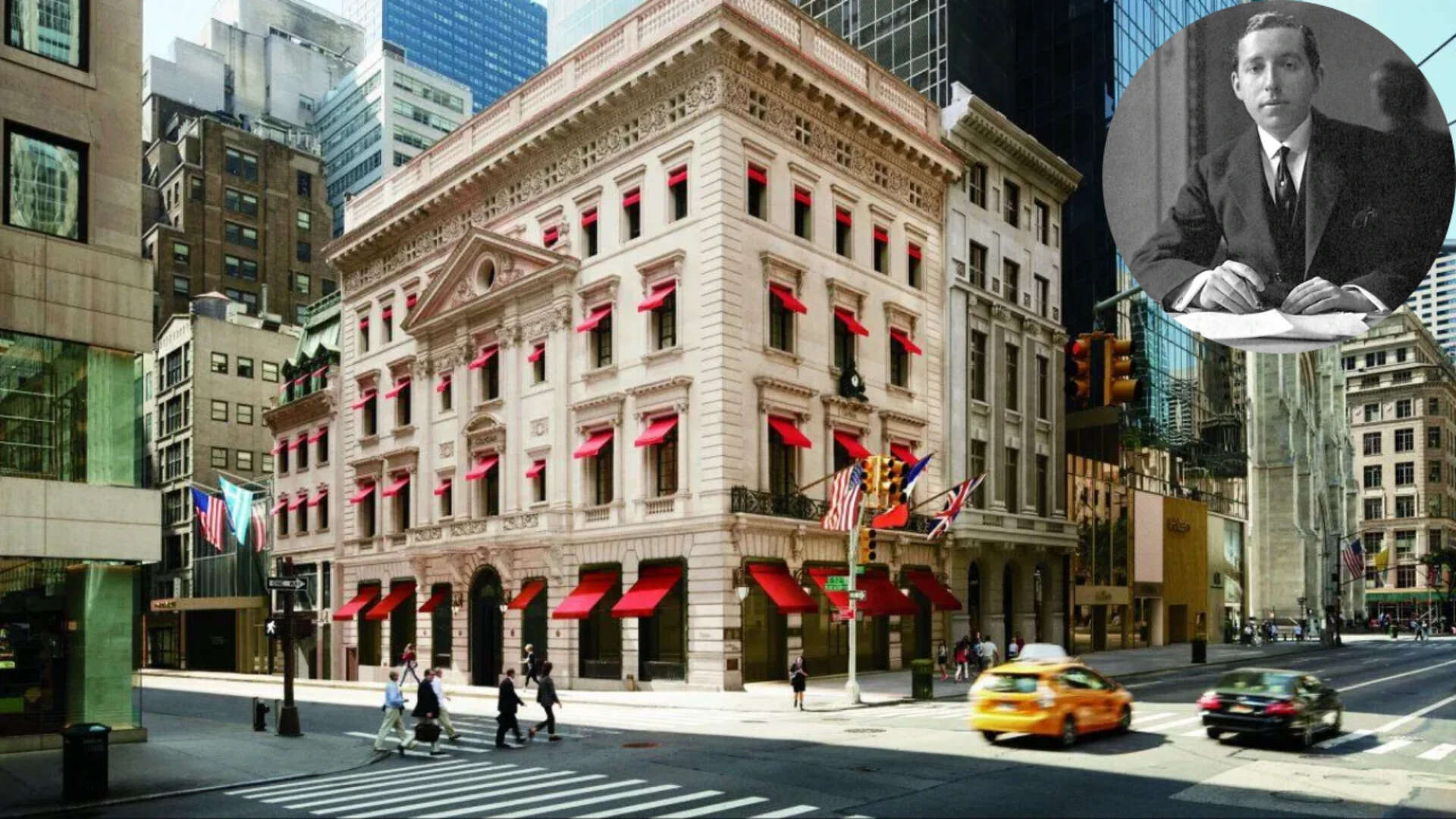
In 1917, Pierre Cartier traded a double-strand natural pearl necklace valued at $1 million and a single $100 bill to acquire the massive neo-Renaissance mansion of banker Morton F. Plant on the corner of Fifth Avenue and 52nd Street. Today, that flagship property remains the crown jewel of Cartier's global retail empire. What looks like a whimsical, eccentric barter of the Gilded Age was actually a calculated, high-stakes real estate play that capitalized on a massive shift in urban demographics and a fleeting valuation bubble. It represents one of the most brilliant asymmetric asset swaps in American history.
To truly understand this transaction, one must look past the romanticized lore of Manhattan high society. This was not a casual trade born of convenience. It was a cold-hearted financial maneuvering executed by two masters of their respective crafts, each correctly predicting that the assets they held were about to experience wildly divergent futures.
The Illusion of the Million Dollar Pearl
To modern eyes, trading a grand mansion on Fifth Avenue for a piece of jewelry sounds like financial madness. Natural pearls, however, were the ultimate status symbol for the industrial tycoons of the early 20th century.
Before Kokichi Mikimoto perfected the commercial cultivation of pearls in Japan, natural specimens were vanishingly rare. Gathering a perfectly matched double strand of 128 flawless pearls required diving through thousands of wild oysters in the Persian Gulf. It took Cartier years to assemble the collection. In 1917, those pearls represented the pinnacle of concentrated, portable wealth. They were far more exclusive than diamonds.
Morton F. Plant’s young wife, Mae, desperately wanted the necklace. Plant, a multi-millionaire railroad and banking magnate, possessed an abundance of real estate but lacked the specific social currency that the world's finest pearl necklace offered his bride. Cartier, conversely, possessed luxury inventory but desperately needed a permanent, prestigious physical anchor in New York City to compete with American giants like Tiffany & Co.
The valuation of $1 million in 1917 was astronomical. Adjusted for inflation, it represents tens of millions today, but even that conversion fails to capture its true contemporary purchasing power. It was an asset bubble built entirely on scarcity. Pierre Cartier knew that scarcity was vulnerable to technological disruption; Morton Plant failed to see it coming.
The Great Fifth Avenue Exodus
The primary driver behind the deal was not the jewelry itself, but the changing geography of Manhattan's elite.
For decades, the stretch of Fifth Avenue below 59th Street was an exclusive residential sanctuary for the Astors, Vanderbilts, and Morgans. By the mid-1910s, that sanctuary was crumbling. Commercial enterprises, high-end hotels, and luxury retailers were marching steadily uptown from Madison Square.
[Retail Expansion] ---> Moving North up Fifth Avenue ---> [Encroaching on Residential Mansions]
The quiet, aristocratic atmosphere of Millionaire’s Row was being replaced by the bustle of commerce. For the ultra-wealthy, living next door to a retail storefront was unacceptable.
Morton Plant saw the writing on the wall. His mansion at 52nd Street was no longer a peaceful domestic retreat; it was now the frontline of a commercial invasion. He had already decided to move further uptown to a new mansion on 86th Street. The 52nd Street property was an asset he intended to liquidate.
Selling a massive residential property in a transitioning neighborhood through traditional means was difficult. Finding a buyer who wanted to live there was nearly impossible, and selling to a commercial developer often meant enduring prolonged negotiations and market scrutiny. Cartier presented a clean, immediate exit.
The Economics of a Masterful Asset Swap
Pierre Cartier’s genius lay in recognizing that the commercial value of the Plant mansion far exceeded its residential worth. By converting a home into a luxury retail flagship, Cartier could unlock massive commercial rents and brand equity that a private homeowner could never realize.
The transaction was structured beautifully.
- The Asset Transferred: A double-strand natural pearl necklace valued at $1,000,000.
- The Cash Element: A single $100 bill to finalize the legal contract.
- The Real Estate Acquired: A six-story stone mansion on the most valuable corner of Fifth Avenue.
For Cartier, the necklace represented wholesale cost and time, not a cash outlay of $1 million. He traded inventory—which carried a hefty markup—for a prime piece of real estate. He effectively bought a landmark building at a deep discount.
For Plant, he avoided real estate commissions, property listing delays, and capital gains complexities of a standard cash sale, walking away with a highly liquid, intensely desired luxury asset that delighted his wife.
The Brutal Reality of Divergent Valuations
The true brilliance of Cartier’s move became clear only a few years after the ink dried on the deed.
In the 1920s, cultured pearls flooded the global market. Mikimoto’s scientific breakthrough allowed high-quality pearls to be grown at a fraction of the cost of wild harvesting. The artificial scarcity that sustained the million-dollar valuation of Mae Plant’s necklace evaporated almost overnight. The market crashed.
When Mae Plant died in 1956, her famous double strand of Cartier pearls was put up for auction. The jewelry that had once purchased a Fifth Avenue mansion fetched a mere $151,000. It had lost the vast majority of its value, ravaged by technology and changing tastes.
Meanwhile, the real estate market in Manhattan did the exact opposite. As Fifth Avenue cemented its reputation as the premier luxury shopping destination in the world, land values skyrocketed. The Plant mansion, maintained meticulously by Cartier, grew exponentially in value. Today, the building is worth hundreds of millions of dollars, serving as an irreplaceable marketing asset and retail powerhouse.
Asset Value Trajectory (1917–Present)
=========================================================
Asset                  1917 Value       Long-Term Outcome
---------------------------------------------------------
The Cartier Pearls     $1,000,000       Crashed to $151,000 by 1956
The Plant Mansion      ~$1,000,000      Worth hundreds of millions today
=========================================================
Why the Deal Could Never Happen Today
Modern corporate real estate and luxury retail have evolved past the point of handshake barter deals. Today, a transaction of this magnitude would be buried under layers of institutional scrutiny, zoning laws, board approvals, and rigorous appraisal metrics.
Luxury brands now rely on complex sale-leaseback models, sovereign wealth fund financing, and global real estate conglomerates like LVMH or Kering to secure their flagships. The autonomy that allowed Pierre Cartier to trade physical inventory directly for a corporate headquarters is gone, replaced by standardized financial engineering.
The 1917 trade remains a masterclass in identifying asymmetric value. Cartier understood that tangible land in the heart of a growing metropolis is the ultimate finite resource. Jewelry designs change, fashion trends evolve, and technology disrupts scarcity, but prime real estate retains a structural permanence that cannot be replicated in a workshop.
Morton Plant got his pearls and a happy wife for the remainder of his days, but Pierre Cartier secured the future of his global brand by recognizing that a changing urban landscape is the most profitable canvas an entrepreneur can find.