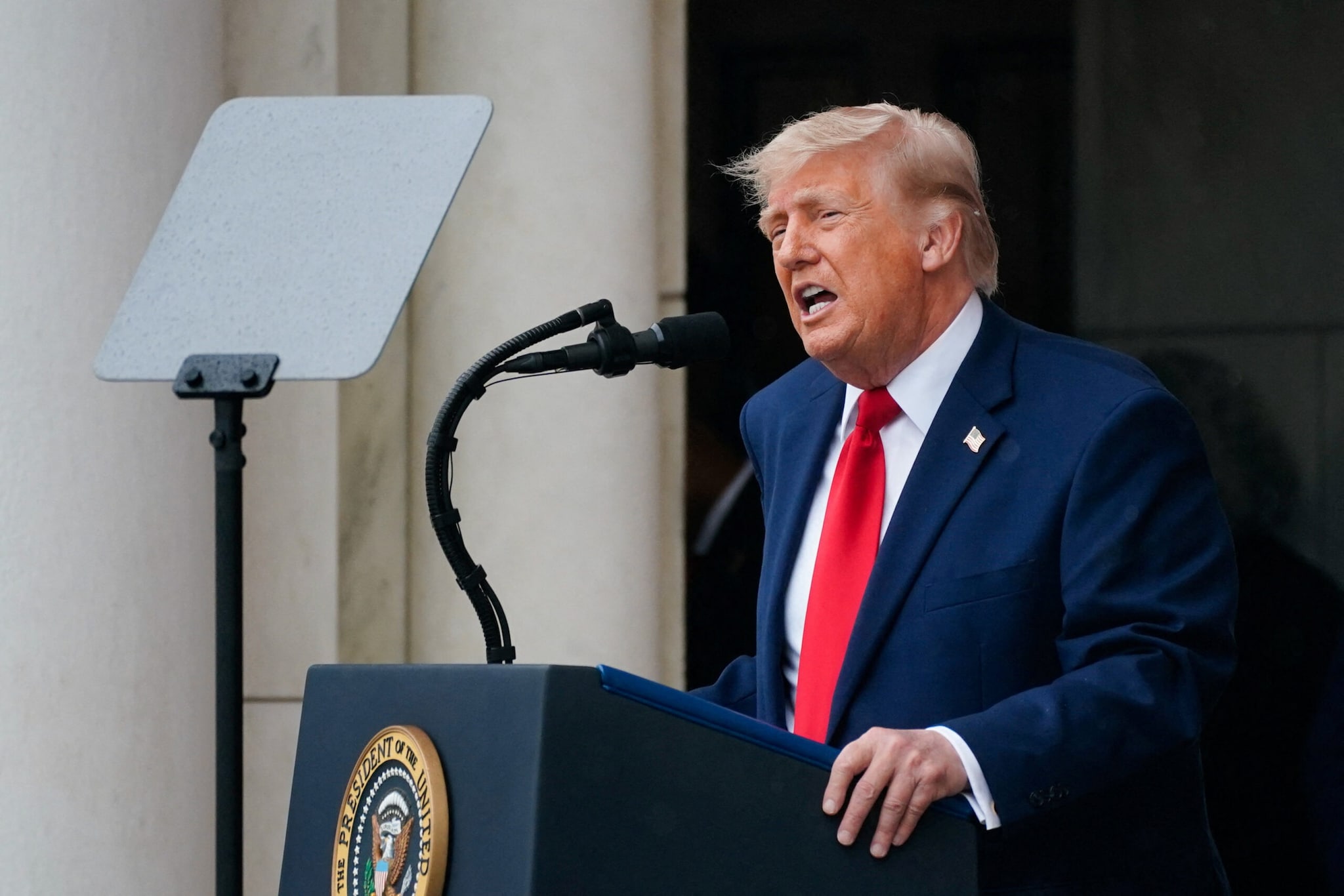
The corporate unraveling of the Great American State Fair’s premier musical lineup reveals a stark reality about commercial entertainment in a hyper-polarized market. When President Donald Trump announced that the National Mall would no longer host a nostalgic roster of 1980s and 1990s pop, country, and rock icons, but would instead feature a political rally headlined by country crooner Lee Greenwood and patriotic military ensembles, the official narrative shifted immediately to political preference. The truth, however, is a classic study in brand preservation, contract friction, and the impossible math of modern event production.
Performers did not simply wake up and discover the event’s political undertones. They fled a structural misalignment between corporate sponsorship, non-partisan branding promises, and the reality of a highly weaponized stage.
The Illusion of a Non-Partisan Stage
The Great American State Fair, scheduled to occupy the National Mall from June 25 through July 10, was envisioned as the jewel of the Freedom 250 celebrations marking the semi-quincentennial anniversary of the United States. Conceived under White House Executive Order 14189, the initiative was handed to Freedom 250, a nonprofit entity tasked with designing a coast-to-coast celebration.
The initial strategy was brilliantly commercial. To draw broad, multi-generational crowds to the National Mall, organizers booked a heavy dose of nostalgia. The lineup boasted country icon Martina McBride, rock frontman Bret Michaels, R&B legends The Commodores, and retro mainstays like Vanilla Ice, Young MC, and Morris Day and the Time. It was a lineup designed for mass appeal, detached from modern culture wars.
Then came the structural fracture.
Promotional materials and logistical briefings began to blur the lines between a civic milestone and a campaign-style environment. For commercial legacy acts, that blur is a existential threat. Corporate touring operations rely heavily on corporate sponsorships, private venue bookings, and multi-demographic ticket sales. Aligning with a highly charged political atmosphere instantly threatens half of an artist's balance sheet.
Martina McBride noted that while she initially understood the event to be a non-partisan celebration of state history and community, the operational reality proved "misleading." The Commodores issued a remarkably candid corporate position, stating that their music serves as their voice and they "choose not to publicly affiliate with any single political party."
This was not an ideological mutiny. It was risk management.
The Economics of the Corporate Pullout
When an artist backs out of a high-profile Washington event, the financial calculations are brutal. Entertainment contracts for major national celebrations typically include strict force majeure clauses, non-disparagement agreements, and specific riders regarding political synchronization.
- Sponsorship Vulnerability: Modern heritage tours are subsidized by consumer brands, automotive companies, and major beverage distributors. These corporations demand neutrality. A single viral image of a brand-sponsored artist performing under a partisan banner can trigger morals clauses in sponsorship contracts, costing millions in lost revenue.
- The Streaming Factor: Legacy artists survive on catalog streaming algorithmic placement. Splitting their audience down partisan lines risks targeted boycotts, playlist removals, and a drop in digital spins.
- Future Booking Friction: Municipal venues, state fairs, and corporate conventions represent the steady bread-and-butter of touring acts. By staying on a bill that transformed into a partisan rally, artists risked alienation from blue-state fair boards and municipal venues nationwide.
Once the first domino fell—as artists realized the "Freedom 250" branding was fundamentally intertwined with executive partisan messaging—the exodus became logistically inevitable. Entertainment lawyers looked at the indemnity clauses, weighed the potential fallout, and advised their clients to cut ties.
From Pop Nostalgia to Military Precision
The pivot from a commercial pop festival to a tightly choreographed military and traditional showcase was swift. On Truth Social, the administration recharacterized the departures not as a corporate retreat, but as a purging of overpaid talent. The event was rebranded as "A Rally to end all Rallies," shifting from a multi-day commercial concert series to a singular, high-octane political event on June 24 at 7:00 p.m.
Original Pop Lineup              Pivoted Rally Roster
--------------------              --------------------
Martina McBride                  Lee Greenwood
The Commodores                   Christopher Macchio
Bret Michaels                    U.S. Marine Band
Young MC / Vanilla Ice           Joint Armed Forces Chorus
Morris Day and the Time          U.S. Army Band ("Pershing's Own")
This lineup shift changes the entire financial and legal landscape of the event. Military bands—such as "The President's Own" United States Marine Band and the U.S. Army Band "Pershing's Own"—operate under federal mandates. They do not command commercial booking fees, they do not require complex corporate sponsorship alignments, and they cannot back out due to branding concerns.
By replacing commercial acts with federal musical assets and long-time cultural allies like Lee Greenwood, the organizers solved a massive logistical headache. They eliminated the threat of breach-of-contract lawsuits from commercial entities and replaced unpredictable private talent with disciplined, state-sanctioned ensembles.
The Regional Fair Dilemma
While the drama on the National Mall dominates headlines, the real crisis faces the broader Freedom 250 infrastructure. The United States Department of Agriculture (USDA) had spent months distributing toolkits to regional and state fair boards across all 50 states, encouraging them to transform local agricultural expositions into patriotic epicenters.
Local fair managers now face a complicated landscape. State fairs are inherently local, designed to celebrate regional agriculture, livestock, and community pride across diverse populations. The nationalization and politicization of the Freedom 250 brand makes it incredibly difficult for local organizers to maintain the broad, community-wide consensus required to run a successful regional event.
When the flagship event on the National Mall strips away its mainstream entertainment in favor of a hard-line rally format, the local trickledown is measurable. Corporate vendors, local food concessionaires, and regional sponsors are forced to evaluate whether their participation in local "Freedom 250" pavilions carries an unintended political cost.
The Reality of Public Space Monopolization
Holding a massive political rally under the guise of a national semi-quincentennial fair presents unprecedented logistical friction for Washington, D.C. The National Mall is public ground, managed by the National Park Service. It is designed to host national celebrations, but the conversion of a two-week cultural fair into a singular, hyper-focused political rally alters security protocols, crowd dynamics, and local transit requirements.
With the Great American State Fair pavilions scheduled to open the very next day on June 25, the logistical overlay of a massive campaign-style rally on June 24 creates an administrative nightmare. Security cordons, secret service perimeters, and crowd control assets must be deployed and then instantly recalibrated for a multi-week public exposition.
The immediate result is a fragmented experience for the public. Instead of entering a cohesive, non-partisan celebration of American history, visitors will step onto a National Mall that has been physically and culturally conditioned by a major political event just 24 hours prior.
This transformation highlights the ultimate vulnerability of modern civic celebrations. In a fractured cultural environment, the idea of a blank-canvas, unifying national festival is an antiquity. Every stage demands a side, every lyric is scrutinized for alignment, and the commercial entities that power the live entertainment industry will choose to walk away from the microphone long before they risk their corporate bottom line.