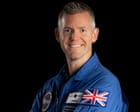
The global space industry is preparing for its most significant operational shift in decades, but the public narrative is completely missing the point.
When the UK Space Agency and commercial spaceflight operator Vast announced an agreement to potentially send British Paralympian and orthopaedic surgeon John McFall into orbit, the headlines focused entirely on inspiration. Media outlets framed it as a feel-good triumph of human spirit over physical limitation.
That framing is wrong. It reduces a complex, highly technical engineering challenge to a public relations stunt.
               [ HARDWARE INTEGRATION ]
                          |
   +----------------------+----------------------+
   |                                             |
[ SPACECRAFT LIFE SUPPORT ]             [ ECOSYSTEM ARCHITECTURE ]
- Pressure suit seal geometry          - Microprocessor knee algorithms
- Hatch clearance metrics               - Off-nominal emergency response
- Seat liner customization              - Stump volume fluid shifts
The real story behind McFall’s upcoming flight to the commercial Haven-1 station isn't about overcoming adversity. It is about a brutal, numbers-driven calculation regarding safety, hardware compatibility, and systemic inertia. For sixty years, space agencies relied on an unspoken rule: it is cheaper to change the human than to change the spacecraft. McFall's mission is the first serious attempt to prove that the economic and operational mathematics of spaceflight have fundamentally changed.
The Legacy of the Perfect Specimen
To understand why it took until 2026 to see a person with a physical disability on the cusp of an orbital mission, you have to look at the Cold War foundations of aerospace engineering. Early spacecraft like Mercury, Gemini, and Vostok were not built for comfort. They were built to the absolute absolute minimum margins of volume and weight.
Engineers treated the human body as a standardized component. The ideal astronaut was a military test pilot who fit a precise, narrow band of height, weight, and physical configuration. If an astronaut’s limbs were too long, they couldn't reach the manual abort triggers in an emergency. If they were too short, they couldn't pull the manual parachute reserves.
This created a design philosophy that outlived the Cold War by decades. Spacecraft cockpits, spacesuits, and emergency escape systems were all designed around a non-disabled, highly standardized baseline.
The European Space Agency (ESA) disrupted this philosophy in 2022 by launching the "Fly!" feasibility study. They selected McFall—an above-the-knee amputee who won bronze in the 100m at the 2008 Beijing Paralympics before qualifying as a trauma specialist—not to give him a ride, but to use his body and medical expertise as a testbed. The goal was to find out if modern spacecraft could accommodate physical divergence without compromising safety.
The study’s initial findings, wrapped up recently, proved there are no absolute physiological showstoppers. But translating a theoretical feasibility study into a live mission on a commercial space station reveals the hidden technical friction points that the industry rarely discusses.
The Hidden Engineering Friction of Microgravity Prosthetics
The public assumes that floatation in microgravity makes a missing limb irrelevant. In reality, weightlessness introduces a completely new set of mechanical and physiological complications.
When an astronaut enters orbit, the human body undergoes massive fluid shifts. Without gravity pulling blood and interstitial fluids toward the lower extremities, fluids migrate toward the chest and head. For a person with a lower-limb amputation, this causes the volume of the residual limb, or stump, to fluctuate unpredictably throughout the day.
The Orbital Fit Challenge: A prosthetic socket must fit with millimeter precision to prevent skin chafing, blistering, and deep tissue bruising. In space, a socket that fit perfectly at breakfast might cause severe pain or slip off entirely by lunchtime due to fluid volume loss in the leg.
Furthermore, modern high-performance prosthetics are not passive pieces of plastic and carbon fiber. They are complex electronic systems. McFall uses a microprocessor-controlled knee unit that relies on advanced algorithms, gyroscopes, and accelerometers to predict terrain and stabilize the user on Earth.
Space introduces two massive variables to these electronic limbs:
- Algorithmic Confusion: Microprocessor knees are calibrated for a 1G environment. In microgravity, where legs float and forces are applied from bizarre angles, the onboard software can misinterpret the environment, locking the joint or triggering unpredictable resistance modes.
- Radiation Vulnerability: Commercial-off-the-shelf medical microprocessors are not radiation-hardened. The constant bombardment of cosmic rays and solar particles in low Earth orbit can cause single-event upsets, effectively short-circuiting the leg's control system during critical maneuvers.
McFall’s two-week mission, whether it occurs on Vast’s Haven-1 station or via a private flight to the International Space Station, will devote significant time to analyzing these specific issues. He will be testing how a microprocessor-controlled prosthetic behaves when subjected to the weird mechanics of orbital life. The data gathered won't just help future disabled astronauts; it will fundamentally alter how manufacturers design adaptive technology for harsh terrestrial environments like deep-sea diving, aviation, and high-altitude rescue.
The Private Space Station Economics
The timing of this mission is not an accident. The UK Space Agency’s agreement with Vast highlights a profound structural shift from government-monopolized spaceflight to commercial infrastructure.
NASA plans to decommission the International Space Station by 2030. In its place, a scramble of private companies—Vast, Axiom Space, and Voyager Space—are racing to launch commercial outposts. These companies cannot afford the rigid, slow-moving procurement models of traditional state agencies. They need to fill seats, and they need to maximize the commercial utility of every single flight.
| Spacecraft Variable | Historical State Model (NASA/Roscosmos) | Modern Commercial Model (Vast/SpaceX) |
|---|---|---|
| Crew Selection Criteria | Rigid physical standardization based on military flight baselines. | Flexible capability profiles focused on mission-specific utility. |
| Hardware Adaptability | Decades-long engineering cycles; modifications require massive budget allocations. | Modular interiors, 3D-printed custom components, rapid software iteration. |
| Funding Structure | 100% taxpayer-funded through national space budgets. | Hybrid models utilizing state backing, corporate sponsorships, and private capital. |
Vast's Haven-1 station is roughly the size of a single-decker bus. To make such a compact volume viable for a diverse clientele, the interior architecture has to be modular. Instead of welding permanent foot restraints and handholds designed for a specific body type, commercial stations use adjustable, reconfigurable tracks.
The economic reality is simple. If the commercial space industry wants to open its doors to wealthy private citizens, researchers, and specialists from global corporations, it must abandon the hyper-standardized physical requirements of the 1960s. John McFall’s flight is the operational stress-test for this new business model. If a commercial station can safely support a trauma surgeon with a prosthetic leg, it can support almost anyone.
The Real Risk Factor is Not What You Think
Whenever disability in spaceflight is discussed, critics quietly bring up the worst-case scenario: an emergency evacuation. If a fire breaks out or a micrometeoroid punctures the hull, can an amputee move fast enough to save the crew?
This objection misses how modern spacecraft operate. In an emergency on a SpaceX Crew Dragon capsule or within Haven-1, physical speed over ground is irrelevant. Crew members do not run to escape pods. They navigate via hand-holds in three-dimensional space, utilizing upper body strength and core stability to guide themselves into their custom-molded seats.
[ EMERGENCY EVACUATION SEQUENCE ]
      |
      v
[ RAPID DECOMPRESSION / FIRE ALERT ]
      |
      +---> UPPER BODY NAVIGATION: Crew uses overhead hand-rails to traverse modules.
      |
      +---> RE-SUIT PRESSURE CHECKS: Astronauts don suits using manual upper-body closures.
      |
      +---> CAPSULE INTEGRATION: Securement via custom seat-liners and 5-point harness systems.
In a microgravity emergency, lower limbs are often a liability for any astronaut. Long, unconstrained legs float freely and can inadvertently strike control panels, snag cabling, or block the view of team members. McFall's unique physical configuration might actually offer a strange spatial advantage in a cramped capsule during high-G re-entry, where lower extremity blood pooling is a major cause of fainting among non-disabled astronauts.
The real risk factor is not emergency mobility. It is the modification of the life support hardware itself.
Every time you modify a spacesuit pressure garment to accommodate a unique limb shape, you introduce potential leak paths. Every time you alter a seat liner to balance the weight distribution of an amputee during a 4G launch, you alter the structural dynamics of the entire couch assembly. The engineering team at Vast and SpaceX must prove that these subtle, individualized modifications do not create systemic vulnerabilities for the rest of the crew.
Beyond the PR Stunt
McFall himself is acutely aware of the risk of being used as a corporate mascot. He has stated clearly that he does not want his mission to be a public relations fad. He wants to do his job, collect clean data, and prove his value as an asset to the mission.
His background as an orthopaedic surgeon makes him uniquely qualified to do exactly that. He is not just a test subject; he is the primary investigator of his own physiological adaptation. He will be tracking bone mineral density loss, muscle atrophy patterns, and the precise mechanical load variations on his intact limb versus his residual limb.
This is the hard-nosed perspective that must replace the superficial commentary surrounding inclusive spaceflight. We are not entering an era of space accessibility because the industry suddenly developed a conscience. We are entering it because the commercial survival of private space stations demands modularity, flexibility, and a broader definition of human capability. McFall is the pioneer not because he is breaking a barrier, but because he is the first to prove that standardizing the machine is infinitely more valuable than standardizing the human.