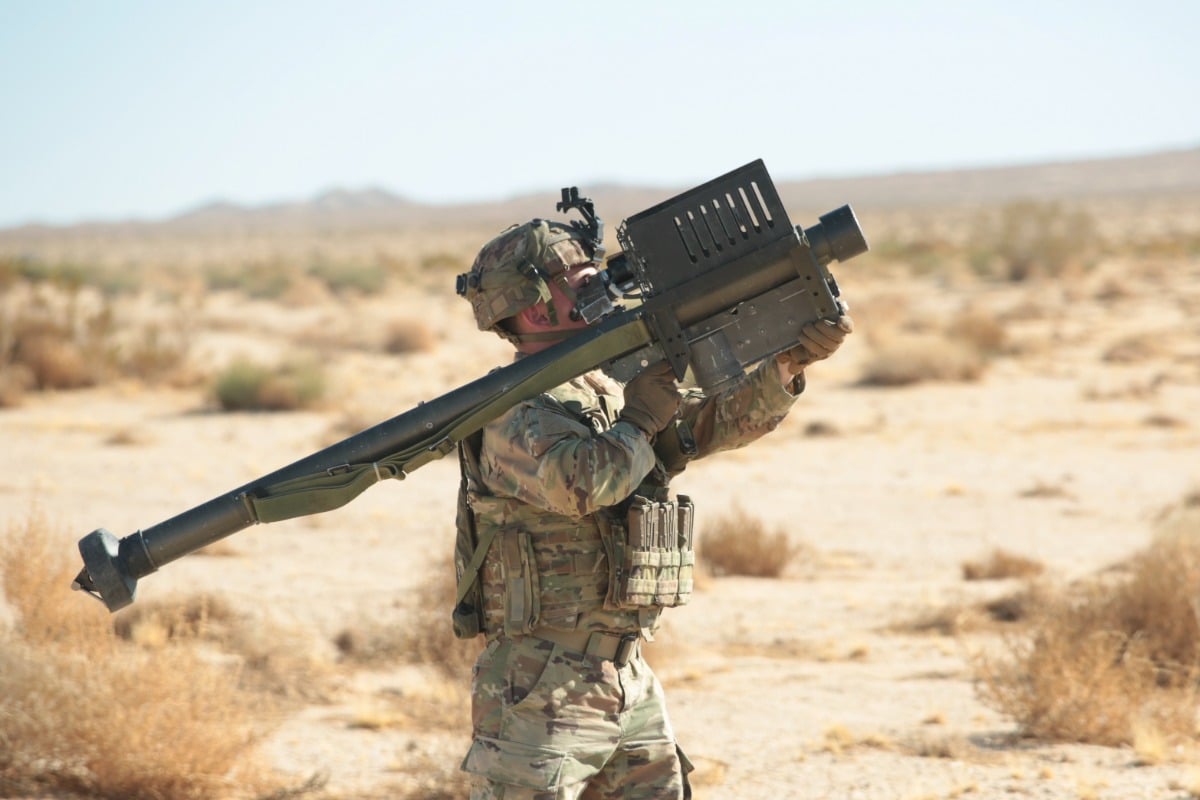
Brazil is quietly pivoting its continental defense strategy by requesting a $330 million purchase of U.S.-made FIM-92K Stinger Block I missiles. The U.S. State Department approved the potential Foreign Military Sale on June 11, 2026, signaling a major shift in how South America’s largest nation plans to protect its airspace. While the official line focuses on countering narco-terrorism and securing borders, the procurement of 100 modern man-portable air defense systems (MANPADS) reveals a deeper anxiety. Brazil is scrambling to address a gaping vulnerability in low-altitude air defense, driven by the cheap, weaponized drone technology rewriting the rules of modern warfare.
For over a decade, Brasilia relied on Russian hardware for short-range air defense. In 2010, the country bought 300 9K338 Igla-S systems from Moscow. But supply chain realities and geopolitical friction have turned those Russian systems into liabilities. Maintaining Russian weapons has become nearly impossible due to international sanctions and Moscow’s domestic wartime demands.
The Stinger purchase is not just a modernization effort. It is an expensive insurance policy against an entirely new tier of airborne threats that traditional border security forces are unequipped to handle.
The Reality of Low Altitude Vulnerability
The modern battlefield shows that expensive, multi-million-dollar fighter jets and high-altitude radar grids are completely blind to low-flying commercial drones modified to carry explosives. Brazil shares thousands of miles of dense, porous borders with nations deeply entrenched in illicit trafficking and paramilitary activity. Drug cartels in South America are already mimicking the asymmetric tactics seen in eastern Europe, using small unmanned aerial vehicles for surveillance and contraband transport.
The FIM-92K variant requested by Brazil is significantly more advanced than the basic Stingers that filled Cold War arsenals. The "K" model is specifically engineered to integrate into wider network-centric warfare frameworks. It utilizes a vehicle data link that allows the operator to receive targeting information from external radars before the target is even visible to the human eye.
This connectivity is vital. Spotting a small, quiet quadcopter over the canopy of the Amazon jungle without network assistance is an exercise in futility.
The Stinger utilizes a dual-spectrum infrared and ultraviolet seeker head. This configuration prevents the missile from being easily fooled by standard flares or natural heat clutter, such as the intense solar heat reflecting off dense tropical foliage. Once the missile leaves the launch tube, its solid-fuel rocket motor accelerates the weapon to Mach 2.54. It closes the distance to low-altitude threats with brutal speed.
The Cost of the Western Pivot
Paying $330 million for 100 missiles and related gripstocks seems like an astronomical sum. The math breaks down to over $3 million per firing unit once integration, engineering assistance, and logistics support are factored into the contract. This staggering unit price reflects the extreme demand on Western defense production lines, where manufacturers like RTX Corporation and Lockheed Martin are stretched thin trying to replenish depleted global stockpiles.
Critics point out that burning a multi-million-dollar interceptor to down a drone that costs less than a used car is economically unsustainable. It is a mathematical trap. If a paramilitary group or trafficking ring flies dozens of cheap drones toward a critical infrastructure target, a garrison armed only with 100 Stingers will quickly face a resource crisis.
However, Brazilian military planners are not looking at the Stinger as a daily tool for routine border patrols. They view it as a high-tier deterrent designed to safeguard critical nodes, such as major hydroelectric dams, military forward bases, and urban command centers during high-security events. The acquisition allows Brazil to sync its radar communications directly with Western standards, preparing the ground for broader defense integration with Washington and NATO allies.
Breaking the Russian Logistics Loop
The logistics of defense procurement are cold and unsentimental. Brazil's previous reliance on the Russian Igla-S created a dependency that became toxic after global trade routes and financial networks shut Moscow out of the Western economic sphere. Batteries fail, rocket motors degrade, and tracking mechanisms require specialized depot-level maintenance that Russia can no longer reliably export.
By walking away from the Igla-S ecosystem, Brazil is admitting that the era of non-aligned procurement carries severe hidden costs. The transition to the FIM-92K provides access to a stable, albeit expensive, American supply chain. It ensures that when a soldier pulls the trigger mechanism on a gripstock in the middle of a remote border crisis, the battery coolant unit will actually function, cryogenically cooling the missile seeker to its operational temperature within seconds.
The strategic shift also carries a quiet diplomatic message. By choosing American systems over competitive alternatives from China or local developments, Brazil stabilizes its position as the dominant security anchor in the Western Hemisphere. The U.S. State Department noted that this sale will not alter the basic military balance in the region. That is technically true; Argentina and Colombia are not going to launch an arms race over 100 short-range missiles.
But the sale fundamentally changes the internal security dynamics within Brazil. It provides the army with a highly mobile, hard-hitting shield that can be deployed via light trucks, helicopters, or foot patrols into environments where heavy anti-aircraft vehicles cannot tread. Brazil is realizing that protecting a nation of continental proportions requires more than just goodwill and border checkpoints. It requires the ability to knock down anything that flies, no matter how small, sneaky, or cheap it happens to be.