Mumbai’s film industry is quietly rewriting its geopolitical playbook. For years, the narrative seemed set in stone, with silver screens flashing images of tense border standoffs and villainous foreign operatives. Yet a sudden shift in scriptwriting rooms across India has left industry watchers asking why the world's most prolific film industry abruptly dropped its aggressive cinematic posture toward China. The answer does not lie in a sudden wave of diplomatic harmony, nor does it signal the birth of a new trilateral alliance with Russia. It is the result of cold, hard box office math and a desperate scramble for survival in a fragmented global market.
The entertainment industry operates on money, not government press releases. While political commentators speculate about a shifting geopolitical axis, the reality inside India's production houses is far more pragmatic. Filmmakers are realizing that alienating massive neighboring audiences makes zero financial sense at a time when domestic theater attendance is unpredictable.
The Mirage of the Trilateral Cinematic Axis
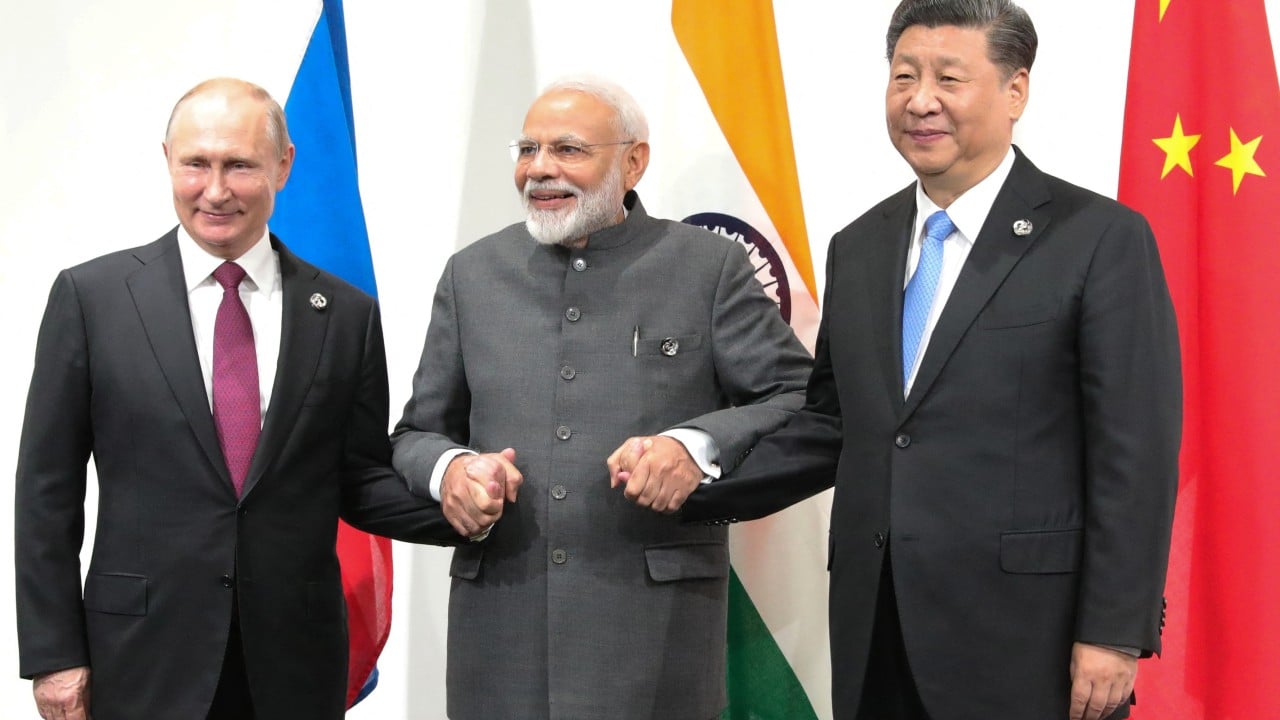
Geopolitical analysts love to find patterns where only balance sheets exist. When Indian studios stopped churning out crude caricatures of Chinese adversaries, some Western observers pointed to the BRICS alliance. They suggested a cultural pivot was underway to align public sentiment across New Delhi, Beijing, and Moscow.
That theory collapses under scrutiny.
Russian cinema has virtually no footprint in the Indian domestic market. Outside of niche film festivals or historic nostalgia for Soviet-era distribution deals, modern Russian films do not screen in Mumbai or Delhi. Similarly, Indian audiences show little interest in Moscow’s contemporary cinematic output. The idea of a coordinated cultural front between these three nations ignores the fundamental laws of consumer demand.
The relationship between Bollywood and China is purely commercial, highly volatile, and entirely distinct from any diplomatic maneuvering involving Russia. It is an economic calculation.
The Ghost of Aamir Khan and the Billion Yuan Dream
To understand why Indian producers are careful not to offend Beijing, one must look back at a brief, golden window of unprecedented financial success.
Before global trade tensions flared, Indian films achieved historic box office numbers in Chinese theaters. The phenomenon was spearheaded by specific, emotionally resonant dramas.
| Movie Title | Chinese Box Office Gross (Approximate) | Primary Appeal Factor |
|---|---|---|
| Dangal | $190 Million | Academic pressure and paternal sacrifice |
| Secret Superstar | $118 Million | Universal themes of family and ambition |
| Andhadhun | $45 Million | High-concept suspense and dark humor |
These figures were not just impressive; they were revolutionary. For a brief moment, the Chinese market offered Indian producers a revenue stream that could dwarf domestic earnings. Dangal made more money in China than it did in India. That realization fundamentally altered how studio executives viewed their northern neighbor.
Then came the border clashes in 2020. The geopolitical chill led to an immediate, unofficial ban on Indian films in China.
The financial faucet was turned off overnight. For three years, Indian studios felt the pain of that lost revenue. The current softening of tone on Indian screens is not an endorsement of Beijing’s policies. It is a calculated attempt to keep the door unlocked for future distribution deals. Producers have learned that writing a Chinese villain into a script means guaranteed exclusion from the world’s second-largest theatrical market.
The High Cost of Nationalistic Cinema
Following the 2020 freeze, a wave of highly nationalistic Indian films flooded domestic theaters. These projects relied heavily on domestic fervor to drive ticket sales. They focused on historical conflicts, intelligence operations, and overt patriotism.
Initially, the strategy worked. Domestic audiences, fueled by real-world headlines, flocked to theaters.
But the domestic market has saturation points. A movie budget cannot scale infinitely if it relies solely on local viewers and a scattered diaspora. High-budget action spectacles require global distribution to break even. When Indian producers looked at their balance sheets for these hyper-patriotic projects, they discovered a harsh truth. While they broke records at home, they made absolutely nothing abroad.
The Exclusion Zone
When a film positions a specific country as the antagonist, it does more than just lose that specific market. It complicates distribution across the entire Southeast Asian region, where trade relationships and cultural ties are deeply intertwined.
Major streaming platforms also look askance at content that could trigger regulatory backlash in major Asian territories. A streaming giant calculating global viewership numbers will hesitate to acquire worldwide rights for a project that risks getting their service restricted or banned in a market of over a billion people.
By removing explicit foreign villains, writers are opening up their narratives for smoother international licensing deals.
The Western Streaming Pivot
As Indian studios ease away from overt geopolitical friction, they are also adapting to changing dynamics with Western streaming platforms. The major American subscription platforms have shifted their strategies within the subcontinent. The era of writing blank checks for experimental local content is over.
Platforms are demanding profitability. They want content that travels well across borders without causing diplomatic headaches.
This pressure from digital distributors reinforces the move away from localized political posturing. A sleek action thriller featuring an ambiguous, non-state corporate villain can stream seamlessly from Toronto to Tokyo. A film explicitly targeting a foreign military force immediately becomes a liability.
The Independent Path Forward
The future of Indian cinema's global ambitions will not be defined by state-sponsored narratives or forced cultural alliances. It will be defined by independent storytelling that taps into universal human experiences.
The success of recent regional South Indian cinema on the global stage proved that audiences crave high-energy, original storytelling rather than predictable political messaging. These films succeeded globally because they focused on mythic scale, interpersonal loyalty, and kinetic filmmaking, avoiding contemporary border politics entirely.
Studios are recognizing this shift. The focus is returning to high-concept entertainment that avoids the trap of fleeting political headlines.
The industry is reverting to its core strength: melodrama, spectacle, and emotional resonance. The exclusion of specific foreign adversaries from the script is a business strategy designed to maximize the shelf life of intellectual property in a ruthless global marketplace. Indian cinema is choosing the ledger over the sword. Total global reach requires total diplomatic neutrality on screen.