When Telstra’s nationwide mobile network dropped offline in the early hours of a winter morning, it did not just stop people from checking their social media feeds or streaming videos. It paralyzed regional rail networks across two states, disabled retail transaction terminals across the continent, and left desperate citizens unable to reach emergency services through Triple Zero. Within hours, the carrier announced that ninety percent of the network was back online, treating the incident as a temporary operational hiccup. But this corporate reassurance misses the deeper, more unsettling reality. Australia has built its entire societal infrastructure on top of commercial cellular networks that lack genuine structural redundancy, creating a brittle system where a single software configuration error or hardware failure can freeze a nation.
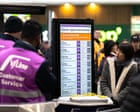
The disruption began around four in the morning, sending immediate shockwaves through systems that most Australians assume are completely separate from standard consumer phone plans. The most visible collapse occurred in public transport. Victoria’s entire V/Line regional train network ground to a halt, leaving thousands of commuters stranded at stations during the morning rush hour. Train drivers could no longer communicate with the central control room, a safety violation that legally and operationally prevents any locomotive from moving. Concurrently, regional rail routes in New South Wales, including the Southern Highlands and Hunter lines, ceased operations due to the same external communications failure.
At the exact same time, businesses found themselves unable to process card payments as EFTPOS terminals, heavily reliant on Telstra’s cellular backend, went dark. Most terrifyingly, police forces in Western Australia and emergency management agencies nationwide had to issue urgent public warnings because people using Telstra devices could not connect to Triple Zero.
The immediate corporate response followed a familiar, well-rehearsed script. Telstra issued an apology, suggested that users try restarting their phones, and gradually updated the public on restoration percentages. This superficial framing treats the event as an isolated incident, an unpredictable piece of bad luck managed by diligent engineering teams.
The truth is far more structural. This was an entirely predictable consequence of a regulatory environment that allows vital public utilities to rely unconditionally on private, profit-driven telecommunications infrastructure without mandatory, hardwired fail-safes.
The Illusion of Redundancy in Critical Rail Safety
To understand how deep this rot goes, look at the rail transport sector. The complete suspension of Victoria's V/Line network demonstrates an incredible vulnerability in how modern public transit systems are designed. For decades, trains relied on dedicated, proprietary radio networks or hardwired signaling systems owned and operated by the rail companies themselves. These systems were expensive to maintain, but they were isolated from the public internet and consumer traffic.
In the push to modernize and cut capital expenditure, infrastructure managers shifted critical communications to commercial cellular networks. V/Line drivers depend on Telstra’s network to maintain a constant data and voice link with control centers. When that commercial network drops, the safety net vanishes.
This is not a matter of convenience. It is a strict regulatory requirement that drivers must have immediate, reliable communication lines to report track obstructions, mechanical failures, or signaling discrepancies. Without that link, the trains are blind.
The core vulnerability here is the lack of multi-carrier roaming for industrial systems. When a consumer mobile phone loses reception from one carrier, it can sometimes latch onto another for emergency purposes. Yet, the high-tech, multi-million dollar communication suites installed inside regional trains were tied exclusively to a single provider's network architecture. There was no automated fallback to switch the entire fleet over to Optus or Vodafone when the primary connection failed.
Relying on a single commercial entity for the safety-critical operations of a state’s mass transit network is a profound failure of engineering risk management. The economic savings realized by outsourcing this infrastructure to a commercial carrier are continually wiped out by the staggering economic costs of total network shutdowns.
Emergency Calls and the Failure of Network Fallbacks
The most critical failure of the entire episode involves the breakdown of the emergency call system. Under Australian telecommunications law, every mobile phone must be able to route a emergency call through any available network, regardless of which carrier provides the user's SIM card. If a Telstra customer is in an area with no Telstra signal but strong Optus coverage, a Triple Zero call should seamlessly hop onto the competitor's tower.
During this outage, that system failed to protect thousands of citizens. When a carrier experiences a deep core network failure rather than a simple tower malfunction, the user’s phone often believes it is still connected to a valid network. The phone displays signal bars and tries to authenticate with its home network, but the backend infrastructure is unable to process or pass the call forward. Because the handset thinks it is successfully talking to its native network, it does not trigger the emergency roaming mechanism to find an alternative carrier.
This technical blind spot left vulnerable individuals holding phones that claimed to have service, yet were entirely incapable of completing a call for help. Police and emergency services were forced to tell citizens to find a neighbor, use a landline, or seek out Wi-Fi calling.
This advice ignores reality. The copper landline network has been systematically dismantled over the last decade, replaced by fiber and fixed-wireless systems that stop working during power outages or local network failures. Expecting an elderly resident or someone experiencing a medical emergency to wander the streets looking for an unimpacted neighbor is a systemic policy failure.
The government and telecommunications regulators have known about this architectural flaw for years. It was thoroughly exposed during previous mass outages, yet no definitive technical standard has been mandated to force devices to immediately drop connection and roam to another network if a core data pathway is unresponsive for more than a few seconds.
The Cashless Economy Meets a Single Point of Failure
The financial fallout from the outage highlight another risk, the forced march toward a completely cashless economy. Over the past decade, both commercial banks and government policies have heavily discouraged the use of physical currency. Businesses have responded by adopting compact, cellular-based EFTPOS terminals that allow transactions to happen anywhere.
When the network failed, the retail economy stalled. Small businesses, cafes, independent grocers, and transport operators were forced to turn customers away or rely on an honor system that is unsustainable for modern commerce. Payment processors like Tyro confirmed that their mobile terminals could not reach the banking servers because the underlying cellular data streams were broken.
+-------------------------------------------------------------------------+
|                    The Anatomy of a Systemic Outage                    |
+-------------------------------------------------------------------------+
|                                                                         |
|  [Core Network Failure]                                                 |
|          │                                                              |
|          ├──► [Handsets Stay Latched] ──► Triple Zero Fails to Roam     |
|          │                                                              |
|          ├──► [Driver Communications] ──► Regional Rail Grinds to Halt  |
|          │                                                              |
|          └──► [Cellular Data Streams] ──► EFTPOS Terminals Deactivated  |
|                                                                         |
+-------------------------------------------------------------------------+
This presents a clear economic hazard. Cash acts as a decentralized, offline buffer system. When electronic systems fail, physical money continues to move goods and services without requiring a single byte of data to traverse an underwater cable or a data center switch. By aggressively eliminating cash infrastructure, society has removed its own economic shock absorbers.
The standard corporate response to these transaction failures is to tell merchants to connect their terminals to local Wi-Fi or fixed broadband connections. But in regional Australia, that fixed broadband often relies on the exact same underlying backhaul fiber owned and operated by the very company experiencing the outage. The separation between a mobile network and a fixed network is frequently an illusion maintained by branding, underneath the surface, they share the same physical cables, routing hubs, and vulnerabilities.
Market Dominance and Regulatory Inaction
The structural reason Australia finds itself in this position is the unchallenged market dominance of a single provider combined with toothless regulatory oversight. Telstra enjoys a vast geographic monopoly across much of regional and rural Australia. For millions of citizens and thousands of critical infrastructure providers, there is no viable alternative carrier. This lack of true market competition reduces the financial incentive for the company to invest heavily in deep, expensive network redundancies that remain idle until a catastrophe occurs.
When an organization holds a near-monopoly over the primary communication lines of a continent, its internal operational errors cease to be private corporate matters. They become matters of national security. Yet, the Australian Communications and Media Authority and successive federal governments have consistently treated these events with kid gloves. Post-incident investigations typically result in bureaucratic reports, vague promises of infrastructure upgrades, and small fines that represent a rounding error on a major corporation's balance sheet.
True resilience requires enforcing structural separation and mandatory interoperability. If a private telecommunications provider wants to bid for lucrative government contracts to run rail communication networks, emergency services backends, or public utility systems, they must be legally compelled to build those systems with automatic cross-carrier redundancy. If one network goes down, the traffic must instantaneously shift to a competitor's infrastructure at the hardware layer, without requiring manual intervention from a user or a train driver.
The current system allows telecommunications executives to externalize the financial risks of their network architecture while pocketing the profits of a digitized society. The economic losses of stranded commuters, aborted retail sales, and delayed emergency responses are borne entirely by the public and small business owners. Until the regulatory framework shifts the financial liability of these infrastructure failures entirely onto the carriers themselves, nothing will change. The next national outage is not a matter of if, but when, and the consequences could easily move from economic chaos to preventable loss of life.