Two in the morning smells like stale coffee, damp wool, and the sharp metallic tang of fluorescent lights humming over linoleum floors.
If you have ever stood inside a municipal counting center long after the television anchors have gone home and the campaign banners have been rolled into cardboard tubes, you know that democracy rarely looks like a parade. It looks like cardboard boxes sealed with blue tamper-evident tape. It looks like poll workers rubbing bloodshot eyes while mechanical optical scanners swallow thousands of heavy cardstock sheets, one rhythmic thwack at a time.
Right now, in the gray limbo between election night and official certification, that rhythmic thwack is the only sound that matters.
For days, the headlines have told a story of suspended animation. A dead heat. A city holding its breath while pundits stare at spreadsheets and argue over margins thinner than a coat of paint. Yet beneath the surface of that apparent stalemate, something quiet and decisive is shifting. Political analysts looking closely at the remaining uncounted batches—the mail-in envelopes dropped off in the final hours, the provisional ballots cast by commuters and shift workers, the late-arriving precincts from densely packed neighborhoods—see a clear trajectory forming.
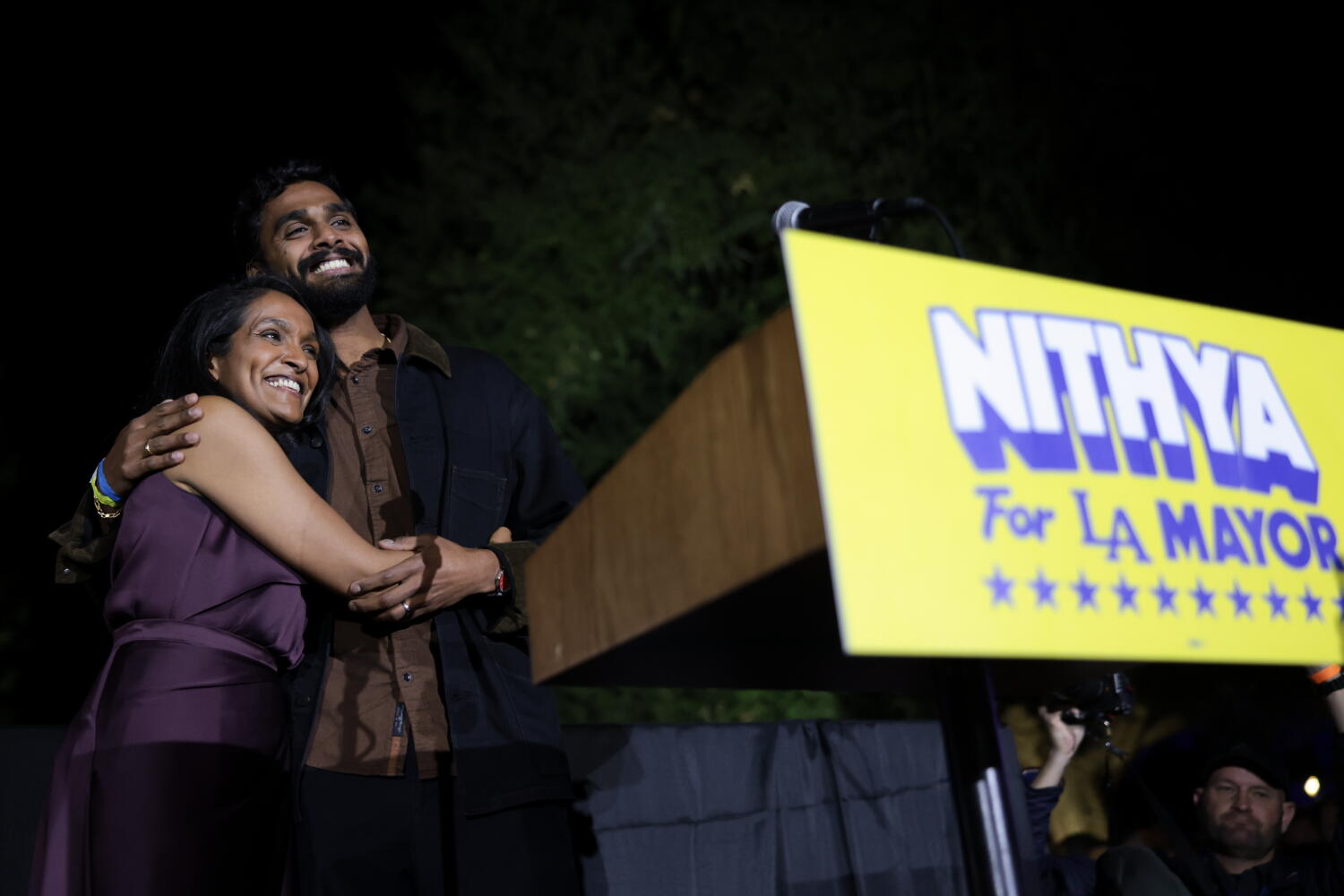
Raman is standing on the edge of the mayor's office.
To understand why, you have to stop looking at the scoreboard as a static photograph and start seeing it as a moving river. Most people watch election returns the way they watch a basketball game, assuming that whoever leads at halftime holds the natural momentum. Elections do not work that way. They are not single contests; they are several distinct elections happening simultaneously, separated by how and when people choose to cast their votes.
The Architecture of a Late Surge
Consider a hypothetical voter—let us call her Maya—to see how this invisible machinery actually functions.
Maya works double shifts at a downtown hospital. On Tuesday morning, while early in-person voters are already queuing outside elementary school gymnasiums, she is finishing a twelve-hour rotation. By the time she catches the bus home, feeds her kids, and realizes the polls close in forty minutes, standing in a ninety-minute precinct line is impossible. Instead, at 6:45 PM, she walks three blocks to a metal drop box outside the public library, slides her signed mail-in ballot through the slot, and goes home to sleep.
Maya’s vote is completely legal. It was cast before the deadline. Yet on election night, when the first wave of numbers flashes across cable news chyrons at 8:05 PM, Maya does not exist in the data.
Her envelope sits inside a locked canvas bag. Before a scanner ever reads her choice for mayor, election clerks must transport that bag under bipartisan supervision, slice open the outer envelope, verify that her signature matches the one on file with the registrar, flatten the folded paper so it does not jam the rollers, and feed it into the machine. That process takes days, not minutes.
And Maya is not an anomaly. She is a demographic pattern.
Across urban elections over the past decade, a consistent behavioral divide has hardened into political law. Voters who cast their ballots early in person or show up at precincts on Tuesday morning tend to be older, wealthier, and more likely to favor established, status-quo candidates. Voters who utilize drop boxes on the final day, mail their ballots during the final forty-eight hours, or cast provisional ballots after moving apartments tend to be younger, working-class, renters, and disproportionately aligned with reform-minded challengers.
When analysts examine the uncounted pools still sitting in county warehouses, they are not guessing in the dark. They are looking at geographic origin codes and ballot-type breakdowns. They know which neighborhoods generated those late envelopes. They know how those exact precincts voted in the initial batches already tabulated. When a candidate is trailing by a razor-thin margin—say, a single percentage point—while tens of thousands of ballots remain uncounted in neighborhoods where that candidate is winning sixty-two percent of the vote, the outcome is no longer a mystery. It is simple arithmetic waiting for the clock to catch up.
Why the Delay Feels Like Suspicion
Wait.
That pause you just felt—that nagging, uncomfortable itch in the back of your mind asking why modern technology cannot count every piece of paper before midnight—is completely human. When you can transfer money across continents in three seconds on a smartphone, waiting four days to find out who will run your city feels broken. Worse, in an era where trust in institutions has been worn down to raw nerve endings, delay breeds paranoia.
It is easy to confuse slowness with incompetence, or worse, manipulation. Even seasoned observers feel a spike of anxiety when lead changes happen at 4:00 PM on a Thursday, days after the campaign rallies have ended. The brain craves closure. When the scoreboard flips out of sight, behind badge-access doors, people naturally wonder what happened in the dark.
Think of the counting process not like a digital bank transfer, but like an airport security line during a holiday rush. The passengers are all there before the flight leaves, standing inside the terminal. The plane is not taking on secret passengers after takeoff. The bottleneck exists because every single person has to step through a human verification checkpoint—checking IDs, inspecting bags, resolving flags—before they are cleared to board.
If election officials prioritized speed over verification, they could dump every unverified envelope into high-speed tabulators by midnight and declare a winner before morning coffee. The price of that speed would be chaos: duplicate ballots, mismatched signatures, unverified provisional voters, and lawsuits that would drag on for months. The slowness is not a flaw in the system. The slowness is the security system.
The Weight Sitting on the Desk
Lost inside the horse-race obsession over percentages and precinct maps is what actually happens the morning after the final batch is certified. Winning an election by a fraction of a percent does not give a new mayor a honeymoon. It hands them a fractured city and an inbox overflowing with emergencies that do not care who won the late vote.
A mayor’s job is brutally unglamorous. Beyond the ribbon cuttings and speeches sits the quiet, grinding machinery of urban survival.
There is the transit agency facing a structural budget deficit that threatens to cut late-night bus routes—the exact routes workers like our hypothetical nurse Maya rely on to get home. There is the zoning board deadlocked over whether to approve mid-rise apartment developments in neighborhoods where teachers and firefighters can no longer afford rent. There is the police overtime budget spiraling past projections while response times for non-violent emergencies stretch past forty minutes.
When Raman steps into that office, assuming the late ballot projections hold, the margin of victory will double as a warning label. Nearly half the electorate wanted someone else. Every decision—from appointing a police chief to renegotiating municipal union contracts to deciding where emergency shelter beds get placed—will be scrutinized by skeptics looking for proof that the late surge was a mistake.
Yet there is another side to winning on the strength of late, hard-won votes.
It creates an unmistakable debt. A candidate carried across the finish line by last-minute drop-box voters, renters, and shift workers knows precisely who put them behind the desk. Those voters did not show up out of habit or civic nostalgia. Many of them stood in rain-slicked parking lots at dusk or hunted down stamps at corner bodegas because they felt the city was slipping out from under them.
The Final Stack of Envelopes
Back in the counting room, the fluorescent lights never flicker.
A clerk in a gray cardigan picks up another blue-taped box from a wooden pallet, cuts the seal with a yellow utility knife, and lifts out a neat stack of cream-colored envelopes. Outside, rush-hour traffic is already building on the avenues, commuters staring through windshields at damp asphalt, checking their phones for alerts that have not quite arrived yet.
Inside, the optical scanner whirs to life again. Thwack. Thwack. Thwack. One sheet at a time, the invisible city makes itself heard.



