The water does not knock before it enters.
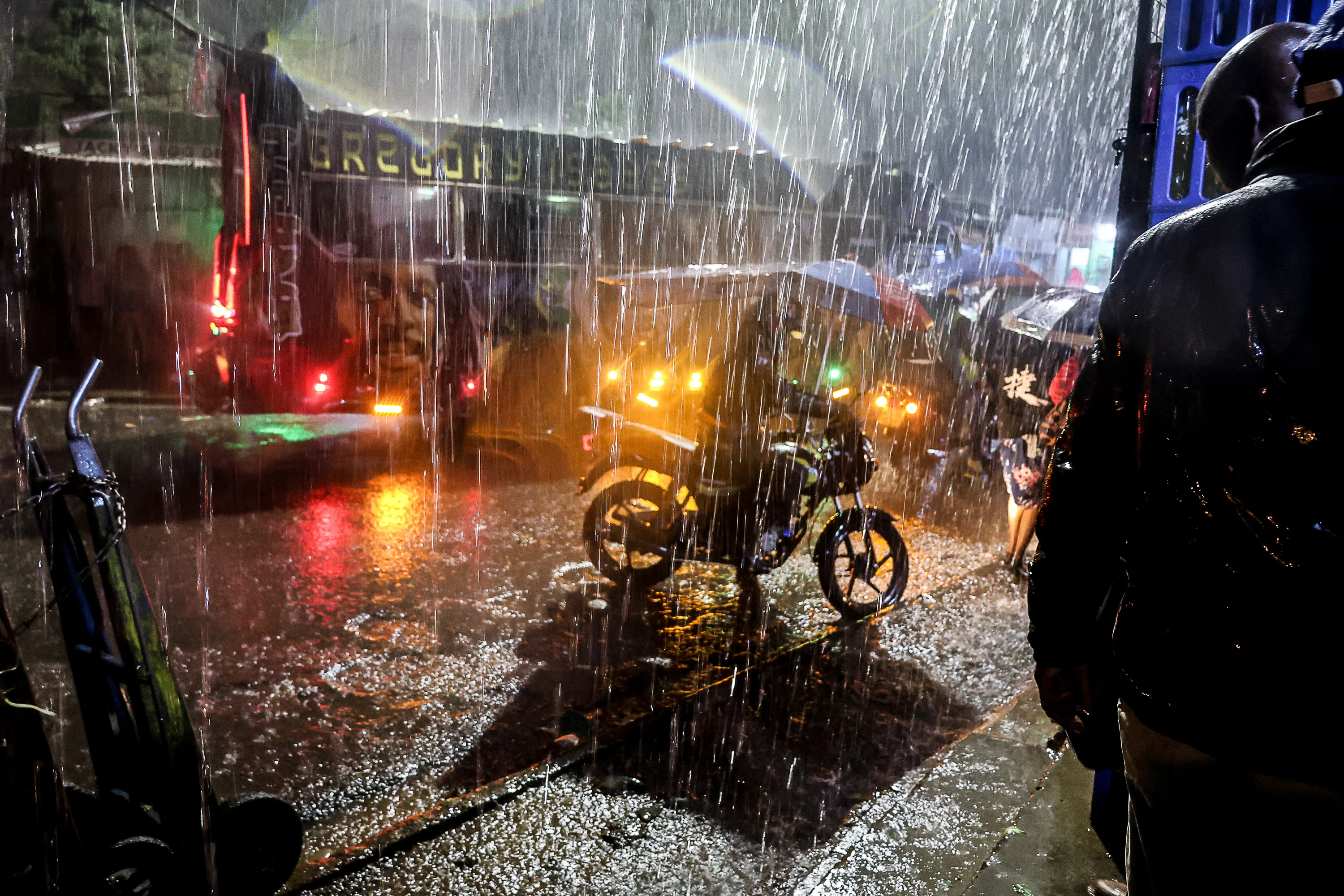
If you have ever stood in a ground-floor hallway at three in the morning while a tropical downpour hammers the roof like gravel, you know the sound that precedes the panic. It is not the roar of a breaking dam. It is a soft, insistent hiss. It is the sound of brown, silt-heavy rainwater bubbling up through a floor drain, curling quietly around the legs of a dining table, and soaking into the bottom hem of your trousers before your brain even registers that the street outside has become a river.
Ask anyone who has lived through a severe El Niño cycle along the Pacific coast—from the steep, clay-choked hillsides of coastal Peru to the sprawling lowland deltas of Southeast Asia and the flood-prone valleys of California—and they will tell you that the real terror of extreme weather is not the storm itself. Storms end. Clouds break. What lingers is the mud that turns a living room into an excavation site, the ruined family photographs swollen to twice their thickness, and the gnawing dread that arrives every time the meteorological charts turn a deeper shade of crimson.
For decades, our answer to this seasonal dread has been concrete. We poured millions of tons of gray cement into riverbanks, built towering seawalls, straightened meandering creeks into rigid drainage channels, and laid down endless miles of impermeable asphalt. We treated water like an invading army to be blocked at the gates.
And for a while, it worked. Until the oceans warmed, the atmospheric rivers grew heavier, and the concrete began to fail.
Today, a radically different kind of defense is taking root across vulnerable coastlines and river basins. Journalists and municipal planners have started calling them a "Green Army"—millions of mangroves, vetiver grasses, native reeds, and newly restored wetland buffers planted by hand, spade by spade, by local residents, biologists, and civic volunteers. They are soft. They sway in the wind. You can snap a single stem between your thumb and forefinger. Yet, as climate models warn of increasingly volatile El Niño warming events, this living wall is proving to be far stronger than the gray infrastructure we spent a century building.
The Trap of the Gray Wall
To understand why a cluster of marsh grass can outmuscle a reinforced concrete levee, you have to look at how water actually behaves when the sky opens up.
Consider a hypothetical coastal town—let’s call it San Mateo del Mar—sitting at the mouth of a narrow river valley. Twenty years ago, city engineers noticed that heavy seasonal rains were routinely flooding the town's historic market square. Their solution was textbook twentieth-century engineering: they encased the riverbanks in smooth concrete walls and paved over the marshy floodplain upstream to build a new commercial district.
On paper, the problem was solved. In reality, they had built a high-speed waterslide aimed directly at their own front door.
When an El Niño event warms the central and eastern Pacific Ocean, it shifts the jet stream, pulling massive plumes of moisture toward coastlines that are often dry for the rest of the year. When six inches of rain fall in four hours onto San Mateo del Mar’s newly paved hills, the water has nowhere to soak in. Asphalt cannot drink. Concrete cannot breathe. Instead, every single drop rushes downhill simultaneously, accelerating down the smooth concrete river channel like a bullet through a barrel. By the time that wall of water reaches the town center, it has gained enough velocity to overtop the seawalls, rip up roadbeds, and drown neighborhoods in minutes.
We got flood control completely backward. We tried to fight a liquid force with rigid, unyielding barriers, forgetting a basic law of physics: energy cannot be destroyed; it can only be dispersed or redirected. When you block water with a flat wall, you simply push its destructive energy onto your neighbor downstream—or wait until the water rises high enough to spill over the top.
I remember standing on a bridge in northern Peru during the coastal El Niño of 2017, watching a concrete retaining wall buckle under the pressure of a swollen river. The sound was like a gunshot. Within sixty seconds, an entire block of brick homes was knee-deep in churning water. Ten miles down the same river, however, an old agricultural cooperative had refused to clear a dense, half-mile belt of native reeds and carob trees along their riverbank. While the concrete upstream shattered, those tangled trees bent nearly horizontal under the current, trapping tons of floating debris and slowing the water to a gentle, manageable creep. The fields behind them stayed dry.
Nature, it turns out, does not build walls. It builds sponges.
Inside the Living Sponge
What exactly is this "Green Army" doing beneath the surface that human engineering struggles to replicate?
If you pull a single stalk of vetiver grass—a deep-rooted perennial native to India that is now being deployed across flood zones from Central America to the Philippines—out of the earth, the secret reveals itself immediately. Above ground, it looks like an ordinary clump of tall, stiff green blades. Below ground, it is an engineering marvel. Within a single year, vetiver sends down a dense, vertical curtain of roots reaching ten to twelve feet deep into the soil. Unlike tree roots, which spread outward and can topple in high winds, vetiver roots grow straight down, weaving through the dirt like steel rebar in reinforced concrete.
When an El Niño storm unleashes torrential rain onto a hillside planted with contour lines of vetiver, three things happen at once. First, the stiff blades above ground act like a million tiny speed bumps, catching rushing sheets of rainwater and forcing them to slow down. Second, that slowdown gives gravity time to pull the water downward, following the vertical pathways carved by the roots deep into the underground water table. Third, the root web binds the soil together with a tensile strength roughly one-sixth that of mild steel, preventing the catastrophic mudslides that routinely bury mountain villages during extreme wet seasons.
Move down from the hills to the coast, and the infantry changes, though the strategy remains the same. Here, the frontline soldiers are mangroves.
With their gnarled, stilt-like prop roots arching out of tidal mudflats, mangrove forests look chaotic, almost impenetrable. To a coastal developer, they often look like wasted real estate. To a storm surge, they are a labyrinth of friction. Researchers studying coastal protection have found that a healthy mangrove belt just one hundred meters wide can reduce the height of incoming waves by up to sixty-six percent. Every tangled root forces the surging ocean to split, swirl, and lose momentum. By the time the water reaches the homes behind the forest, its teeth have been pulled.
The Muddy Hands Behind the Movement
None of this happens automatically. Ecosystems that took centuries to evolve were cleared in decades for shrimp farms, housing developments, and industrial ports. Rebuilding them before the next major El Niño peaks requires a race against the calendar—and an army of human hands willing to get very dirty.
Take Elena, a composite figure based on dozens of community organizers working across coastal watersheds today. Five years ago, Elena was a schoolteacher who watched her classroom turn into a relief shelter after unseasonal floods washed out the only highway connecting her town to the regional hospital. Frustrated by endless municipal debates over multi-million-dollar drainage projects that never broke ground, she joined a local watershed coalition.
Every Saturday morning at dawn, while the air is still cool and heavy with salt mist, Elena and forty neighbors wade into the gray, knee-deep silt of the estuary. They carry bundles of mangrove propagules—long, cigar-shaped seedlings harvested from healthy trees nearby—and press them firmly into the mud at precise intervals.
It is unglamorous, exhausting work. Mosquitoes swarm in the stagnant air. The mud pulls at your boots with a suction that threatens to wrench your ankles. There are no ribbon-cutting ceremonies, no gleaming brass plaques, and no immediate gratification. A newly planted mangrove seedling looks pathetic against the vast, gray expanse of an incoming tide. For the first six months, you walk away wondering if the next big swell will simply wash your morning’s labor back out to sea.
I have felt that exact doubt myself while planting native sedges along an eroded creek bank after a winter washout. You look at a two-inch green shoot sticking out of raw, scarred earth, and then you look at the high-water mark ten feet up the trunk of a surviving sycamore tree. The math feels absurd. You feel like you are trying to stop a freight train with a toothpick.
Why Skepticism Is Reasonable—And Where It Falls Short
Let’s be honest about the limitations, because pretending nature is a magic wand does nobody any favors.
Green infrastructure is not an instant fix. You cannot plant a forest on Tuesday to stop a flood arriving on Friday. Mangroves take three to five years to establish a root network dense enough to blunt a major storm surge. Wetland restoration requires land—often prime agricultural or waterfront land that municipalities have to buy back or negotiate over for years. And in densely packed urban centers where skyscrapers sit ten feet from the water's edge, there simply isn't enough room to plant a wide buffer zone. In those places, we still need pumps, storm drains, and seawalls.
Critics also point out that living defenses are vulnerable to the very climate extremes they are meant to fight. If an El Niño cycle brings a brutal drought to one region before swinging into torrential rain the next year, young saplings can wither and die before they ever get the chance to hold back a flood.
Yet, when you look at the ledger over ten or twenty years, the economics become impossible to ignore. A concrete seawall begins degrading the moment it dries. Saltwater corrodes its internal steel; shifting ground cracks its foundation; rising sea levels eventually render its height obsolete, forcing taxpayers to spend millions raising it again.
A living shoreline does the exact opposite. It self-repairs after a storm. It traps sediment and organic matter, naturally raising the elevation of the coastline over time to keep pace with rising seas. While concrete depreciates, a forest appreciates. Every year, its roots grow deeper, its canopy grows wider, and its capacity to absorb carbon and shelter juvenile fish—reviving local fisheries in the process—multiplies.
The Shift From Control to Collaboration
What we are witnessing in these muddy estuaries and terraced hillsides is more than a clever environmental trend. It is a quiet revolution in how human beings relate to the planet we inhabit.
For generations, modern civilization operated under the delusion that we stood outside of nature, engineering our way around its inconveniences. We drained the swamps because they bred mosquitoes; we paved the creeks because they wandered; we stripped the hillsides because timber paid the bills. When El Niño arrived—a natural, ancient rhythm of the Pacific Ocean that Indigenous cultures in South America recognized and adapted to centuries ago—our rigid, paved-over cities shattered like glass.
The "Green Army" represents an admission of humility. It acknowledges that water wants to spread out, slow down, and soak in—and that our smartest move is to give it the space and the botanical partners to do exactly that.
Consider what happens next when a community makes this shift. The floodwaters don't vanish, and the storms don't stop coming. El Niño will continue to warm the Pacific, and the skies will still unleash their fury. But when the rain hits a watershed armored with deep-rooted grasses, restored floodplains, and thick coastal mangroves, the panic changes into something manageable. The water rises slowly instead of surging. It clears the streets in hours instead of days. And the mud stays anchored in the roots where it belongs, rather than drying on someone’s living room floor.
What Remains After the Rain
Three years after Elena and her neighbors began wading into that gray estuary at dawn, another heavy winter storm rolled off the ocean. The rain fell steadily for thirty-six hours, swelling the river until it spilled over its banks and pressed hard against the edge of town.
Residents stood on their porches in yellow raincoats, flashlights cutting through the dark, watching the water line creep up the street. They braced for the familiar, sickening sound of bubbling drains and splintering wood.
It never came.
Half a mile away, out in the pitch black of the tidal flats, fifty thousand young mangrove trees were leaning into the current, their tangled roots locking arms beneath the surface, catching the surge and bleeding away its fury drop by drop. When the sun finally broke through the clouds the following morning, the town’s market square was wet, littered with fallen leaves and a few stray branches—and entirely intact.
Down by the water's edge, covered in a fresh layer of rich river silt, the green shoots stood upright in the morning light, already drinking in the sun.