Silence.
In financial markets, silence is rarely neutral; it is a mirror in which every trader, homebuyer, and small business owner sees their own anxiety reflected back at twice its normal size. When a central bank leader steps up to a podium and offers no clear signal on an upcoming October interest rate decision, the headlines move fast and sound clinical. Rate path uncertain. Policy options open. Data dependent. To a casual reader scrolling past a ticker feed, it looks like a routine non-event.
It isn't.
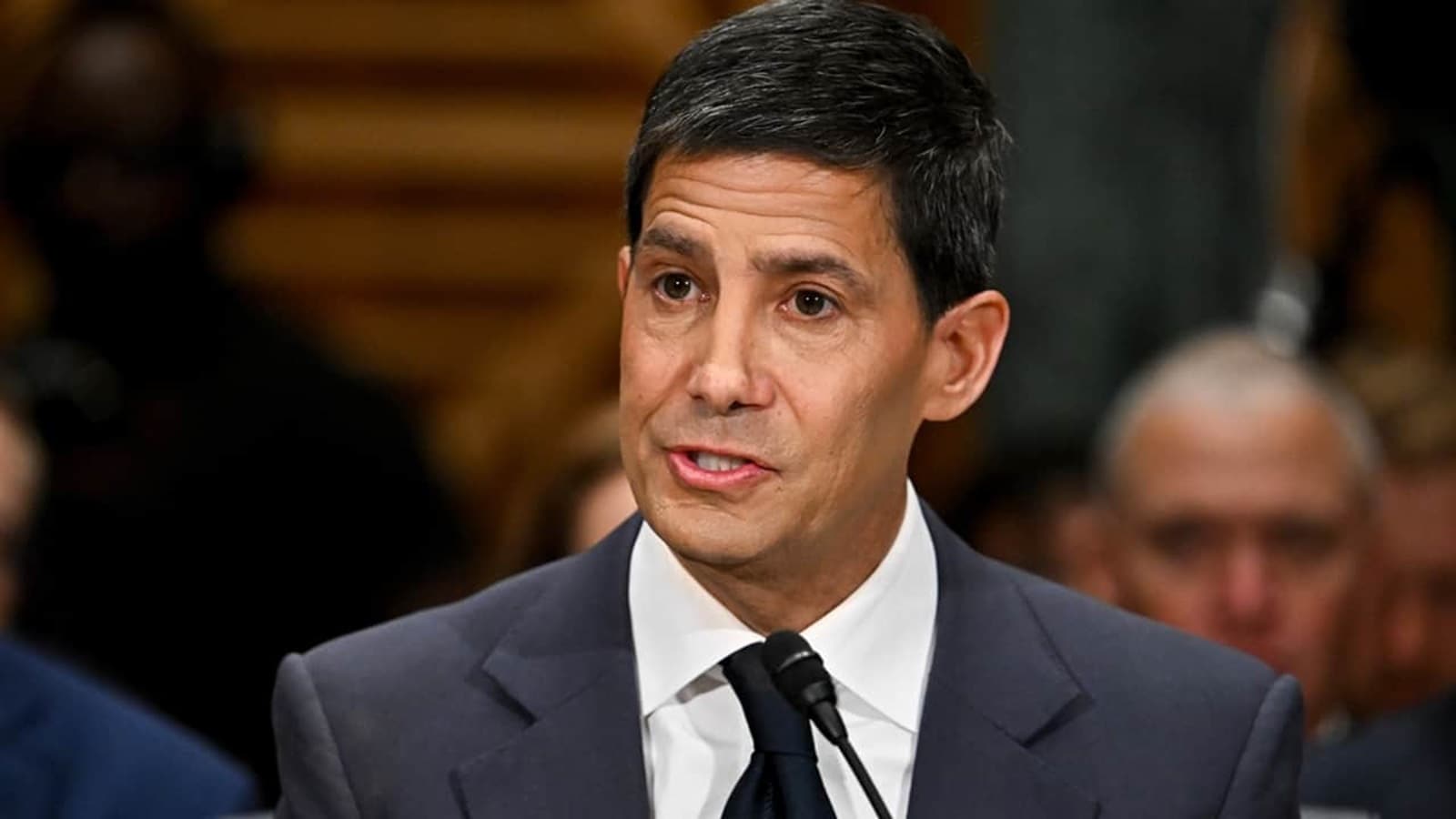
Interest rates are not abstract levers pulled inside a marble building in Washington. They are the invisible gravity pressing down on kitchen tables across the country. They decide whether a family can afford to refinance a mortgage after a medical bill, whether a machinist in Ohio keeps her overtime hours when a factory pauses equipment upgrades, and whether a bakery owner in Denver dares to sign a five-year lease on a second oven. When Federal Reserve Chair Kevin Warsh declines to telegraph a move ahead of an October meeting, millions of people are forced to make irreversible choices in dim light.
I have spent years watching markets price in certainty that does not exist. The hum of a trading floor at three in the afternoon has a distinct, electric rasp—dozens of monitors glowing amber and slate blue, keyboards clicking like rain on tin, voices dropping an octave whenever a sentence from a central banker sounds slightly less rehearsed than the last. In those rooms, traders treat ambiguity like a riddle to be solved before the next second ticks by. Out in the real world, ambiguity is not a puzzle. It is a weight on your chest when a renewal notice sits unopened on the counter.
Let me be upfront about how we will walk through this. To make sense of what an undecided October rate path actually means, I am going to use a few hypothetical people and everyday scenes to show how monetary policy ripples outward—and I will tell you plainly whenever I am sketching a hypothetical or using a metaphor so you never mistake a story for a ledger entry. The underlying premise itself—that the Fed chair gives no clear directional signal ahead of an October rate decision—comes straight from the core story we are examining, and from there we build outward using real economic mechanics, historical memory, and plain human stakes.
When Nothing Is Promised, Everything Is Priced
Consider a hypothetical small-business owner named Elena—again, she is a composite character created to illustrate how rate uncertainty works on the ground, not a real person from a news dispatch. Elena runs a regional cold-storage and logistics outfit that hauls produce and packaged goods between distribution hubs. Her trucks are aging. Two of them need major transmission work before winter frost sets in, and she has been eyeing a used pair that would keep her routes running on schedule.
To buy those trucks, Elena needs a commercial loan. A shift of even a fraction of a percentage point in borrowing costs changes her monthly cash flow enough to eat up her buffer for tires, diesel spikes, or a slow week at the docks. When a Fed chair refuses to tip his hand ahead of an October decision, the lender on the other end of Elena's phone call does not suddenly become generous. Banks dislike fog just as much as borrowers do. They widen spreads, tighten terms, or quote rates that assume the worst-case scenario rather than the hopeful one.
Think of interest rates like the water level in a harbor. A metaphor here helps: if the tide chart is blank and the harbor master refuses to say whether the swell is rising or falling, captains do not steer blindly at full speed. They hold near the pier, trim cargo, or pay extra for insurance. Money behaves the same way. Capital is skittish when the price of borrowing tomorrow is an open question.
Why does a central bank chair hold back a signal in the first place? Critics sometimes imagine it as theatrical secrecy, a deliberate game of keep-away with Wall Street. Sometimes, though, restraint is the only honest response to a messy picture. Inflation rarely moves in a straight line, labor markets send mixed signals across different regions and industries, and committing publicly to an October cut or hike too early can box policymakers into a corner if fresh data arrives looking nothing like last month's forecast.
Still, honesty at the podium does not erase the cost in the living room. A household looking to buy a starter home does not care about academic debates over policy optionality when a locked rate expires in three weeks. A person carrying credit card debt or a variable-rate line of credit feels every basis point in real dollars that cannot go toward groceries or savings.
The Ghost of Past Cycles
History does not repeat on cue, yet people who live through rate cycles carry muscle memory long after the press conferences end. Over the past several decades, whenever the Federal Reserve has stood at a crossroads—whether pivoting toward easing after a bout of inflation or holding firm while growth cooled—the weeks right before a decision have felt like standing on thin ice near the shore. You can hear the creak, even if you cannot see the crack yet.
Markets hate surprises, yet they also grow brittle when they over-interpret every syllable. A single pause in a speech, a choice between saying "balanced risks" and "attentive to incoming data," can send bond yields twitching and equity futures swinging before lunch. That sensitivity is a symptom of how deeply modern finance is wired to the cost of money. Nearly every asset—from a Treasury note to a suburban townhouse—gets valued against a benchmark rate. When that benchmark lacks a clear October trajectory, buyers and sellers argue over the ruler itself.
But the real problem lies elsewhere: financial markets can adjust their positions in milliseconds, while human lives move on calendars, leases, and paychecks.
A hedge fund manager who guesses wrong on an October rate move can unwind a trade, take a hit on a quarterly statement, and try again next week. A family signing a twelve-month apartment lease or taking on a five-year auto loan does not get a do-over in milliseconds. Their commitments are sticky. Their budgets have edges.
This is where I have to admit something that financial commentators often gloss over because it makes them sound less certain than they want to appear. Predicting near-term interest rate moves—especially when the chair himself is withholding a signal—is genuinely hard. Even seasoned economists with teams of PhDs and mountains of data get the timing wrong. Anyone who tells you they know with absolute certainty what happens next when the central bank leaves the door unlatched is selling confidence, not clarity.
What we can do instead is pay closer attention to the mechanics that govern the decision. Central bankers watch inflation trends, employment resilience, financial conditions, and broader economic momentum. When signals conflict, keeping options open is often a way of saying: we are watching the same crosswinds you are, and we refuse to pretend we know which gust wins until the numbers settle.
Reading Between the Lines Without Losing Your Mind
When a Fed chair offers no clear hint on an October rate decision, the temptation is to treat every word like tea leaves. Analysts dissect phrasing. Commentators hunt for hidden tells. Meanwhile, regular people end up feeling either left behind by jargon or whipsawed by competing hot takes.
Consider another hypothetical figure—let's call him Marcus, an early-career engineer paying off student loans while trying to save for a down payment. Again, Marcus is a fictional stand-in to illustrate everyday trade-offs, not a real person. When headlines shout that the rate path is unclear, Marcus might wonder if he should rush to lock in a financial product today or wait until after the October meeting to see if borrowing gets cheaper.
There is no single magic trick for Marcus, Elena, or anyone else staring at an uncertain rate calendar. Still, a few grounded habits keep noise from turning into panic:
- Separate headlines from your actual timeline. If you are not borrowing, refinancing, or rolling over debt in the next sixty days, an October rate decision matters far less today than your emergency fund and monthly cash flow.
- Stress-test your own numbers. Instead of betting your budget on a rate cut that might not arrive, ask whether your plan still holds if rates stay put or tick slightly higher.
- Watch the real economy, not just the drama. Job stability, wage growth, local housing supply, and your own debt terms shape your daily life more directly than intraday market swings.
Consider what happens next: once you stop treating central bank silence as a personal command to act immediately, you reclaim a small measure of agency. You stop reacting to every tremor in the bond market and start making decisions that fit your actual life.
The Invisible Stakes Behind a Quiet Podium
There is something almost surreal about how much weight a handful of sentences can carry. One afternoon, a chair speaks carefully, leaving October wide open. Across the country, coffee shops open at dawn, freight trains roll through quiet valleys, nurses finish night shifts, and parents check bank balances on their phones before breakfast. None of those people voted on monetary policy, yet all of them live inside its weather.
Monetary policy is often described as an art and a science, a delicate balance between keeping prices stable and supporting maximum employment. That description is accurate, if a little bloodless. In human terms, it is a constant tug-of-war between today's relief and tomorrow's stability. Move too fast to lower rates, and inflation can flare back up like embers under dry brush, eroding paychecks all over again. Hold rates too tight for too long, and businesses stall, hiring slows, and households that stretched to stay afloat begin to buckle.
When no clear October signal is offered, that tug-of-war is simply out in the open. The chair is refusing to hand out easy reassurance before the evidence is in. For people craving certainty, that refusal stings. For anyone who values a central bank that waits for real data rather than chasing market mood swings, it can look like discipline.
Both reactions are understandable. Money touches everything—shelter, work, dignity, freedom to plan a year ahead. When the price of money is left unsaid, it is natural to lean forward, strain to hear a whisper, and wonder what is waiting around the corner.
Evening falls over the city, streetlights flicking on one by one along avenues lined with parked cars and lit apartment windows, each one holding a family trying to build a steady life under a sky that never quite promises tomorrow's forecast.