Death used to have an address. It was a sterile, humming room in the back of a hospital, smelling faintly of bleach and institutional soup, where monitors beeped a monotonous rhythm until they didn't. We sanitized the transition. We handed dying people over to white coats and clinical efficiency, as if the end of a human life were simply a technical malfunction that doctors failed to fix.
Then came the silence.
When the monitors stopped, families were left standing in empty parking lots with cardboard boxes containing a dead person's shoes and a cheap watch. We won the war against sudden death through modern medicine, but in doing so, we lost the art of dying. We forgot how to sit still in a room where time was running out.
Enter the death doula.
A decade ago, the term would have drawn blank stares or nervous laughter at a dinner party. Today, high-profile figures, cultural icons, and A-list celebrities are quietly bringing death doulas into their inner circles. What was once whispered about as a morbid underground movement or a taboo side hustle has emerged into the daylight.
Why now? Why are people whose lives are defined by endless noise and flashing cameras suddenly seeking out guides for the quietest moment of all?
Consider the anatomy of a modern exit. When a person realizes their chapters are drawing to a close, the terror rarely stems from the abstract concept of eternity. The fear is granular. It is the panic of a cold room, the overwhelming paperwork, the strained conversations with exhausted relatives who do not know where to look. Modern medicine can manage pain, but it cannot hold a hand through the existential dread of a Tuesday afternoon.
That is where the doula steps across the threshold.
They are not doctors. They do not write prescriptions or diagnose ailments. Think of them as translators for the final stage of the human experience. They are professional companions, choreographers of comfort, and anchor points in a storm of grief.
When a well-known actor or a busy executive receives a terminal diagnosis, the instinct is often to retreat behind gated walls, surrounded by teams of attorneys and PR handlers. But isolation is a poor companion when the shadows lengthen. Celebrities, despite the armor of wealth and privilege, face the same universal terror as the rest of us. They want dignity. They want control. They want someone who is not afraid of the dark.
And so, the quiet inquiries begin. Confidential contracts are signed. A stranger with a calm voice and soft shoes enters the estate.
What happens behind those closed doors challenges everything we think we know about mortality.
Ask any experienced end-of-life guide what dying people talk about most, and you will not hear grand philosophical musings about the meaning of the universe. The questions are remarkably ordinary, and all the more heartbreaking for it.
Did I matter?
Will anyone remember the small things?
Can we turn off the overhead lights?
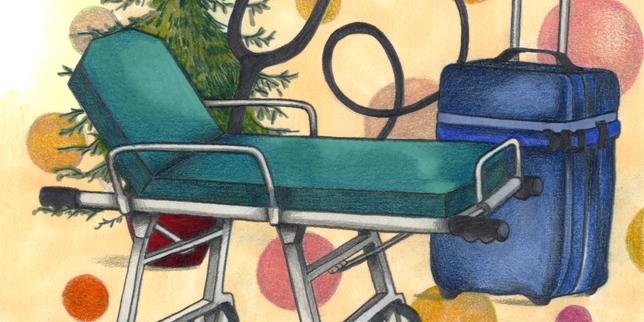
The dying are acutely sensitive to environment. Hospitals are built for efficiency, not peace. A death doula arrives with a toolkit that looks nothing like a medical cart. They bring fairy lights to replace glaring fluorescents. They bring essential oils, bluetooth speakers loaded with forgotten vinyl tracks from decades past, and, most importantly, permission.
Permission to be angry. Permission to cry. Permission to stop pretending that everything is fine when it is painfully, undeniably falling apart.
There is an invisible architecture to dying well. It requires pacing. It requires knowing when to clear the room so a husband and wife can share an unfiltered moment, and knowing when to crowd the bed with children and grandchildren who need to see that an ending can be soft.
Critics call it a luxury trend. They point to the rising fees and the celebrity endorsements as proof that society has found yet another way to monetize existential dread. They ask why we need to pay specialists for something humans used to handle naturally within tight-knit communities.
The criticism is fair, but it misses the point entirely.
We no longer live in tight-knit communities. We live in fractured, mobile, hyper-isolated bubbles. When a neighbor died fifty years ago, the women of the town washed the body and sat with the family. Today, most people do not even know the names of the people living on either side of their apartment door. The social fabric that once cushioned grief has worn threadbare. Death doulas are not a new invention; they are professional replacements for the village we abandoned.
We outsourced dying to institutions. Now, we are buying our way back to humanity.
The work is grueling. It requires an emotional resilience that defies normal human boundaries. To walk into a house day after day, knowing that every interaction brings you closer to a funeral, is a heavy burden. Doulas listen to regrets that span eighty years. They hold space for the ugly parts of human nature that emerge when the ego realizes it has run out of runway.
I remember sitting across from a veteran guide who described her first solo client. She was shaking so badly she could barely pour the tea. She thought her job was to fix things, to make the pain go away with soothing words and calm breathing exercises.
She learned quickly that you cannot fix an eclipse.
Her role wasn't to stop the sun from setting. Her role was simply to sit on the porch and make sure the person watching it didn't feel alone in the dark.
That distinction changes everything. It shifts the paradigm from medical management to human witness.
When an A-list celebrity hires a death doula, it signals a cultural shift. It breaks the final taboo. If someone whose entire life was built on illusion and perfection can look mortality in the eye and say, "I need help leaving," it gives permission for everyone else to drop the charade.
We are all terminal. Every single one of us is walking through a temporary gallery, looking at paintings that will eventually be packed away.
We spend decades learning how to build careers, how to buy homes, how to curate reputations and polish images. We take courses in leadership and financial planning and relationship management. Yet, when it comes to the final exam, we are handed a blank sheet of paper and told to improvise.
The rise of the death doula suggests we are finally growing tired of improvising in the dark.
Imagine walking into your own final room. The clutter is gone. The people who matter most are gathered close, not whispering in hushed, terrified tones, but sharing stories, laughing through their tears, remembering who you were before the illness took the stage. The light is warm. The music is low.
There is no rush.
That is what people are paying for. Not a brand, not a status symbol, but an anchor.
The trend will continue to grow. More training programs will open. More hospitals will hesitantly integrate these independent guides into their care teams. The stigma will continue to erode, replaced by the quiet realization that how we leave matters just as much as how we arrive.
The door at the end of the hall is waiting for all of us.
Until it opens, the best we can hope for is a steady hand to help us turn the knob, and someone willing to stay in the room until the lights go out.