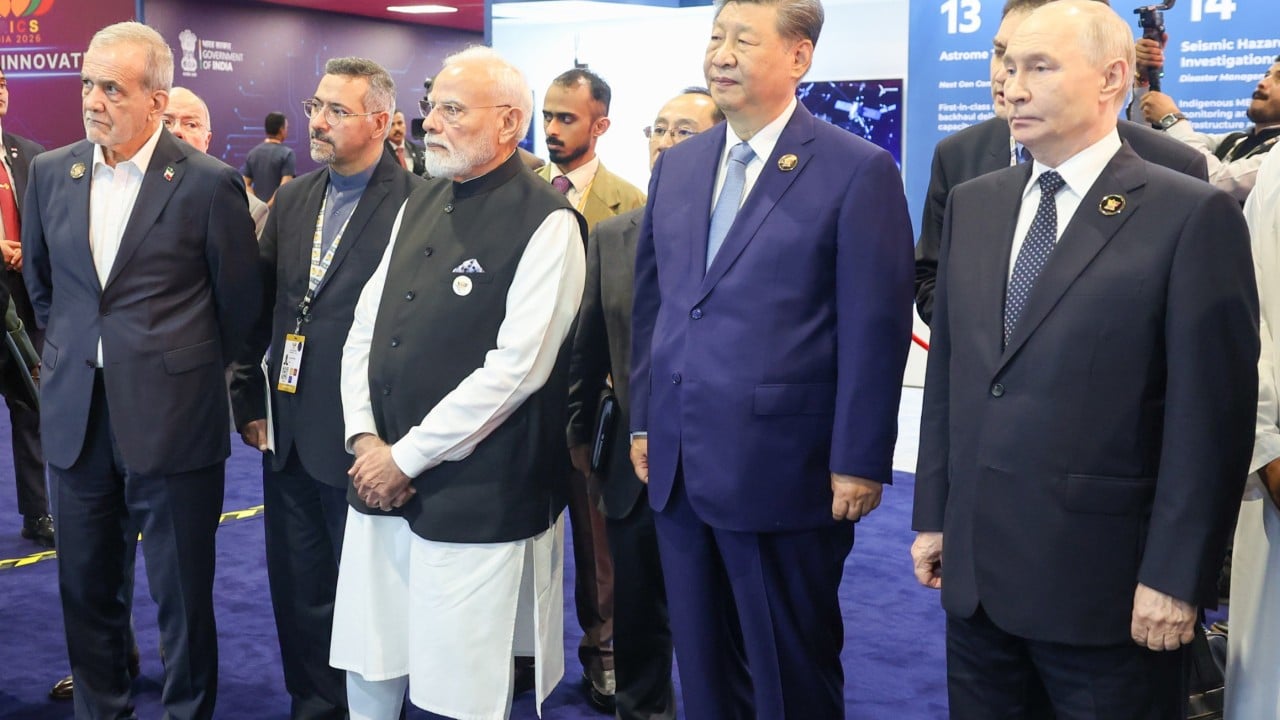
Cable news broadcasts love a good financial apocalypse narrative. Every few months, headlines roar about a new currency poised to dethrone the United States dollar overnight, triggering a dramatic collapse of American economic hegemony. Reality operates on a much slower, more pragmatic frequency. The expanded bloc spanning multiple continents is not staging an open monetary revolt. They are engaging in a calculated exercise of financial self-defense. By expanding local currency settlements, building alternative payment corridors, and encouraging bilateral trade agreements that bypass Western-controlled financial messaging systems, member states are quietly insulating their economies against future sanctions and excessive transaction costs.
Understanding why this shift matters requires stripping away the breathless rhetoric and looking closely at the plumbing of international finance. For decades, the greenback has held an unyielding monopoly on global commerce. Oil, commodities, and debt instruments are priced, settled, and cleared through American banks. This arrangement gives Washington extraordinary diplomatic and economic authority. If a country falls out of favor with the White House, access to the dollar-denominated financial network can be restricted or cut off entirely.
That weaponization of the global financial system changed calculations across developing economies long before recent summits formalized new dialogues. When foreign exchange reserves were frozen following geopolitical escalations in Eastern Europe, financial ministries from Beijing to Brasilia took meticulous notes. They realized that holding massive amounts of sovereign debt or routing routine trade payments through New York correspondent banks introduced structural vulnerability. The objective among developing nations shifted from challenging the dollar directly to building an insurance policy against it.
The Illusion of a Single Currency
Much of the public confusion stems from conflating two entirely different economic projects: replacing the global reserve currency and expanding local currency trade settlement.
Creating a single, unified BRICS currency remains a theoretical concept rather than a functioning policy. A currency union requires extraordinary macroeconomic alignment. Member states would need synchronized inflation rates, unified fiscal policies, completely open capital accounts, and a central monetary authority willing to act as a lender of last resort during economic panics.
Consider the sheer structural divergence within the bloc. China operates a massive manufacturing and exporting surplus supported by strict capital controls and a managed exchange rate. India maintains a different monetary framework with entirely separate capital mobility rules. Brazil and South Africa manage floating currencies shaped by commodity cycles and domestic fiscal pressures. Adding nations with severe economic instabilities or heavy international sanctions further complicates any serious proposal for a shared monetary unit.
No member government is willing to surrender national monetary sovereignty to a hypothetical multinational committee. Officials from major member states have repeatedly clarified that a shared currency is off the agenda. Instead of debating an impossible monetary merger, policymakers are focusing on practical mechanics. They want to trade directly using their own national currencies whenever possible.
The Mechanics of Weaponization Mitigation
To grasp how local currency settlement actually functions, consider a hypothetical transaction between two trading partners within the bloc. Suppose an industrial manufacturer in Brazil purchases raw materials from a supplier in another member nation. Under the traditional arrangement, the Brazilian firm must acquire US dollars, route the funds through a correspondent bank in New York, convert those dollars into the seller's local currency, and pay hefty transaction fees at every step while exposing the transaction to potential oversight or clearance delays imposed by foreign regulators.
By utilizing bilateral currency swap agreements and local settlement channels, both parties can invoice the trade directly in their own national currencies. The transaction clears through domestic banking networks or alternative financial corridors. No dollars change hands. No American banking institution clears the payment. The transaction cost drops, the settlement speed increases, and the trade remains completely immune to foreign sanctions or dollar liquidity shortages.
This is the true nature of the current financial rebalancing. It is an exercise in risk reduction rather than total displacement. Global commodity markets will continue pricing oil and gold in dollars for the foreseeable future because those markets require unmatched liquidity, deep financial instruments, and absolute market trust. Yet, the underlying plumbing is fracturing into regional corridors where the dollar is simply unnecessary.
Constructing Alternative Infrastructure
Building alternative payment channels requires physical and digital infrastructure that can operate independently of established Western systems. This infrastructural push represents the most tangible progress emerging from recent diplomatic gatherings.
Financial authorities across member countries are actively testing central bank digital currencies and cross-border messaging systems. For instance, China continues expanding its domestic digital yuan pilot zones, recording trillions in transaction volume. Other member states are experimenting with universal QR codes, biometric verification, and interbank messaging alternatives designed to prevent single points of failure.
Proposals for independent clearing houses and depository infrastructure aim to solve a persistent bottleneck in non-dollar trade. Without efficient financial corridors, exporters and importers struggle to transfer funds smoothly without falling back on conventional banking networks. By establishing regional settlement hubs, these nations are reducing their reliance on traditional intermediary currencies.
Even the development bank established over a decade ago to finance infrastructure projects across developing economies has shifted a portion of its lending strategy toward local currencies. While the institution still raises capital in international markets where dollar-denominated bonds remain easiest to sell, its stated objective includes expanding local currency financing to protect borrowing nations from exchange rate volatility.
The Structural Hurdles Slowing the Transition
Enthusiasts often underestimate the immense gravitational pull of the established monetary order. De-dollarization faces severe structural barriers that cannot be wished away by political declarations.
Convertibility remains a primary obstacle. Not every national currency within the network is freely traded, easily accessed, or readily repatriated by private corporations. If a commercial enterprise accepts payment in a currency that has strict capital controls or limited global liquidity, that enterprise assumes substantial foreign exchange risk. Private businesses answer to shareholders and balance sheets, not geopolitical aspirations. They will only use alternative currencies if those instruments offer stability, deep secondary markets, and manageable hedging costs.
Liquidity depth provides the dollar with its ultimate defense. Global financial markets rely on deep pools of risk-free assets, specifically government debt securities, where trillions of units can move instantly without disrupting prices. No alternative currency bloc currently offers a comparable depth of liquid, open capital markets backed by transparent legal institutions.
Consequently, the shift away from the dollar is characterized by friction, uneven adoption, and pragmatic compromise. Trade imbalances create structural accumulation problems. If one country consistently sells goods to another without buying an equivalent amount of goods in return, the surplus country accumulates mountains of a local currency it cannot easily spend elsewhere. Resolving this requires complex bilateral clearing mechanisms or third-party reinvestment strategies that add administrative overhead.
The Long-Term Outlook for Global Finance
Financial hegemony does not usually vanish in a sudden revolutionary collapse. It erodes slowly as alternative pathways are paved, tested, and normalized over decades.
Washington would be mistaken to dismiss these developments as mere diplomatic theater. Every bilateral trade agreement settled in local currencies, every digital payment corridor established outside Western oversight, and every central bank reserve diversified away from American debt chips away at the absolute dominance the dollar has enjoyed since the mid-twentieth century.
The international monetary system is moving away from unipolar centralization toward a messy, multi-hub reality. The greenback will retain its crown as the premier global currency for generations, supported by market depth and entrenched network effects. But the monopoly is broken. Nations that once had no alternative to the dollar now possess functional exits, and that single structural change permanently alters the dynamics of global economic power.