Power rarely announces its departure with a trumpet blast. Usually, it slips away on a Tuesday afternoon, disguised as a procedural vote, carried out in the fluorescent hum of a legislative chamber where half the seats look empty until the tally lights up the board.
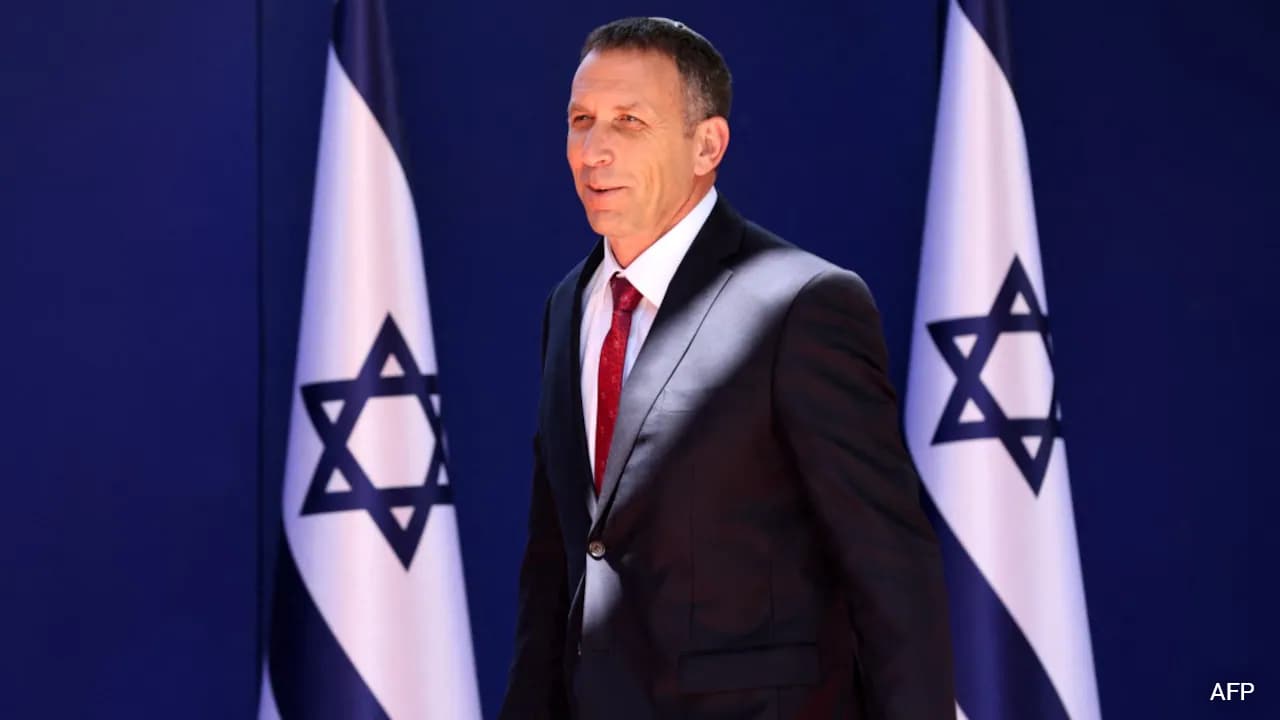
That was the texture of the air inside the Knesset when lawmakers elected an ally of Gadi Eisenkot as Speaker of the Israeli Parliament, delivering a sharp, unmistakable blow to Prime Minister Benjamin Netanyahu. On paper, the headline reads like standard parliamentary mechanics. A gavel changed hands. A coalition discipline cracked. One political camp gained an institutional foothold while another lost a critical lever of control.
Yet to stop at the headline is to miss the human electricity that makes a moment like this dangerous, thrilling, and deeply consequential for millions of people living between the Mediterranean and the Jordan River.
To understand why a Speaker’s chair matters so much, imagine a hypothetical family sitting around a kitchen table in Holon—let’s call them David and Maya. They are not political operatives. David manages logistics for a medical supply firm; Maya teaches high school civics. They do not spend their evenings parsing Knesset bylaws or tracking committee assignments. What they feel, every single week, is the weight of a country that seems permanently braced for impact—economically, militarily, and socially. When Maya looks at the news, she isn't asking who controls the legislative calendar. She is asking whether her son’s reserve duty will ever become predictable, whether the courts will protect her neighbor’s rights, and whether the people running the state are listening to anyone outside their own echo chamber.
For David and Maya, the Speaker of the Knesset sounds like an abstract title, something ceremonial, like the person who calls order when lawmakers shout too loudly.
They would be wrong.
The Gatekeeper of the National Conversation
In a parliamentary democracy like Israel’s, the Speaker is not a referee watching from the sidelines. Think of the Speaker as the air traffic controller at a congested airport during a thunderstorm. Every piece of legislation—every budget bill, every judicial reform, every emergency wartime measure, every no-confidence motion—is a plane circling overhead. The Speaker decides which flights get cleared to land, which ones circle until they run out of fuel, and which ones are grounded before they ever reach the runway.
When that chair belongs to a loyalist of the Prime Minister, the legislative sky stays clear for the government’s priorities and stormy for the opposition. Bills favored by the ruling coalition move smoothly through readings. Embarrassing debates get scheduled at midnight when cameras are off. Procedural hurdles suddenly appear in front of inquiries the government would rather avoid.
When an ally of Gadi Eisenkot takes that gavel instead, the entire weather system shifts overnight.
Gadi Eisenkot is not a politician built for viral soundbites or theatrical rage. A former Chief of Staff of the Israel Defense Forces, he carries the stoic, measured cadence of a career soldier who spent decades reading maps before speaking. Over recent years, as Israeli politics fractured into tribal loyalty tests, Eisenkot emerged as a quiet center of gravity—a figure whose credibility was forged not in party backrooms, but in uniform, and later deepened by unimaginable personal grief during the war in Gaza, where he lost his son and nephew in combat. When someone aligned with Eisenkot ascends to the Knesset’s highest institutional post, the message reverberates far beyond the podium. It signals that a critical mass of lawmakers—including defectors or hesitant partners within the broader political ecosystem—decided that absolute alignment with Netanyahu was no longer sustainable.
Inside the Anatomy of a Political Fracture
Anyone who has ever watched a long-standing alliance unravel knows that the break almost never happens over the biggest ideological disagreement. It happens over trust. It happens when people inside the room begin to whisper the same question they are too afraid to say at the microphone: Where is this actually taking us?
In the weeks leading up to the vote, the corridors of the Knesset carried that unmistakable, metallic scent of a coalition losing its grip. You could see it in the small things. Ministers lingering too long outside committee rooms. Backbenchers checking their phones with tight jaws. Spokespeople offering rehearsed assurances that sounded less like confidence and more like damage control.
For years, Benjamin Netanyahu’s political survival rested on an extraordinary ability to turn every parliamentary vote into an existential binary: either you stand with the leadership, or you hand the keys to your enemies. That discipline held through indictments, five consecutive election cycles, massive street protests over judicial overhaul, and the trauma of October 7 and its aftermath. Critics described it as an iron grip; supporters called it necessary stability in a hostile neighborhood.
Either way, it worked—until it didn’t.
The election of an Eisenkot ally as Speaker exposed the limits of fear as a governing glue. According to parliamentary observers and political analysts tracking the vote, the outcome required more than unified opposition discipline; it depended on quiet fractures within the governing camp itself, where fatigue over endless political brinkmanship finally outweighed loyalty to the Prime Minister’s desk. Once secret ballots or cross-aisle understandings enter the equation, the illusion of invincibility evaporates. A leader who cannot guarantee the loyalty of his own floor on a foundational leadership vote suddenly looks vulnerable on every subsequent bill.
And in politics, perception is gravity. Once people believe you are falling, they start stepping back so they aren't pulled down with you.
What Changes When the Gavel Moves
Let us return for a moment to David and Maya in Holon, because the real stakes of this vote do not live in the Knesset cafeteria. They live in what happens next to ordinary citizens.
First, there is the legislative calendar itself. With an Eisenkot-aligned Speaker holding the gavel, the government loses its monopoly over the parliamentary agenda. Controversial bills that rely on procedural shortcuts to bypass deep scrutiny will face a much steeper climb. Opposition motions, oversight hearings, and debates on ultra-Orthodox military conscription, war strategy, and state commissions of inquiry suddenly gain oxygen.
Second, there is the question of institutional legitimacy. During periods of intense national strain, parliaments often drift into becoming rubber stamps for the executive branch. Cabinets make decisions behind closed doors, and the legislature simply ratifies them after the fact. A Speaker independent of the Prime Minister’s inner circle restores friction to the system. Friction sounds unpleasant, especially to people exhausted by political fighting, yet in a democracy, friction is what keeps the brakes working. Without it, a government accelerates unchecked toward whatever cliff lies ahead.
Third, and perhaps most crucially, is the psychological shift across the Israeli electorate. For months, millions of Israelis have felt trapped in a loop where public anger—whether over hostage negotiations, economic strain, or the unequal burden of military reserve service—seemed to bounce off the walls of Jerusalem without altering the trajectory of power. Seeing an ally of Eisenkot elevated to Speaker breaks that spell of inevitability. It demonstrates that parliamentary arithmetic is still alive, that alliances are still fluid, and that no single leader owns the state’s institutions.
The Weight of the Chair
Of course, winning the Speaker’s chair is not the same thing as governing a divided nation. Anyone pretending this single vote solves Israel’s deepest crises is selling comforting fiction.
The new Speaker steps onto a minefield. Every ruling on parliamentary procedure will be dissected for bias. Every scheduling decision will trigger accusations of sabotage from coalition loyalists or timidity from opposition firebrands. Meanwhile, Netanyahu remains one of the most resourceful political tacticians in modern democratic history—a leader who has been written off dozens of times only to outmaneuver rivals when they mistook a setback for a surrender.
Even Gadi Eisenkot himself faces a delicate balancing act. Influence in Israeli politics can be fragile; step too aggressively into partisan warfare, and you risk losing the very centrists and moderate right-wing voters who admire your restraint. Move too cautiously, and the momentum of a breakthrough moment dissipates into routine gridlock.
I remember standing once outside a municipal council hall in central Israel late at night after a bitter local budget vote, watching two council members from rival parties share a quiet cigarette under a flickering streetlight. Inside, they had spent three hours yelling about betrayal and ruin. Outside, in the cool night air, one of them rubbed his eyes and said, "We forget that the people paying the taxes don't care who won the argument. They care whether the streetlights stay on tomorrow."
That is the real test waiting behind the polished wood of the Speaker’s rostrum.
A gavel is just a piece of timber until someone uses it to demand accountability, protect minority voices, and force a government to answer hard questions in daylight. When the tally board lit up in Jerusalem and an ally of Gadi Eisenkot claimed the chair, the immediate shockwave belonged to Benjamin Netanyahu and his stunned allies.
The lasting verdict, however, belongs to the quiet rooms across the country—where ordinary families are watching to see if the people who hold power finally remember who they are holding it for.