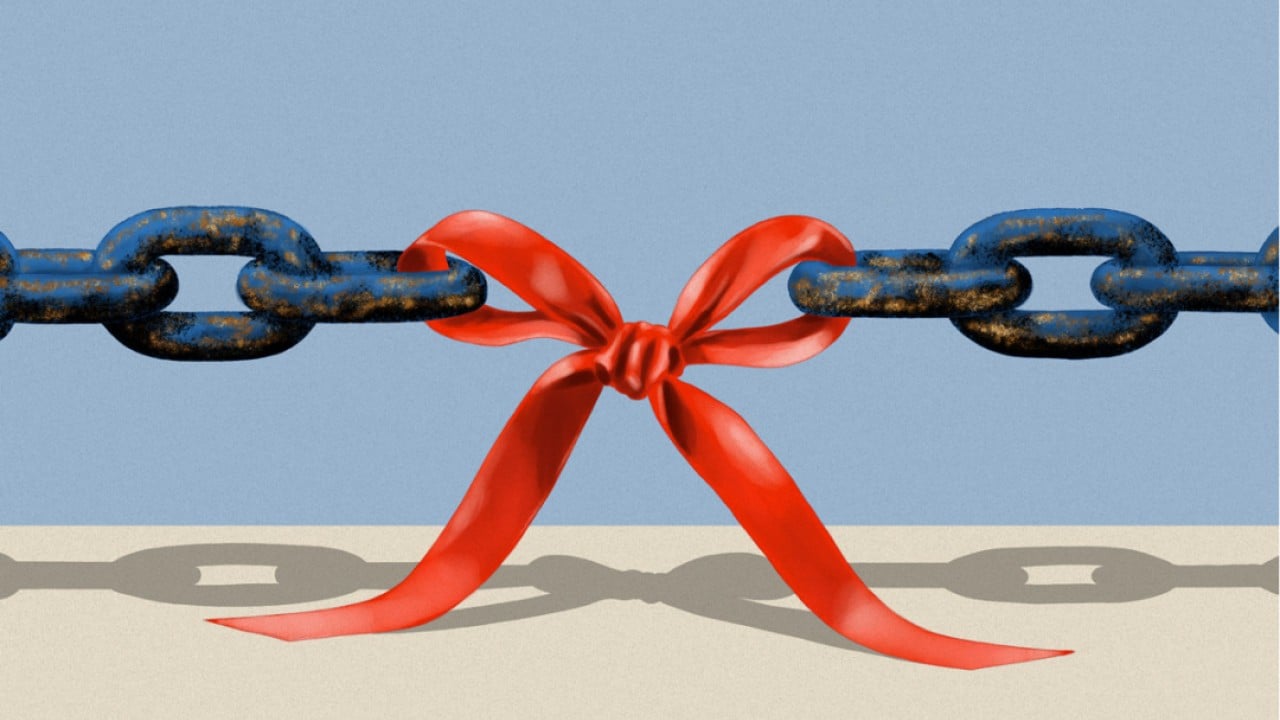
At 3:14 AM in a brightly lit warehouse outside Toledo, Ohio, Marcus Vance stares at a blinking amber light on a diagnostic console. He smells burnt ozone and stale coffee. A specialized voltage regulator—a component roughly the size of a toaster that keeps an entire regional assembly line from frying its own circuits—has failed. Six years ago, Marcus would have tapped three keys, ordered a replacement from a distributor in Shenzhen, and had it on his loading dock by Thursday. Tonight, he is looking at a fourteen-week backorder and a surcharge that eats his entire quarterly profit margin.
Marcus does not read diplomatic cables. He does not care about communiqués drafted in windowless rooms by men in tailored suits. Yet his livelihood, his mortgage, and the thirty-two machinists sleeping in their beds across Lucas County depend entirely on what happens when the leaders of the United States and China sit across from one another at the Asia-Pacific Economic Cooperation summit in Shenzhen.
The headlines will tell you that an extension of the bilateral trade truce is likely. Analysts will nod sagely, adjusting their spreadsheets by a fraction of a percentage point, treating a geopolitical ceasefire like a routine weather forecast. They call it a pause. They call it stabilization.
They are wrong. It is a reprieve from a cardiac arrest.
To understand why a temporary handshake in southern China matters to a machinist in Ohio, a soybean farmer in Iowa, or an engineer in Munich, we have to look past the dry choreography of international diplomacy. We have to look at the invisible architecture of modern life—and how close we came to watching it shatter.
The Architecture of Fragility
Consider a hypothetical scenario. Imagine your kitchen table on an ordinary Tuesday morning. You reach for your phone, brew a pot of coffee, and check your bank balance. Nothing about that moment feels geopolitical. Yet the lithium-ion battery powering your screen was likely refined in Guangdong; the thermal sensor inside your coffee maker was stamped in a factory outside Dongguan; the fiber-optic cables carrying your banking data across the Pacific floor were laid and maintained through supply chains entangled across both hemispheres.
For forty years, Washington and Beijing operated under an unspoken bargain. America provided the consumer demand, the reserve currency, and the foundational intellectual property; China provided the manufacturing scale, the rare-earth processing, and the relentless logistical speed. Like two climbers roped together on a sheer granite face, neither could fall without dragging the other into the abyss.
Then the rope began to fray.
Over the past decade, tariffs ceased to be surgical instruments and became blunt-force weapons. Export controls on advanced semiconductors met retaliatory restrictions on gallium, germanium, and graphite—minerals most people cannot pronounce, yet without which no modern radar system, electric vehicle, or smartphone can function. By the time diplomats gathered in late 2025 to hammer out a fragile truce, global trade between the world’s two largest economies had already begun rerouting itself through costly, circuitous detours in Vietnam, Mexico, and Malaysia.
I remember walking the floor of a consumer electronics trade show in Las Vegas two winters ago. Usually, those halls hum with the frantic optimism of founders pitching tomorrow’s miracles. That year, the mood felt like a wake. A hardware startup founder from Austin pulled me aside near a loading bay, his voice dropping to a whisper as he showed me two identical circuit boards. One cost four dollars to produce in Shenzhen. The other, assembled in a newly hastily built facility in North America to dodge punitive tariffs, cost nineteen dollars—and still relied on Chinese-sourced capacitors hidden beneath a new country-of-origin sticker. "We aren't decoupling," he told me, rubbing his temples. "We're just paying a tax to pretend we are."
That tax does not vanish into thin air. It lands quietly on grocery receipts, auto loan rates, and hospital equipment budgets. When pundits casually debate whether the US-China truce will be extended in Shenzhen, they are really asking whether ordinary families will be spared another sudden shock to the cost of living.
Why Shenzhen Changes the Room
Location is never an accident in statecraft. Holding this APEC summit in Shenzhen is a deliberate, theatrical choice—one loaded with historical irony and quiet leverage.
Forty-six years ago, Shenzhen was a sleepy collection of fishing villages and rice paddies across the border from Hong Kong, home to roughly thirty thousand people. Today, it is a gleaming megacity of nearly eighteen million, the undisputed nervous system of global hardware manufacturing. Walk through the Huaqiangbei electronics market in the city's Futian district, and you can source every component needed to build a smartphone, a drone, or a medical ventilator within a four-block radius before lunch.
Hosting the summit here sends an unmistakable message without a single word spoken at a podium: This is the engine room.
For Beijing, extending the truce is not an act of charity; it is an economic necessity. China’s domestic economy is navigating a painful transition. A prolonged slump in its property sector—which once accounted for nearly a quarter of its economic output—has left local governments burdened with debt and millions of middle-class families hesitant to spend. Youth unemployment remains stubbornly high, and domestic consumption has struggled to pick up the slack. China needs its export engine humming, and it needs access to Western markets and capital to stabilize growth while it attempts to pivot toward high-tech self-reliance.
Washington faces a mirror-image dilemma, though dressed in different political clothes. On paper, political rhetoric in the United States remains fiercely hawkish toward Beijing. No politician wins votes in the Rust Belt by sounding soft on trade. Yet behind closed doors at the Treasury Department and the Federal Reserve, the math is unforgiving. Reimposing sweeping, across-the-board tariffs right now would reignite inflation just as interest rates have begun to settle into a manageable rhythm. American corporations—from agricultural giants in the Midwest to semiconductor designers in Silicon Valley—have spent months lobbying quietly in Washington, warning that an abrupt collapse of the truce would trigger immediate supply chain freezes and layoffs before an election cycle.
Both capitals are trapped by their own domestic pressures. Neither can afford a full-scale economic war, yet neither can afford to look like they are blinking first.
The Anatomy of a Diplomatic Ceasefire
So what actually happens when two superpowers need peace without wanting to admit they need it? They build an off-ramp disguised as a victory.
If you watch the official broadcasts from Shenzhen, you will see handshakes, flags, and carefully curated smiles. You will hear phrases like "managing competition responsibly" and "maintaining open lines of communication." It is easy to dismiss these words as empty diplomatic theater.
Do not make that mistake. In high-stakes diplomacy, ambiguity is not a flaw; it is the entire mechanism that keeps the machinery running.
An extension of the truce at the Shenzhen APEC summit will likely look deceptively modest. Do not expect a grand bargain that resolves the fundamental disputes over intellectual property, state subsidies, or technological supremacy. Those structural conflicts will define the next thirty years of global politics. Instead, look for targeted, transactional extensions:
- Tariff Suspensions: Extending existing exclusions on hundreds of categories of industrial components, medical supplies, and consumer goods, preventing automatic tariff escalations from snapping back into place.
- Agricultural and Energy Commitments: Quiet agreements for China to maintain steady purchases of American soybeans, sorghum, and liquefied natural gas—giving Washington tangible wins to point to in farm-belt states.
- Working Groups on Export Controls: The creation of technical channels where officials discuss semiconductor and critical mineral restrictions before they are announced, reducing the risk of accidental escalation.
To understand how this works in practice, think of two rival neighbors who share a single well during a drought. They do not like each other. They disagree on where the property line sits, and both are quietly digging their own wells in the backyard. Until those new wells hit water, however, neither neighbor will poison the shared one. Extending the truce is simply both sides agreeing to keep the bucket on the rope for another twelve months while they keep digging.
The Invisible Stakes in the Quiet Rooms
Yet even the most carefully managed truce carries hidden dangers—and this is where the narrative becomes deeply uncertain.
I will be honest with you: predicting the exact durability of any US-China agreement is a humbling exercise. History is littered with diplomatic breakthroughs that unraveled over a single stray incident. A miscalculated naval patrol in the South China Sea, a sudden cyber intrusion on a municipal water grid, or a domestic political scandal in either capital can turn a warm handshake into a cold freeze overnight.
There is also a deeper, quieter cost to living from truce to truce.
When businesses do not know whether tariffs will jump by twenty-five percent next autumn, they stop making long-term bets. Remember Marcus Vance, our warehouse manager in Toledo? Right now, Marcus wants to buy two new computer-controlled milling machines and hire four apprentices. Those machines cost four hundred thousand dollars. If the Shenzhen summit produces a simple twelve-month extension of the status quo, Marcus breathes a sigh of relief—for about forty-eight hours. Then he realizes that twelve months is not long enough to pay off a four-hundred-thousand-dollar loan. So he holds off. He repairs the old machines with duct tape and overtime hours, waiting to see what happens next year.
Multiply Marcus’s hesitation by ten million small and medium-sized businesses across North America, Europe, and Asia. That is the invisible drag of geopolitical uncertainty. A truce prevents the house from burning down, which is infinitely better than a fire, yet living permanently in a state of suspended animation slowly starves the global economy of the confidence required to build, innovate, and hire.
Meanwhile, beneath the surface of the truce, the race for technological sovereignty continues at breakneck speed. In clean laboratories in Hsinchu, Arizona, and Shanghai, engineers are racing to master next-generation chip fabrication. Across the deserts of Nevada and the steppes of Inner Mongolia, mining conglomerates are scrambling to refine lithium and rare earths outside each other's reach. The truce does not stop this separation; it merely slows the speed at which the tectonic plates grind against one another, giving both nations time to reinforce their own foundations before the next tremor hits.
The Human Ledger
We often talk about geopolitics as if it were a chess match played on a polished wooden board, far above the clouds. We speak of "Beijing" and "Washington" as monolithic actors, forgetting that nations are made of people who wake up every morning hoping their work matters and their children will have a slightly easier life than they did.
In a cramped apartment in Shenzhen’s Bao'an district, a twenty-six-year-old mechanical engineer named Lin Wei spends her evenings testing firmware for smart hearing aids exported to clinics in Chicago and London. She learned English by watching American sitcoms on her laptop and dreams of saving enough money to take her parents to see the Grand Canyon. In central Illinois, a third-generation farmer named David Miller watches weather radar on his porch, calculating whether diesel prices and export tariffs will allow him to pass his four hundred acres down to his daughter without drowning her in debt.
Neither Lin Wei nor David Miller will sit at the conference table when the APEC summit convenes. Neither will draft a single sentence of the final communiqué. Yet every tariff line item, every export license, and every diplomatic concession is written directly onto the ledger of their lives.
When the leaders of the United States and China step onto the stage in Shenzhen and signal that the truce will hold, the financial markets will likely rally for an afternoon, commentators will move on to the next news cycle, and the world will exhale.
Back in Toledo, Marcus Vance will check his supplier portal at 3:14 AM, see that the backorder on his voltage regulator has dropped from fourteen weeks to ten days, turn off the blinking amber diagnostic light, and finally go home to sleep.