Walk down Spring Street in downtown Los Angeles at seven in the morning, and the air smells of exhaust, wet concrete, and roasting coffee from the street carts tucked beside the granite steps of City Hall.
For nearly two centuries, the people walking up those steps to run the second-largest city in the United States looked very little like the people standing in line for that coffee. Los Angeles has always sold itself to the world as a sun-drenched laboratory of the future, a sprawling patchwork of neighborhoods where languages collide at every crosswalk. Yet inside the limestone tower at 200 North Spring Street, the levers of actual, citywide power remained remarkably narrow.
That changed in a single election cycle.
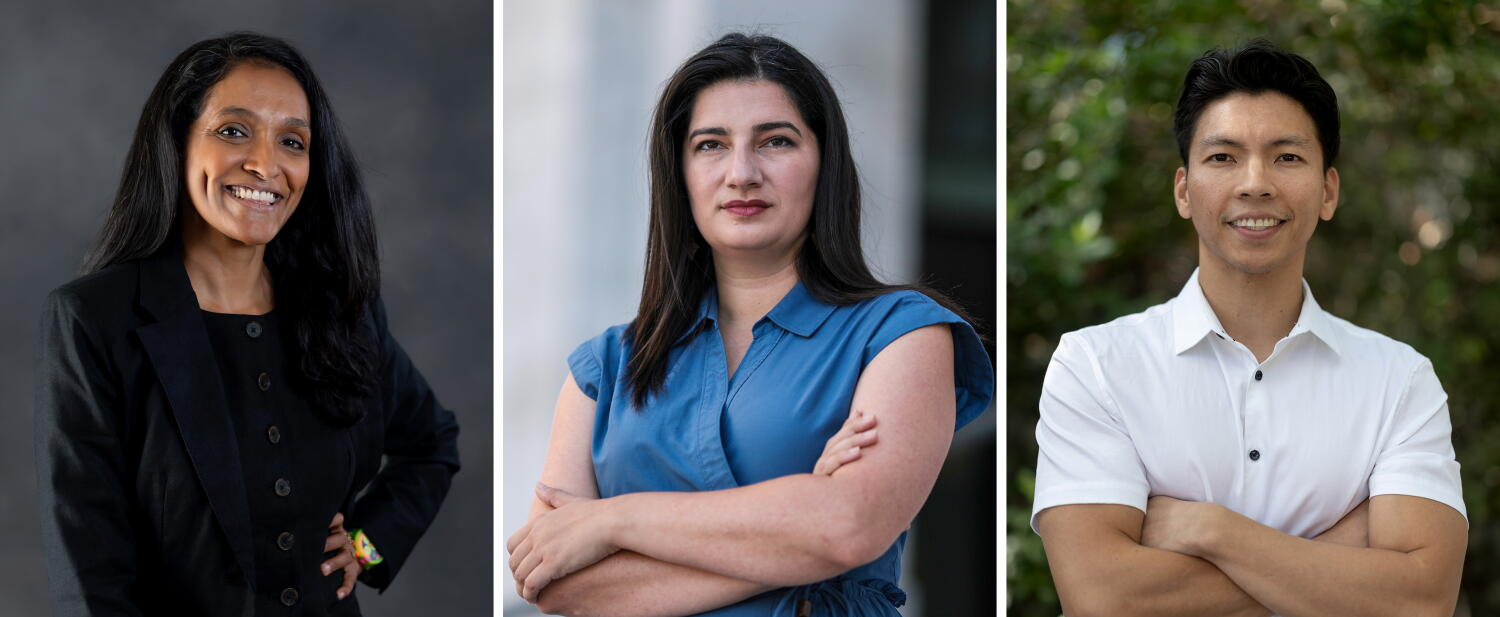
For the first time in the history of Los Angeles, all three of the city's top citywide elected offices—Mayor, City Attorney, and City Controller—will be held simultaneously by Asian Americans.
Read that sentence again, slowly, because political headlines have a habit of flattening revolutions into trivia. It is easy to treat a milestone like this as a box checked on a civic scorecard, a brief applause line before everyone goes back to arguing about traffic and housing prices. To do that, however, is to miss the real story. This is not merely a demographic footnote. It is the culmination of decades of quiet organizing, generational friction, and a fundamental shift in who gets to decide what Los Angeles becomes over the next twenty years.
The Architecture of Invisible Power
To understand why this moment carries so much weight, you first have to understand how Los Angeles actually runs.
Most people think of city government as a pyramid with the Mayor standing alone at the top. That is a comforting myth, the kind of clean diagram you see in a high school civics textbook. In reality, Los Angeles operates more like a three-legged stool, where each leg holds a distinct, often rivalrous kind of authority. If one leg wobbles, the entire city tilts.
There is the Mayor, the chief executive who sets the budget, commands the police and fire departments, and serves as the public face of four million residents. There is the City Attorney, the chief legal officer who decides which laws get enforced, which lawsuits the city fights or settles, and how the municipal code is weaponized or softened on the streets. And there is the City Controller, the independent auditor who follows every dollar, exposes waste, and holds the power to embarrass the entire political establishment with a single spreadsheet.
Until now, those three seats have never been occupied at once by leaders of Asian descent.
Think about what that means in practical terms. Not symbolically. Practically.
When the three people who control the executive agenda, the legal apparatus, and the financial ledger all carry lived experiences rooted in Asian American communities, the questions asked inside closed-door meetings change. The blind spots shift. Issues that used to require months of external protesting just to get on a committee agenda suddenly sit at the head of the table before the coffee even cools.
A Kitchen Table in Koreatown
Consider a hypothetical scenario to see how this shift filters down to the street level.
Picture a family-owned dry cleaner on a corner in Koreatown, or a small pho restaurant tucked into a strip mall in Historic Filipinotown. Let us call the owner Mr. Park. For thirty years, Mr. Park has woken up at four in the morning, unlocked the security gate, and kept his business alive through recessions, rising commercial rents, and a pandemic that emptied his dining room overnight.
When a city sidewalk project stalls outside his front door for eight months, blocking foot traffic and choking off his daily revenue, Mr. Park rarely calls City Hall. Why would he? To him, municipal bureaucracy is a maze built in a language he only half-trusts, staffed by people who view his neighborhood as a line item rather than a home. When he receives a confusing code enforcement notice, he pays the fine even if it is unfair, because fighting it requires taking time off work and hiring a lawyer he cannot afford.
Now, trace what happens when the people writing the rules, auditing the construction delays, and overseeing small business relief actually recognize Mr. Park's life because they grew up watching their own parents or grandparents navigate that exact same maze.
Suddenly, a stalled sidewalk project is not just a minor infrastructure delay. It is an existential threat to a family's life savings. Translation services on city portals stop being an afterthought added months after a program launches. Audits of city contracting reveal why immigrant-owned businesses get shut out of municipal bids, and the legal office stops treating street vendors and small shopkeepers as nuisance cases.
This is not about favoritism. Anyone who claims that electing Asian American leaders means governing exclusively for Asian Americans fundamentally misunderstands both politics and the sheer diversity of the community itself. Los Angeles is home to the largest populations of Korean, Filipino, Thai, Cambodian, and Japanese Americans in the country, alongside massive Chinese, Vietnamese, and South Asian communities. These groups do not vote as a monolith. They argue fiercely over housing density, policing, transit, and taxes.
What unites them is not a single ideology, but an intimate familiarity with what it feels like to be treated as permanent guests in the city you built.
The Long Shadow of 1871
You cannot appreciate the altitude of this political climb without looking down at the valley it started in.
Los Angeles has a selective memory when it comes to its Asian history. Tourists love the neon glow of Chinatown and the manicured gardens of Little Tokyo, treating them as charming cultural theme parks. Far fewer people walk a few blocks south of Union Station to reflect on what happened on Calle de los Negros in October 1871, when a mob of roughly five hundred people lynched eighteen Chinese residents in one of the deadliest mass lynchings in American history.
For generations after that night, survival for Asian immigrants in Southern California meant staying quiet, keeping your head down, and building parallel economies because the mainstream institutions were legally and violently closed off. Exclusion acts barred citizenship. Alien land laws prevented property ownership. Redlining penned families into specific blocks.
Even as the twentieth century wore on and neighborhoods like Monterey Park, Gardena, and Westlake flourished, political representation lagged decades behind population growth. In 1985, Michael Woo became the first Asian American elected to the Los Angeles City Council. That was more than a century after the city was incorporated. For years afterward, Asian American representation at City Hall often meant a single council seat, a lone voice trying to speak for dozens of distinct nationalities across five hundred square miles.
I still remember sitting in community halls in the early 2000s, listening to frustrated organizers debate whether it was even possible to build a citywide coalition. The conventional wisdom among political consultants back then was brutal and dismissive: Asian Americans did not vote in high enough numbers, they were too geographically scattered, and they lacked the unified machine required to win citywide races.
For years, that cynicism looked like realism.
How the Math Changed
So how did a community once written off by political consultants end up holding every citywide office in Los Angeles?
It did not happen by accident, and it certainly did not happen overnight. It happened because two massive forces collided at the exact right moment in Los Angeles politics.
First, the electorate itself transformed. Over the past two decades, Asian Americans became the fastest-growing racial group in Southern California. More importantly, a younger generation of organizers—many of them the children of immigrants who had worked double shifts in garment factories, hospitals, and corner stores—decided they were done asking for a seat at someone else's table. They built voter registration drives in temples, churches, night markets, and nail salons. They translated ballot measures into Tagalog, Korean, Mandarin, Khmer, and Hindi, turning complicated municipal propositions into kitchen-table conversations.
Second, the old political machinery of Los Angeles cracked open.
Recent years brought historic scandals, leaked audio recordings that exposed raw racial resentment behind closed doors, and a deep, simmering anger among voters over homelessness, rising crime, and the soaring cost of living. Angelenos grew exhausted by career insiders who spoke in polished platitudes while encampments expanded under freeway overpasses and city services ground to a halt.
Voters started looking for competence, independence, and leaders who were not indebted to the same tired network of downtown lobbyists.
And when voters looked across the ballot, they found Asian American candidates who had spent years doing the unglamorous work of public service—auditing budgets, prosecuting fraud, managing public agencies, and building coalitions that stretched from the San Fernando Valley to the Harbor.
The Weight of the Crown
Still, anyone celebrating this moment as a fairy-tale ending has never watched how quickly politics devours its heroes.
Winning office in Los Angeles is hard. Governing Los Angeles is nearly impossible.
The three leaders stepping into these roles inherit a city strained to its breaking point. The housing crisis is no longer a policy debate; it is a daily moral emergency visible on every major boulevard. The city budget faces structural deficits squeezed by rising labor costs and flattening tax revenues. Public trust in City Hall remains fragile, bruised by years of corruption indictments and broken promises.
There is a particular kind of pressure that falls on pioneers. When you are the first, every mistake you make is scrutinized twice as hard. When a traditional politician fails, critics blame the individual. When a historic first stumbles, critics quietly question whether the community was ready for the responsibility.
And there is another, quieter tension waiting inside the community itself.
Because "Asian American" is an umbrella term covering more than twenty distinct ethnic groups with wildly different economic realities, expectations will inevitably collide. A wealthy homeowner in the hills wants aggressive street clearing and strict zoning protection. A low-income tenant in Thai Town or Chinatown wants rent freezes and tenant protections. A small business owner in Little Tokyo wants faster police response times, while a college student in Westwood demands restorative justice and mental health alternatives.
No single mayor, city attorney, or controller can satisfy every faction at once. Conflicts are guaranteed. Disappointments are inevitable.
Beyond the Milestone
Yet standing on the plaza outside City Hall today, watching families take photos in front of the granite steps, it is impossible not to feel the sheer gravity of the shift.
Representation does not magically pave potholes or balance a municipal ledger. It does not guarantee policy perfection. What it does is far simpler and far more profound: it expands the boundaries of who belongs.
For a twelve-year-old kid riding the Metro bus past downtown, looking up at the tower where the city's laws are written, its money is guarded, and its future is debated, the reflection staring back has changed forever. Power no longer belongs to someone else, speaking a distant language from behind closed doors.
It looks like home.
And tomorrow morning, at seven o'clock, when the security gates roll up on the corner dry cleaners and the coffee carts begin to steam along Spring Street, the city will finally be run by people who know the price of every cup.