Static.
That is the sound of a frequency losing its lock on a tower, a slow dissolve where a voice that once boomed through millions of dashboard speakers gradually fades into white noise. For years, the modern political imagination was shaped inside soundproofed studios in Austin, Miami, and Los Angeles, where two men sat across from each other with heavy dynamic microphones, talking for three hours without commercial breaks, scriptwriters, or network executives hovering behind the glass. In that long-form space, politicians stopped sounding like press releases and started sounding like guests at a late-night diner.
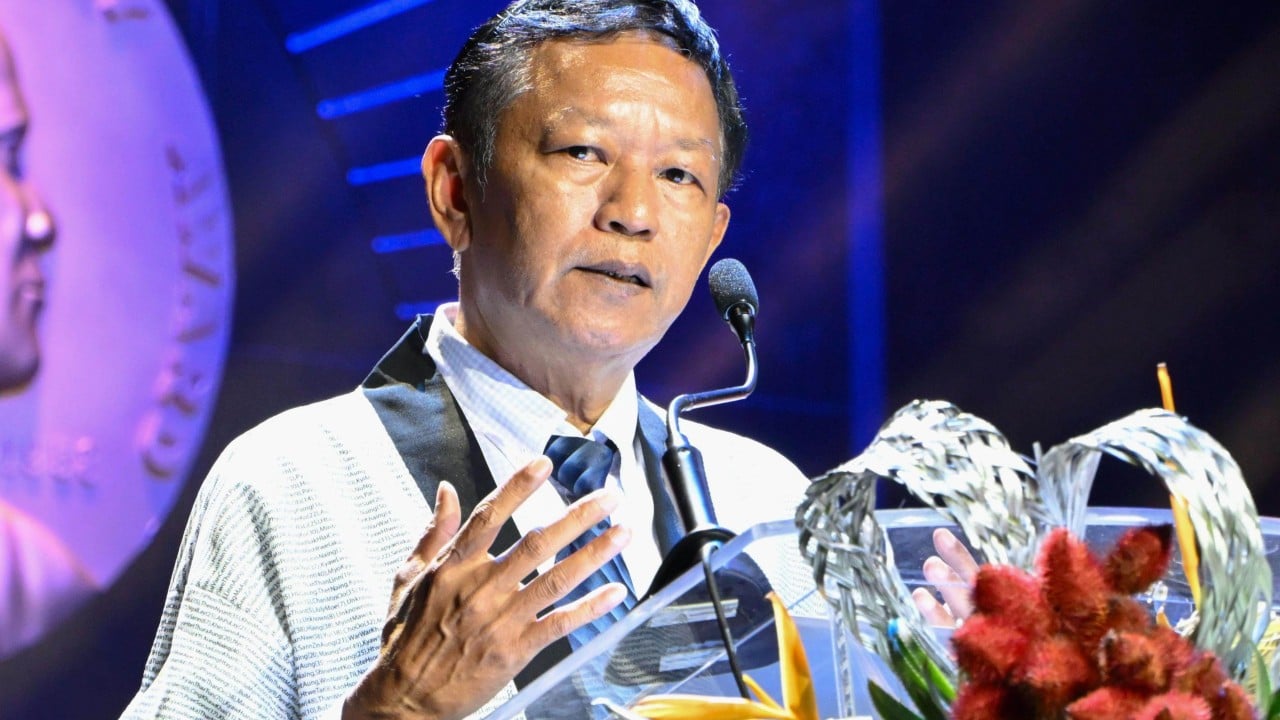
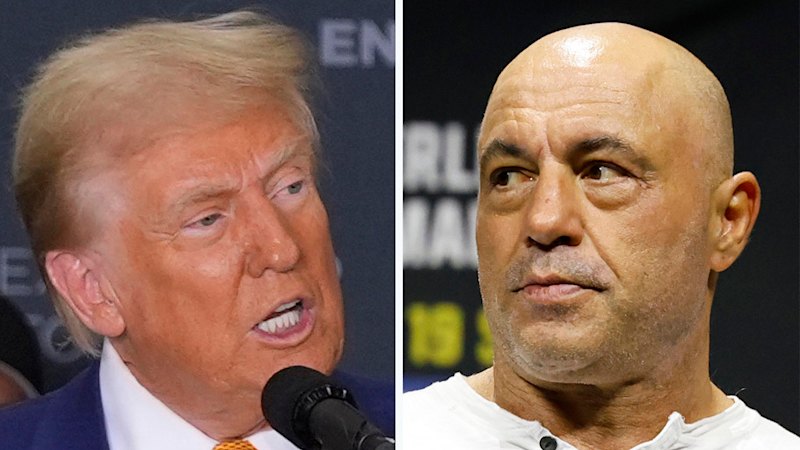
Yet the air inside those studios has shifted. According to recent public remarks by podcaster and commentator Joe Rogan, Donald Trump has lost the "podcast bros"—a loose, sprawling coalition of comedians, mixed martial arts analysts, tech founders, and independent hosts whose massive digital audiences played a defining role in the 2024 presidential election. When Rogan, whose show The Joe Rogan Experience commands one of the largest audiences in digital media, states plainly that the coalition has fractured, the observation carries weight far beyond partisan gossip. It signals a structural rupture in how modern political loyalty is built, maintained, and ultimately dissolved.
To understand why this matters, it helps to step away from cable news panels and look at the people actually wearing the headphones.
Consider a hypothetical listener—let’s call him Marcus, a thirty-two-year-old HVAC technician in Ohio who spends six hours a day driving between service calls. Marcus does not read editorial boards, he does not watch Sunday morning political talk shows, and he views traditional campaign commercials with the same reflexive skepticism he reserves for extended car warranty calls. During his long stretches on the interstate, podcasts are his company. When he listens to Joe Rogan, Theo Von, Andrew Schulz, or Lex Fridman, he is not looking for ideological marching orders. He is looking for authenticity—the subtle, unmistakable cadence of someone speaking without a teleprompter.
In late 2024, that hunger for unscripted candor created an unprecedented political alignment. Trump’s appearances across this ecosystem—sitting for hours with Rogan, trading jokes with Theo Von, dissecting business and policy with Lex Fridman—bypassed legacy media gatekeepers entirely. For listeners like Marcus, the appeal was not necessarily rooted in deep policy white papers. It was rooted in the feeling that an outsider was willing to enter an unpredictable room, sit down without notes, and answer whatever came up. In the language of the podcast world, it felt real.
The Architecture of a Digital Alliance
Political alliances built on party infrastructure are held together by patronage, committee assignments, and shared institutional goals. Alliances built on podcast culture are held together by something far more volatile: vibe, perceived independence, and an unspoken agreement that the host will never become a mere stenographer for power.
Think of the difference between a stadium concert and an acoustic set in a small club. In a stadium, the performer can rely on pyrotechnics, backing tracks, and sheer volume to carry the crowd. In a small club, every missed note is audible, and the audience can tell immediately when the musician is faking emotion. Long-form podcasting is the acoustic club of modern media. Over the course of three hours, rehearsed talking points inevitably run out. What remains is character, curiosity, and consistency.
During the 2024 campaign cycle, podcasters and their audiences largely viewed Trump as a disruptive force pushing back against censorship, bureaucratic overreach, and rigid cultural orthodoxy. Many of these hosts had spent the preceding years clashing with mainstream institutions over pandemic policies, content moderation, and comedy boundaries. They saw a shared adversary. Consequently, they opened their microphones, lending their hard-won credibility to a political movement that promised to dismantle the machinery they distrusted.
But credibility in independent media is rented, never owned. Every episode is a new transaction.
Once a candidate transitions from insurgent outsider to sitting president, the entire gravitational pull of the relationship reverses. The person who once critiqued the establishment becomes the establishment. Every executive order, every foreign policy entanglement, every economic friction point, and every heavy-handed government action is no longer theoretical. It lands squarely on the desk of the administration these hosts helped elevate.
When the Outsider Becomes the Institution
The friction did not erupt from a single dramatic betrayal; rather, it accumulated like dust on a mixing board, steadily degrading the signal until the distortion became impossible to ignore.
Across episodes in 2025 and 2026, commentators within this sphere began voicing unease over policies and rhetoric that clashed with the anti-authoritarian, live-and-let-live ethos that defines their communities. Immigration enforcement tactics that swept up non-violent workers, aggressive tariff regimes that raised everyday costs for small business owners, renewed foreign interventionism, and a perceived reluctance to deliver on long-promised institutional transparency all drew sharp pushback from hosts who had previously been sympathetic.
Rogan himself—a figure whose politics have always been famously difficult to pin to a single party line, blending support for universal healthcare and social freedoms with staunch defense of free speech and Second Amendment rights—repeatedly questioned the direction of the administration on his show. When he observed that Trump had lost the "podcast bros," he was describing a pattern visible across the entire ecosystem. Comedians who thrive on poking holes in hypocrisy found themselves staring at new orthodoxies. Libertarian-leaning tech commentators bristled at state intervention in markets and speech. Hosts who built their brands on questioning authority realized that defending the White House meant becoming the very thing their audiences despised: apologists for the powerful.
Let us be candid about why this dynamic is so disorienting to watch, even for seasoned political observers. For decades, political strategists assumed that once you captured a demographic's attention and won their vote, you could hold them through traditional messaging—rallies, targeted digital ads, and surrogate appearances on friendly television networks. That playbook assumes voters behave like loyal subscribers to a single cable channel.
Podcast audiences do not operate that way. They are fiercely protective of their hosts' independence. The moment an audience suspects a podcaster is carrying water for a politician, the comment sections turn merciless, subscriber counts dip, and the host’s most valuable asset—trust—evaporates. To survive, the podcaster must criticize power, regardless of who holds it.
The Invisible Stakes of the Microphone
To dismiss this shift as mere celebrity gossip or fleeting internet drama is to misunderstand the mechanics of contemporary democracy. The "podcast bro" demographic—predominantly younger and middle-aged men across racial and geographic lines, many of whom rarely voted prior to 2020 or 2024—represents one of the most decisive swing blocs in American politics.
Look back at Marcus, our technician driving through Ohio.
When Marcus listens to his favorite shows today, he is not hearing a unified chorus defending the administration. Instead, he hears confusion, frustration, and dark humor. He hears hosts he trusts questioning whether the promises of economic relief, anti-war restraint, and free-speech absolutism were ever meant to be kept, or if they were simply effective campaign copy tailored for a three-hour studio appearance.
Notice what happens next: Marcus does not suddenly become a devout partisan for the opposing party. That is the mistake traditional political analysts constantly make. When independent voters grow disillusioned with one movement, they rarely sprint into the arms of its rival. Instead, they disengage. They turn up the volume on comedy, sports, and science episodes, and they tune out politics altogether. They become politically homeless, nursing a quiet cynicism that is far harder to win back than outright opposition.
History offers a clear warning here. Time and again, populist movements powered by alternative media—from the talk-radio insurgencies of the 1990s to the early internet coalitions of the 2000s—have discovered that the very traits making a medium potent during a campaign make it treacherous during governance. Decentralized voices cannot be whipped into line by a party chairman. You cannot call a podcaster into a back room and threaten to withhold committee funding, because they do not want anything from Washington except to be left alone.
The Illusion of Control
There is a profound irony in watching modern political operations attempt to replicate the "podcast strategy." Consultants now dissect lighting setups, study conversational pacing, and coach candidates to drop profanity or tell personal anecdotes in hopes of manufacturing spontaneity. They treat authenticity like a software update that can be installed before an interview.
Yet audiences have developed an almost biological sensitivity to manufactured candor. Over years of listening to unedited conversations, millions of people have trained their ears to detect the microscopic pauses where a speaker calculates political risk before answering a simple question. You can buy ad space on a podcast, and you can book a seat at the table, but you cannot buy the room's affection once your actions outside the studio contradict the persona you projected inside it.
When Rogan notes that the "podcast bros" have moved on, he is acknowledging a basic law of human attention. People will forgive a leader for being imperfect, loud, or unconventional. What an anti-establishment audience will rarely forgive is feeling played.
In the quiet hours after the studio lights dim, the red "On Air" sign clicks off, and the audio files upload to servers around the world, no press secretary can edit the verdict of the room. Inside millions of earbuds and car cabins, the conversation has already moved on, leaving an empty chair across from the microphone.