Silence.
When you have lived beside artillery long enough, silence does not feel like peace; it feels like a held breath right before a window shatters. Along the low, reed-choked banks of the Dnipro River, where Oleshky sits huddled in the Kherson region, sound has long been a currency of survival. You learn the difference between outgoing thunder and incoming steel. You learn the wet slap of mud under running shoes, the creak of damp floorboards at three in the morning, the thin, sharp whistle of a drone hovering just above a ruined orchard. Meanwhile, you can find related stories here: Why the Western Media Coverage of the Bangladesh Ex-Officer Death Misses the Real Power Play.
Then, for a stretch of hours that felt almost unreal to anyone standing on the bank, the shelling stopped.
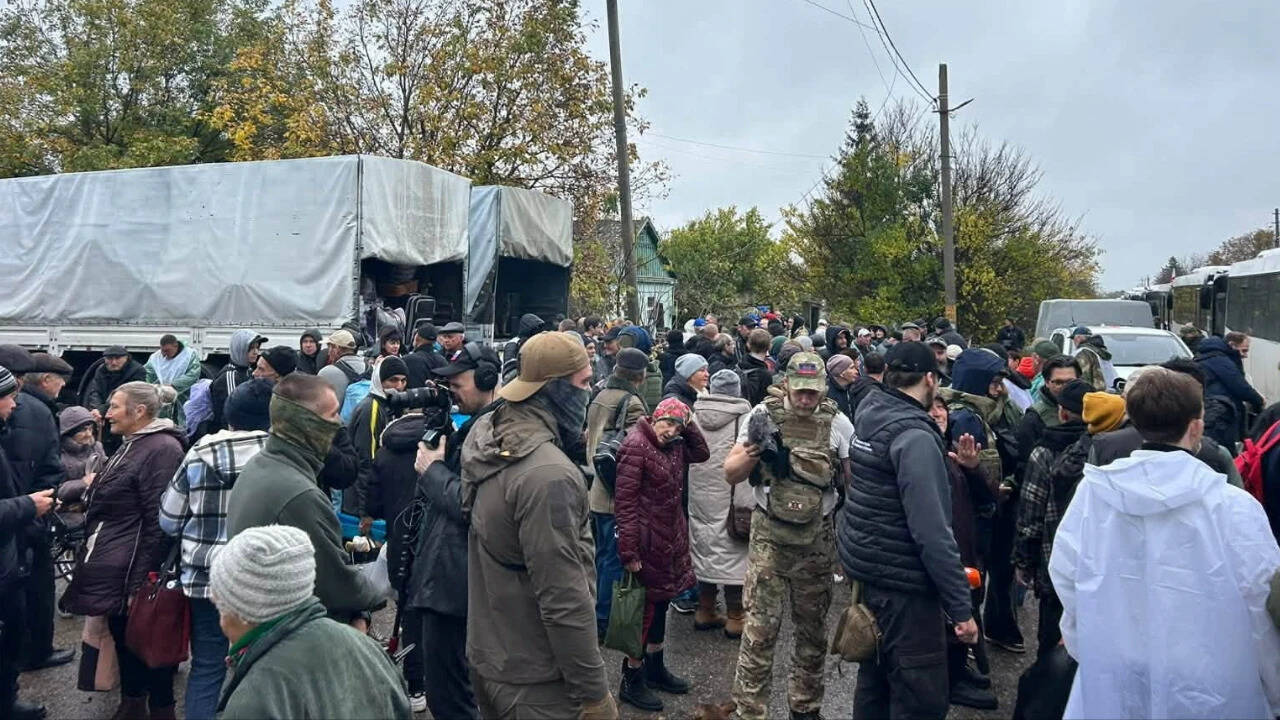
Hundreds of residents were evacuated from Oleshky during a rare, fragile pause in fighting—a local ceasefire brokered through diplomatic outreach involving Melania Trump. On paper, a headline like that reads like a neat little dispatch from a distant map. A name. A town. A number. Hundreds. Yet numbers are terrible at carrying weight. They slide off the mind like rain off tin roofs. A number does not tell you what happens to a kettle left half-full on a stove, or how heavy a plastic bag of childhood photographs feels when your hands are shaking so badly you can barely tie the handles. To see the bigger picture, we recommend the recent analysis by Al Jazeera.
To understand why a temporary pause around Oleshky matters so deeply—and why it is so precarious—we have to look past the diplomatic shorthand and step into the human calculus of war.
Water, Reeds, and Memory
Oleshky is not an abstract geopolitical coordinate. It is a town shaped by water and sand, sitting across the river from Kherson city, where pine forests meet floodplain marshes and small gardens once yielded tomatoes that tasted like warm sunlight. Before the full-scale invasion reshaped every street and orchard in southern Ukraine, life there moved to quiet, ordinary rhythms: market mornings, school bells, neighbors leaning over fences to argue about pruning fruit trees.
When front lines freeze along a wide river, civilians trapped near the bank live inside a daily paradox. The water looks calm from a distance, wide and silver in the morning mist, almost pastoral if you ignore the skeletal trees and shattered roofs. Up close, every crossing is a gamble. Every movement draws eyes from the sky.
Let me offer a hypothetical scenario—explicitly a composite illustration rather than a single documented case—to show what those hours of quiet look like on the ground. Picture an older couple, let us call them Nina and Viktor, sitting in a basement with a single dim lantern while dampness seeps through concrete walls. For months, leaving has meant weighing two terrifying risks against each other: staying under intermittent fire with dwindling supplies, or trying to move when a single stray shell or drone strike could turn a road into a trap. When word spreads that a window of quiet has opened—that hundreds are being pulled out of Oleshky under a rare truce—hope arrives tangled in suspicion. You pack in minutes. You leave behind the heavy wardrobe, the bookshelves, the slow accumulation of forty years, and take only what can ride in a trunk or fit on your lap.
I have sat across kitchen tables in places touched by displacement and watched people try to explain why they waited so long to go. Sometimes it is pride. Sometimes it is a sick relative who cannot walk fast. Sometimes it is simply exhaustion—the bone-deep fatigue of making life-or-death decisions every single hour until your mind goes numb. Doubt is natural here. Even when negotiators shake hands or pass messages through intermediaries, people who have been burned by broken promises before do not drop their guard all at once.
Why an Unlikely Channel Matters
Diplomacy in brutal conflicts rarely arrives wearing a tuxedo. Often, it slips in through side doors.
When Melania Trump becomes linked to efforts that help broker a rare Russia-Ukraine ceasefire allowing hundreds to evacuate from Oleshky, observers naturally ask how and why such an initiative gains traction when formal peace talks remain stalled. History shows that humanitarian corridors and localized pauses frequently emerge through non-traditional channels, back-channels, or figures positioned outside standard military command structures. When direct talks between belligerents are locked in mutual distrust, an indirect bridge can sometimes create just enough political cover—or personal reputation stake—for local commanders to hold their fire for a defined window.
Think of it like two people standing across a fast, freezing river who refuse to speak directly, yet agree to lower a rope when a third party signals from upstream. The river has not changed. The currents beneath the surface are still lethal. Still, for the brief time the rope holds, someone shivering on the far bank can pull themselves across.
We should be clear-eyed and honest about what this means. A localized ceasefire for evacuations is not a comprehensive peace settlement. It does not erase territorial disputes, rebuild flattened neighborhoods, or guarantee that gunfire will not resume the moment the last transport clears the zone. Skepticism is not cynicism when lives are on the line; it is basic survival instinct.
Yet dismissing a narrow pause because it is not a total solution misses something vital. For the people inside Oleshky waiting for extraction, "temporary" is not a footnote. Temporary is the difference between a cold night in a cellar and a warm bed miles away from the blast radius. Temporary is a child sleeping without flinching at every engine sound overhead.
The Invisible Math of Evacuation
Moving hundreds of people out of an active conflict zone is an exercise in logistics where every second carries a cost. Buses or armored vehicles have to navigate damaged roads, potential unexploded ordnance, and narrow timing windows. Medical needs complicate everything: an elderly man with high blood pressure, a child with an asthma inhaler running low, a dog refusing to leave its owner's heels.
Behind every successful evacuation sits a quiet chain of coordination that rarely makes the front page. Someone maps the route. Someone confirms the timing. Someone prepares reception points further back so people arriving with nothing but a coat and a document folder are met with food, water, medical checks, and a place to breathe.
Consider what happens next once the initial relief of getting out begins to fade. Displacement brings its own quiet storms. After the adrenaline of departure drops, grief often catches up. People mourn homes they may never see intact again. They worry about neighbors left behind. They face the disorienting reality of being guests in their own country—or strangers in a new town—trying to rebuild routines from scratch.
In moments like these, I find myself feeling both relief and a sobering humility. Relief, because hundreds of human beings got out of harm's way during a rare opening. Humility, because no outside observer can fully inhabit the weight of carrying your entire life in two bags while wondering if you made the right choice.
What Quiet Reveals
Wars test our capacity to care about things that do not happen in our living rooms. Over time, long conflicts tempt the rest of the world into numbness. Another headline. Another map with arrows and shaded zones. Another count of the displaced.
A rare ceasefire around Oleshky interrupts that numbness for a moment. It reminds us that behind every diplomatic maneuver and every contested square kilometer are real people with real birthdays, sore knees, favorite songs, and unfinished conversations. It shows that even in a war marked by deep bitterness and high stakes, narrow openings for human rescue can still be carved out when pressure, timing, and leverage align—even if only for a little while.
Whether this pause holds for a few hours or becomes a template for future humanitarian windows, its immediate measure is written on human faces rather than treaty parchment. Every person lifted out of danger is a small victory against despair.
Out by the river, the reeds still bend in the wind, indifferent to borders and decrees, holding the memory of every footstep that crossed the mud in the quiet.



