Concrete holds onto the heat long after the Los Angeles sun drops behind the downtown skyline. If you have ever walked the blocks bordering Skid Row at twilight, you know the specific, heavy silence that settles over the asphalt—a silence punctuated only by the hiss of bus brakes, the distant murmur of a siren, and the shuffling of worn-out soles against cracked pavement.
For decades, the city’s approach to this crisis has operated like an emergency room with no recovery ward. A sandwich handed through a fence. A cot for a single night. A bandage slapped over a compound fracture, followed by a polite request to move along at dawn. We treat human survival as a logistical problem of calorie counts and square footage, forgetting that dignity requires an address, a door that locks, and a reason to wake up tomorrow morning.
Then, something unusual happened on a stretch of land where hope usually comes in disposable packaging.
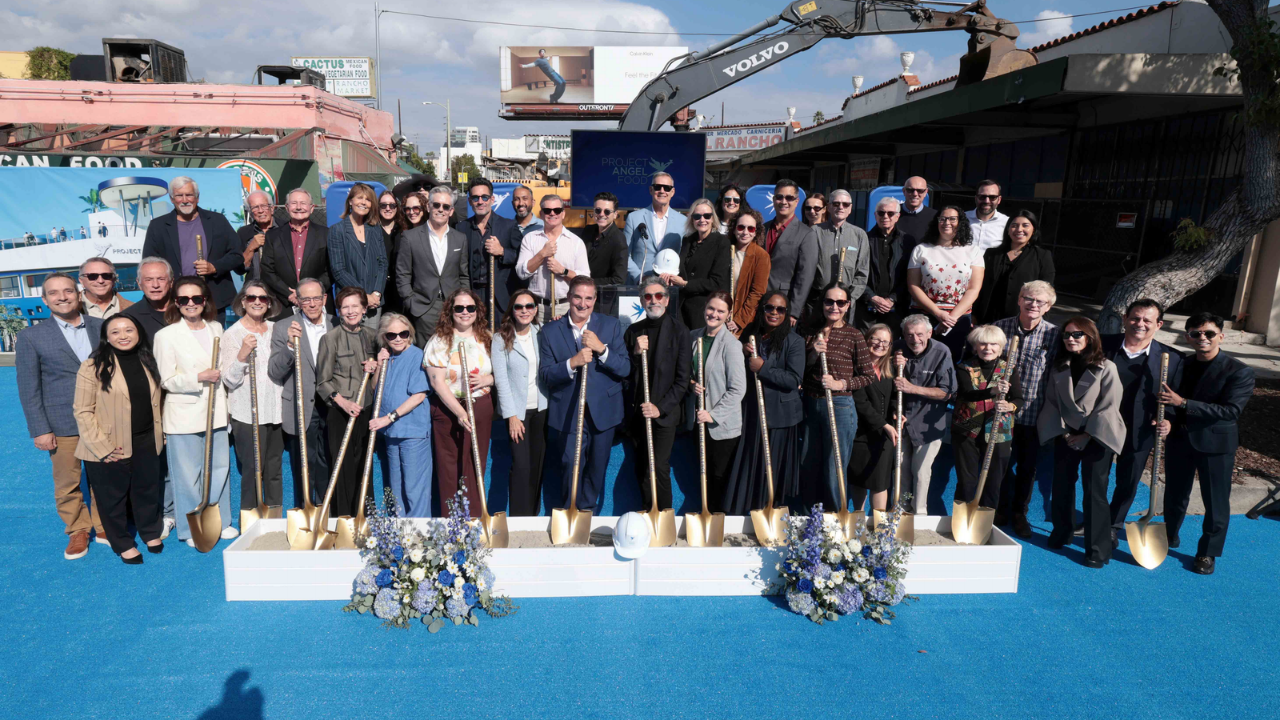
Shovels hit the dirt for the final phase of a sprawling, multi-building sanctuary backed by television titan Chuck Lorre—a project that just crossed its most critical threshold by firing up the stoves in its brand-new commercial kitchen and breaking ground on its concluding structure. On paper, it reads like standard civic philanthropy: a Hollywood producer writes a massive check, a nonprofit cuts a ribbon, and another building goes up in Los Angeles.
Look closer, though, and you realize this is not charity as usual. It is a quiet rebellion against everything we get wrong about poverty.
The Architecture of a Broken System
To understand why a single construction site in downtown Los Angeles matters, you have to picture what happens to a person when the floor drops out from under them.
Consider a hypothetical composite—let’s call him Marcus, a 48-year-old former warehouse supervisor whose life unraveled after a back injury, two surgeries, and an eviction notice. Marcus isn't a statistic. He is a man who knows how to manage inventory, read a manifest, and show up ten minutes early for a shift. Yet once he landed on the street, the city’s fragmented aid system treated him like an infant.
To get a hot meal, Marcus had to stand in one line three miles east. To see a doctor about his lingering pain, he had to take two buses west and wait four hours in a fluorescent-lit lobby. To apply for housing, he needed a caseworker located somewhere else entirely, assuming he hadn't lost his ID when his backpack was stolen two Tuesdays ago.
Exhaustion. That is the invisible tax of being poor in America.
When every basic human need is scattered across a sprawling metropolis, survival becomes a full-time job with zero pay and no days off. You spend so much energy simply staying alive until sundown that you have nothing left to rebuild a life. Philanthropy, for all its good intentions, often mirrors this fragmentation—funding a soup kitchen here, a clinic there, a shelter somewhere else, leaving the broken human being in the middle to stitch the pieces together alone.
Why a Kitchen Comes Before the Roof
When news broke that the Chuck Lorre Family Foundation had backed a comprehensive Los Angeles charity campus—and that the facility had officially opened its kitchen right before breaking ground on its final building—most casual readers probably skimmed past the sequence of events.
They shouldn't have. The order of operations tells the whole story.
In traditional real estate development, you build the shell, finish the rooms, and worry about the amenities last. In human recovery, food is not an amenity. Food is the handshake. You cannot talk to someone about trauma therapy, job training, or permanent supportive housing when their blood sugar is crashing and they haven't eaten a real meal since yesterday afternoon.
Walk into a commercial kitchen that has just come alive for the first time, and your senses wake up immediately. The metallic clatter of sheet pans. The sharp, bright scent of chopped onions hitting hot olive oil. The steady hum of walk-in refrigerators and the warmth radiating from industrial ovens. A real kitchen—not a warming station for pre-packaged trays, not a window handing out cold burritos—sends an unmistakable message to anyone who sits down at the table: You are worth the effort of cooking.
By opening the kitchen first, the campus established its heartbeat before pouring the concrete for its final walls. It created a gathering point where trust could be built over a warm plate, turning strangers into neighbors long before anyone asked them to fill out an intake form.
The Man Behind the Curtain
It is easy to be cynical about Hollywood philanthropy. Los Angeles is full of galas where people in rented tuxedos applaud themselves for writing tax-deductible checks before climbing into black SUVs that whisk them back to the hills.
Chuck Lorre’s involvement feels different precisely because of how little noise he makes about it.
Millions of people know Lorre as the architect of modern network comedy—the mind behind The Big Bang Theory, Two and a Half Men, Mom, and The Kominsky Method. His television empire was built on a very specific kind of storytelling: messy, deeply flawed people sitting around kitchen tables and living rooms, trying to figure out how to stay sober, keep a job, or forgive each other. Beneath the punchlines of a show like Mom, which dealt unflinchingly with addiction, relapse, and poverty, sat a writer who clearly understood that recovery is rarely a straight line.
Lorre has spent years channeling his staggering financial success into the Chuck Lorre Family Foundation, quietly funding healthcare, education, and housing initiatives without demanding his name be plastered across every press release. When he throws his weight behind a multi-building campus in Los Angeles, he isn't buying a legacy. He is applying the same structural logic to civic life that he applies to a television script: if you want the characters to survive the third act, you have to give them a room where they can actually talk to each other.
Breaking Ground on the Final Piece
Which brings us to the dirt turning on that final building.
In construction, breaking ground on the last structure of a master-planned campus marks the moment an ambitious blueprint stops being a dream and becomes an ecosystem. Up until that point, a campus is an incomplete sentence. You have the dining hall, perhaps the medical wing or the administrative offices, maybe the initial residential units—all functioning, all helping people, yet still missing the keystone that locks the arch into place.
Think of a campus like a suspension bridge. The towers can be magnificent, and the deck can look solid, but until the final cables are anchored and tensioned, the bridge cannot carry its full weight.
This final building represents the closing of the loop. Instead of forcing a resident like our hypothetical Marcus to navigate a maze of disconnected city agencies, a unified campus brings the entire continuum of care onto a single footprint. A person can wake up in a safe bed, walk across a courtyard for a hot breakfast prepared in that newly opened kitchen, step into a clinic down the hall for medical or mental health care, and spend the afternoon in job readiness classes—all without ever having to pack their belongings into a plastic bag and wonder where they will sleep tonight.
The Invisible Economics of Permanence
Critics of comprehensive campuses often balk at the price tag. Building from the ground up in Los Angeles is notoriously expensive, tangled in zoning laws, environmental reviews, and soaring material costs. Why spend tens of millions of dollars on permanent architecture when you could buy thousands of tents or rent out empty motel rooms tomorrow?
Because emergency band-aids are the most expensive mistake a city can make.
Every time a person living on the street cycles through an emergency room for an untreated infection, gets arrested for sleeping on a sidewalk, or enters a temporary shelter only to be discharged back onto the asphalt thirty days later, taxpayers bleed money while the human being deteriorates further. Studies across major American cities consistently show that permanent supportive housing and integrated service campuses dramatically reduce emergency room visits, police interactions, and chronic street homelessness.
More importantly, permanence changes psychology.
When a city builds something solid—with real brick, steel, landscaped courtyards, and commercial kitchens—it tells the neighborhood that the people inside are not disposable. You do not build a multi-building campus for people you intend to sweep under the rug. You build it for people you expect to heal.
What Happens When the Dust Settles
Of course, buildings do not save people. People save people.
Even the most thoughtfully designed campus in Los Angeles will face brutal headwinds the moment the construction crews pack up their tools. Addiction does not vanish because a dining hall serves fresh vegetables. Severe mental illness does not evaporate because a courtyard has shade trees. Staff burnout in social work is real, funding cycles are unpredictable, and the sheer scale of Los Angeles’s housing crisis—where tens of thousands of residents remain unhoused on any given night—can make even a multi-building triumph feel like a bucket emptied into a rising tide.
Anyone who tells you a single campus solves homelessness is selling you a fairy tale.
Yet despair is a luxury that solves nothing. The alternative to building imperfect, ambitious sanctuaries is surrendering entire zip codes to slow-motion tragedy. When a community watches a derelict lot transform into a living, breathing neighborhood—first the kitchen lighting up, then the final foundation being poured—it shifts what people believe is possible. It proves that the machinery of this city, so often paralyzed by bureaucracy and cynicism, can still move dirt and raise walls for the people at the very bottom of the ladder.
Late at night in downtown Los Angeles, the neon signs still buzz over empty sidewalks, and the concrete still holds the day's heat. Somewhere inside that newly opened kitchen, stainless steel counters are being wiped down, pots are stacked neatly on racks, and prep lists are taped to the wall for tomorrow morning. Just across the yard, behind temporary chain-link fencing, the freshly dug earth waits for concrete and steel.
Tomorrow at six in the morning, the ovens will preheat, the coffee will brew, and the doors will unlock.