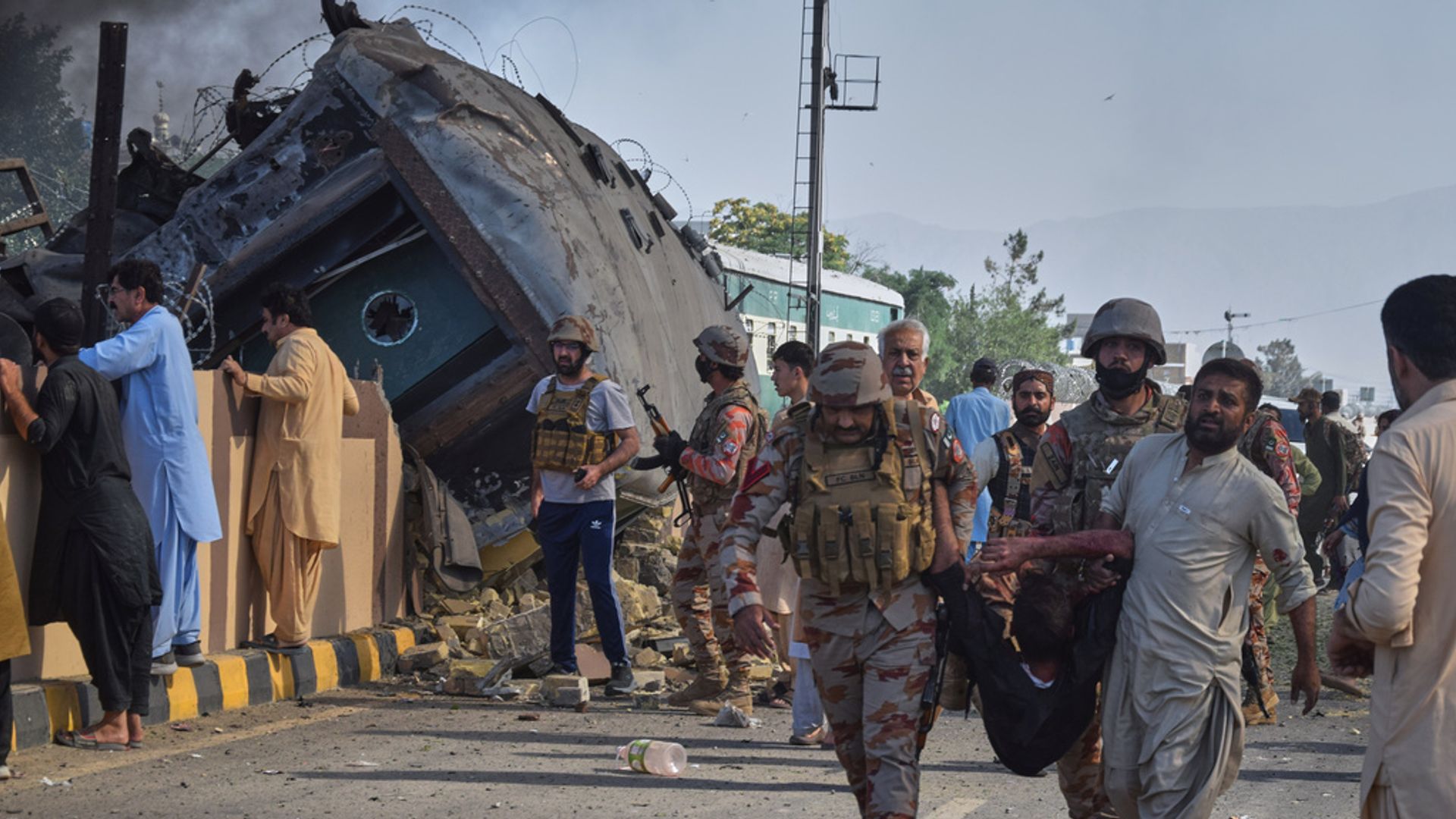
A devastating blast shattered the early morning calm in Quetta on Sunday, proving once again that Pakistan's transport infrastructure remains incredibly vulnerable to insurgent strikes. At least 24 people are dead and over 50 others are injured after an explosive-laden vehicle rammed into a shuttle train passing through the Chaman Phatak area. The train was carrying military personnel and their families from Quetta Cantt, many of whom were traveling ahead of the upcoming Eid holidays.
The outlawed Baloch Liberation Army (BLA) quickly claimed responsibility for the targeted "fidayee" or suicide operation. By striking a moving train packed with army servicemen and civilians, the separatist group has delivered a massive blow to the state's security apparatus. The blast was so powerful that it derailed three coaches, including the locomotive, and flipped two carriages completely on their sides. This isn't just another localized incident. It is a stark reminder of the escalating asymmetric warfare gripping Balochistan.
The Chaman Phatak Incident and Immediate Fallout
The attack occurred shortly after 8:00 AM local time as the train passed a signal near the Chaman Phatak railway area. According to eyewitness accounts and security officials, a vehicle packed with explosives struck one of the main carriages. The impact triggered a massive fireball, sending thick black smoke into the air and shattering windows of buildings blocks away. At least 10 parked vehicles near the tracks were instantly incinerated or severely damaged.
Rescuers, volunteers, and paramilitary forces rushed to the scene to pull survivors from the mangled, overturned metal coaches. Local authorities immediately declared a medical emergency at all government hospitals across Quetta, summoning off-duty doctors and medical staff to manage the influx of critically wounded passengers. Meanwhile, railway officials halted the Peshawar-bound Jaffar Express at the main Quetta Railway Station as a precautionary measure to prevent further tragedy.
Behind the BLA Strategy to Target Transport Hubs
To understand why this happened, you have to look at the shifting tactics of the BLA and its specialized suicide wing, the Majeed Brigade. The group has moved away from low-level hit-and-run tactics against remote outposts. Instead, they're launching highly coordinated operations against high-value logistics and transit networks.
- Exploiting Holiday Travel: The militants knew the train would be packed with military personnel taking leave for Eid. By striking during a peak travel window, they maximized casualties and guaranteed international media attention.
- Economic and Logistical Sabotage: Trains and tracks are the literal lifelines connecting Balochistan to the rest of Pakistan. By turning transit corridors into free-fire zones, the BLA effectively cripples regional mobility and terrifies the public.
- Direct Confrontation with the State: In their public statement, BLA spokesperson Jeeyand Baloch explicitly stated they targeted "occupying forces." They want to show they can hit the military anywhere, even inside heavily patrolled cantonment zones and major transit checkpoints.
The Deeper Crisis Facing Balochistan
Honestly, the Pakistani government is playing a perpetual game of whack-a-mole in its largest, poorest province. Balochistan makes up nearly half of Pakistan's landmass but holds only a fraction of its population. It is incredibly rich in natural gas, copper, and gold. Yet, the local population sees almost none of that wealth.
This deep-seated economic marginalization feeds the separatist narrative. Groups like the BLA argue that Islamabad is merely exploiting Baloch resources without offering development, safety, or political autonomy in return. The multi-billion-dollar China-Pakistan Economic Corridor (CPEC) projects in the province have only worsened these tensions, as locals feel pushed aside by foreign interests and federal security forces.
Whenever an attack of this scale happens, the political response is completely predictable. Prime Minister Shehbaz Sharif condemned the "cowardly act of terrorism" and promised that national resolve wouldn't weaken. Balochistan Chief Minister Sarfraz Bugti vowed to hunt down the masterminds and facilitators, labeling them the "terrorists of Fitna Al-Hindustan." But tough talk doesn't fix a broken intelligence grid.
Moving Past Routine Condemnations
If Pakistan wants to secure its transit lines, it has to change how it protects public infrastructure. Hardening stationary targets like major railway stations isn't enough when hundreds of miles of open track remain completely exposed.
First, security agencies must deploy advanced drone surveillance and real-time monitoring along urban rail corridors like Chaman Phatak. A vehicle loaded with explosives shouldn't be able to easily approach a moving military shuttle at a crossing. Second, there needs to be a serious overhaul of local intelligence sharing between civilian police and military intelligence. The BLA managed to plan, equip, and execute a complex suicide mission right under the nose of the Quetta security apparatus.
Ultimately, military force alone won't end this insurgency. Until the federal government addresses the core economic grievances of the Baloch people and ensures they actually benefit from the wealth under their feet, militant groups will find a steady stream of recruits willing to drive explosives into the side of a train. Securing the tracks means securing the trust of the local population.
This Sky News video report shows the immediate aftermath, rescue efforts, and security response on the ground following the devastating blast in Quetta.