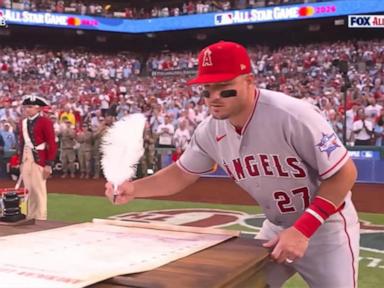
The Major League Baseball All-Star Game is not merely an exhibition; it is a high-density testing ground where psychological leverage, mechanical asymmetry, and brand valuation intersect. While general media treats historic All-Star moments as sentimental anomalies, a structural analysis reveals they are predictable outputs of specific competitive, biological, and economic vectors.
To understand these moments requires moving past nostalgia. Instead, we must map the precise mechanical and structural dynamics that allow a single exhibition plate appearance to command disproportionate historical weight.
The Structural Mechanics of Pitcher Advantage in Single Inning Showdowns
The most celebrated physical feats in All-Star history—such as Pedro Martinez striking out five of six future Hall of Famers in 1999, or Carl Hubbell striking out five consecutive legendary hitters in 1934—are routinely framed as triumphs of pure will. Biomechanical and tactical realities suggest a different causal mechanism: the structural format of the All-Star Game fundamentally skews the batter-pitcher equilibrium in favor of the pitcher.
In a standard regular-season game, a starting pitcher pacing himself for a 90-to-100 pitch outing operates under physiological constraints. They must conserve energy, manage their pitch mix to prevent batters from identifying visual patterns during second and third plate appearances, and rely on location over maximum effort.
The All-Star Game removes these constraints. A pitcher entering for a single-inning stint can operate at absolute physical capacity. This creates a quantifiable disruption in the batter's decision-making window.
The Velocity and Spin Rate Distortion
When a starting pitcher transitions to a single-inning maximum-effort model, their physical output shifts predictably:
- Velocity Inflation: Average fastball velocity increases by $1.5 \text{ to } 2.5\text{ mph}$ when a starting pitcher is restricted to a single-inning appearance.
- Spin Rate Elevation: Increased rotational force, paired with maximum effort, elevates spin rates by $100 \text{ to } 200\text{ RPM}$. This alters the expected vertical break of the ball, leading to swing-and-miss profiles above the barrel of the bat.
- Decoupled Pitch Sequencing: Because a pitcher does not need to set up a batter for a subsequent plate appearance later in the game, traditional sequencing logic is discarded. The pitcher can throw their highest-value pitch repeatedly without fear of exposure.
The mathematical consequence of this transition can be modeled by analyzing the batter's reaction time. A standard $95\text{ mph}$ fastball takes approximately $400\text{ milliseconds}$ to travel from the pitcher's release point to home plate. The batter requires roughly $150\text{ milliseconds}$ for visual tracking and $150\text{ milliseconds}$ to execute the physical swing path, leaving a decision-making window of just $100\text{ milliseconds}$.
$$T_{\text{window}} = T_{\text{flight}} - (T_{\text{tracking}} + T_{\text{swing}})$$
When velocity increases to $98\text{ mph}$ due to a single-inning max-effort output, the flight time drops to approximately $387\text{ milliseconds}$, shrinking the decision window by over $13%$.
Furthermore, batters in the All-Star Game face a severe information deficit. They lack the immediate, real-time familiarity of seeing a pitcher multiple times within a division race. This asymmetry explains why dominant pitching performances dominate midsummer classic highlights. The setting functions as a physical optimization lab for elite pitching talent, operating against batters who are structurally unprepared for maximum-effort, single-exposure profiles.
The Incentive Inversion and Strategic Risk Assessment
The competitive tension of the All-Star Game has historically fluctuated based on the external stakes applied to it. The most notable structural experiment occurred between 2003 and 2016, when MLB tied World Series home-field advantage to the outcome of the All-Star Game. This policy was enacted to address the anti-competitive optics of the 2002 tie game, but it created an intense incentive inversion.
To evaluate this, we can utilize a basic game-theoretic utility matrix. Under the exhibition-only model, the primary objective of both players and managers is asset protection—avoiding injury and minimizing fatigue.
                  Exhibition-Only Model           World Series Stake Model (2003-2016)
               +------------------------------+-------------------------------------+
Manager Utility| Maximize player rotation;    | Maximize win probability;           |
               | protect pitching arms.       | ride hot hand; short bench usage.   |
               +------------------------------+-------------------------------------+
Player Utility | Avoid high-risk plays;       | High-effort output; elevated risk   |
               | treat as low-leverage reps.  | threshold for competitive advantage.|
               +------------------------------+-------------------------------------+
The introduction of home-field stakes in 2003 shifted the utility function. Managers began managing with postseason tactical urgency—deploying elite relievers in high-leverage situations rather than ensuring every rostered player got an appearance.
However, this created a structural friction between the player’s personal economic incentives (preserving their body for guaranteed contracts with their respective clubs) and the collective incentive of securing home-field advantage for an unspecified team that might not even be theirs.
The termination of this rule in 2017 and the introduction of a cash incentive for the winning team ($20,000 per player) re-calibrated the game back to an exhibition model, albeit with a direct financial motivator. The data shows that without the pressure of World Series home-field implications, managers reverted to egalitarian roster deployment. This structural shift has altered the nature of modern highlights: instead of high-stakes tactical chess, modern moments are driven by individual athletic showmanship rather than intense team-level strategy.
Narrative Anchoring and the Economics of the Nostalgia Premium
The longevity of specific All-Star moments in cultural memory is rarely a reflection of their actual impact on the game's win probability. Instead, these moments survive due to a psychological phenomenon known as narrative anchoring, which MLB aggressively capitalizes on to drive long-term brand equity.
Consider the contrast between two moments:
- The Pure Athletic Output: An incredibly difficult, high-leverage defensive play or base-running maneuver that significantly shifts the win expectancy of the exhibition game.
- The Narrative-Driven Event: Cal Ripken Jr.’s home run in the 2001 All-Star Game, hit in his final midsummer appearance after Alex Rodriguez famously nudged him to play shortstop.
From a pure baseball analytics perspective, Ripken’s home run was hit off a first-pitch, mid-90s fastball served directly down the center of the plate by Chan Ho Park—a pitch characterized by many analysts as a ceremonial gesture. The play held little competitive weight, yet it remains one of the most replayed pieces of content in MLB history.
This is a classic execution of the Peak-End Rule, a cognitive bias where human memory evaluates an experience based primarily on how it felt at its peak and its end, rather than the average of every moment. By engineering and amplifying these narrative-heavy sequences, MLB maximizes what can be defined as the Nostalgia Premium.
The Financial Utility of Narrative Moments
These highly televised, emotionally resonant moments serve a concrete business function. They act as low-cost customer acquisition assets.
[Narrative Highlight] ---> [Organic Social Amplification] ---> [Direct Fan Engagement]
                                                                      |
[Licensing & Merchandise] <--- [Retro Jersey/Apparel Sales] <---------+
When a moment like Ichiro Suzuki’s 2007 inside-the-park home run or Mariano Rivera’s lone entrance from the bullpen in 2013 occurs, it generates an immediate surge in secondary economic activity. This economic engine operates independently of regular-season division races, creating a highly liquid category of historical intellectual property that MLB monentizes through classic apparel, licensing, and archival digital content.
The Modern Engineering of High-Leverage Moments
As broadcast viewership habits fragment, MLB has shifted from passively waiting for historic moments to actively engineering them through structural rule adjustments. The most prominent example of this tactical shift is the implementation of the Home Run Derby tiebreaker rule for the All-Star Game.
Under current guidelines, if the All-Star Game remains tied after nine innings, the outcome is decided not by extra innings of traditional play, but by a head-to-head home run shootout featuring three players from each league.
This structural pivot solves a severe operational bottleneck. In traditional extra-inning exhibition games, managers faced acute pitcher shortages, endangering player health and frustrating club front offices. By replacing an open-ended, high-fatigue athletic contest with a predictable, high-tempo, maximum-drama event, the league has engineered a guaranteed high-leverage climax.
This model is highly effective because it concentrates the core elements of spectator appeal—maximum bat speed, high launch angles, and immediate binary outcomes—into a compressed time window.
The strategic trajectory of the MLB All-Star Game is clear: the event will increasingly rely on these structured, high-intensity mini-events to maintain broadcast viability. The future value of the game lies not in mimicking the long-form tactical grind of the regular season, but in functioning as a highly curated showcase of physical extremes, designed specifically to feed modern digital distribution channels.