Israel just hit military targets in Southern Syria again, and Qatar isn't staying quiet about it. On March 20, 2026, the Qatari Ministry of Foreign Affairs issued a sharp condemnation of the airstrikes, calling them a "flagrant violation" of Syrian sovereignty. This isn't just another routine diplomatic complaint. It’s a signal of how high the stakes have climbed in a region already on the brink of a much larger blowup.
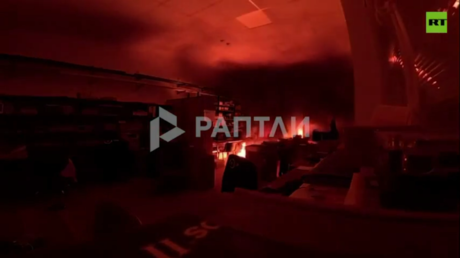
The strikes specifically targeted the Daraa province in Southern Syria. According to reports from the area, Israeli warplanes hit an office belonging to the 40th Division of the Syrian Ministry of Defense near the town of Izraa. While initial reports suggest the damage was mostly material—no immediate casualties were confirmed—the timing and the location make this a powder keg.
The Druze Factor and Israel's Justification
Israel didn't hide behind the usual "ambiguous" silence this time. The Israel Defense Forces (IDF) stepped up and claimed responsibility, but with a specific twist. They’re framing these strikes as a defensive move to protect Druze civilians.
Apparently, there was an attack on Druze residents in the Sweida area the day before. The IDF stated they won't tolerate harm to the Druze population in Syria and will continue to operate to defend them. Defense Minister Israel Katz even went on the record saying Israel won't let the Syrian government use the chaos of the ongoing war against Iran and Hezbollah as a cover to target minorities.
It’s a complicated mess. You’ve got a sovereign nation (Syria) being hit by a neighbor (Israel) who claims they’re acting as a self-appointed protector of a specific ethnic group within that nation's borders. It’s easy to see why Qatar and others view this as a total meltdown of international law.
Qatar's Stance and the Regional Fallout
Qatar’s reaction was swift and didn't pull any punches. Doha argued that the international community's failure to stop these "unchecked practices" is exactly why the crisis keeps getting worse. They’re basically saying that if you let one country ignore the rules of the UN Charter, you can’t act surprised when the whole neighborhood catches fire.
There’s also the 1974 Disengagement Agreement to think about. That’s the old deal meant to keep the peace between Israel and Syria after the Yom Kippur War. Qatar and Syria both pointed out that these airstrikes are a direct breach of that decades-old agreement. When those old treaties start to crumble, there isn't much left to prevent a full-scale ground war.
Honestly, the region is a tinderbox right now. Just a day before these strikes, Qatar was dealing with its own security issues, including reports of Iranian escalations in the Gulf. The fact that Doha is still prioritizing a defense of Syrian sovereignty shows they’re trying to stick to a consistent legal principle, even when their own backyard is getting messy.
What actually happened on the ground?
- Target: Military infrastructure and a command center in Daraa province (specifically the 40th Division).
- Method: Israeli warplanes launched airstrikes from outside Syrian airspace.
- Result: Significant material damage to military compounds; no confirmed deaths as of the latest updates.
- IDF Reason: Retaliation for alleged attacks on Druze civilians in Sweida.
Why this matters for the rest of 2026
If you're watching the news and thinking this is just "more of the same" in the Middle East, you're missing the bigger picture. We’re seeing a shift where Israel is more willing to openly strike Syrian government targets—not just Iranian "proxies"—and justify it through humanitarian or ethnic protection lenses.
This sets a wild precedent. If any country can decide to bomb its neighbor because they don't like how that neighbor is treating a specific group of people, the concept of "sovereignty" becomes pretty much worthless. Qatar knows this. That’s why their statement emphasized that the "continuation of these practices without deterrence" is a threat to everyone's security, not just Syria's.
You should keep a close eye on the Druze-majority areas like Sweida and the border regions in Daraa. If the IDF continues to play the "protector" role, we could see more direct clashes between Israeli jets and the Syrian Arab Army.
To stay ahead of this, don't just look for "Israel vs. Syria" headlines. Watch the diplomatic movements from the GCC (Gulf Cooperation Council). If Qatar and its neighbors start pushing for an emergency UN Security Council meeting, that's your sign that the situation is moving from "skirmish" to "regional crisis." Check the official Qatar News Agency (QNA) feeds for the most direct statements, as they often get the first word on Doha's shifting foreign policy.