You can't fake economic normalcy when the skyline is on fire.
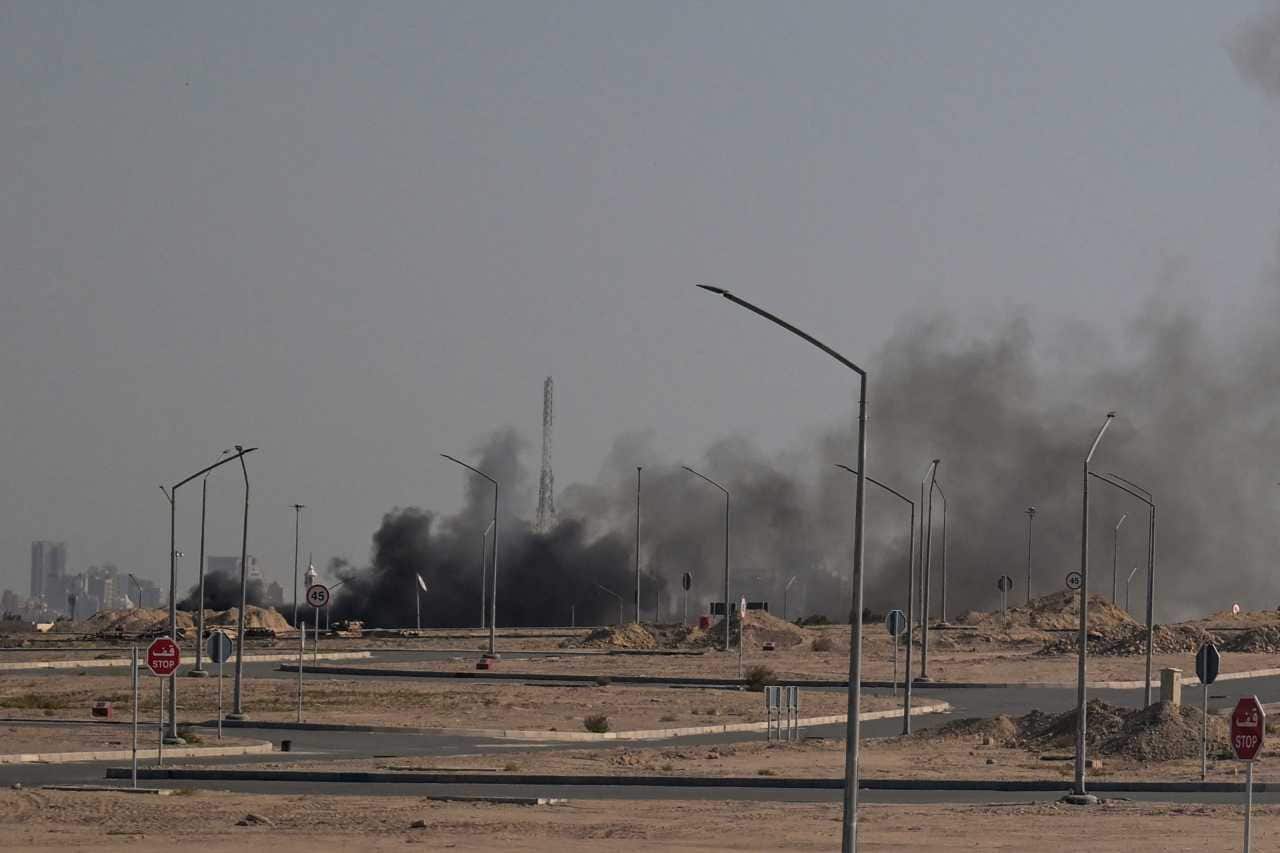
Vladimir Putin wanted the world to see a picture of unyielding Russian financial strength this week. Instead, international delegates arriving in St. Petersburg for the annual International Economic Forum stepped off their planes to the sight of thick, black smoke blotting out the sun. Russia's second-most important city and Putin's own birthplace just learned that a 1,100-kilometer buffer zone means absolutely nothing anymore.
Hours before the event dubbed "Putin’s Davos" could officially kick off, a wave of Ukrainian long-range drones completely bypassed Russian air defenses. They slammed into the St. Petersburg Oil Terminal, one of the Kremlin's largest energy export hubs on the Baltic Sea coast. The message from Kyiv wasn't subtle. It was timed to perfection, explicitly engineered to puncture the illusion of an isolated nation thriving under Western sanctions.
The Myth of the Sovereign Economy
For years, the St. Petersburg International Economic Forum served as a playground for Western CEOs, European prime ministers, and global investment bankers looking to cash in on Russia's vast resources. It was a slick, high-gloss production meant to project prestige. Post-2022, those blue-chip investors vanished. The Kremlin tried to rebrand, calling it a gathering of "sovereign countries" and attacking the traditional Swiss Davos as a globalist relic.
Look at who actually showed up this year to fill the void. The guest list reads less like a global economic powerhouse and more like a bizarre patchwork of geopolitical leftovers, far-right influencers, and a few key regional allies. You have the presidents of Uzbekistan and Tanzania sitting alongside ministers from Cuba and Saudi Arabia. You have a delegation from North Korea. To add a surreal touch of contemporary pop culture, the far-right American influencer Candace Owens and the notorious Tate brothers are roaming the halls, alongside an official U.S. cultural representative overseeing White House ballroom designs for the Trump administration.
The Kremlin desperately needs these guests to believe that the Russian economy is bulletproof. They want you to look at their defense-driven GDP growth figures and ignore the underlying rot. But it's hard to pitch a stable investment environment when the host city has to shut down its airport, scramble its emergency response teams, and completely cut off mobile internet access across the metropolitan area just to keep the local population from sharing videos of incoming attacks.
Deep Strikes and the Crumbling Baltic Shield
The strategic significance of this specific strike goes way beyond a few ruined photo opportunities for Kremlin propagandists. The Petersburg oil terminal handles up to 12.5 million tons of cargo annually. It's a critical artery feeding the Russian war machine. Taking it offline, even temporarily, hits the Kremlin exactly where it hurts: the energy revenues keeping the state budget afloat.
Ukrainian President Volodymyr Zelenskyy didn't mince words, calling the operations a system of "long-range sanctions" enforced by Ukrainian soldiers rather than foreign diplomats.
"The distance from Ukraine's state border to this facility of Russia's oil industry, which serves the war, is about 1,100 kilometres," Zelenskyy stated. "Ukraine's program of long-range sanctions is being implemented exactly as needed to bring peace closer."
It wasn't just the oil terminal that took a hit. The drone campaign executed a synchronized strike on several highly sensitive military installations in the region:
- The Kronstadt Naval Base: Located on an island just off St. Petersburg, this base is the historical heart of the Russian Baltic Fleet.
- The Guided-Missile Corvette Boikiy: Ukrainian Unmanned Systems Forces, led by commander Robert Brovdi, released footage showing a drone slamming directly into the warship while it sat in dry dock undergoing repairs, igniting a severe fire.
- The Tambov Defense Plant: Roughly 600 kilometers from the Ukrainian border, drones struck the Progress military facility in Michurinsk, which manufactures specialized aviation and missile control systems.
Think about the sheer technical achievement here. These drones flew over a thousand kilometers through some of the most heavily defended airspace on earth. Russian authorities claimed their air defenses shot down dozens of targets across the wider Leningrad region. Leningrad Governor Alexander Drozdenko boasted about downing 59 drones. But the reality is written in the smoke. Too many got through.
The High Cost of the Tit-for-Tat Campaign
Don't mistake these long-range drone operations for an isolated act of aggression. They're a direct, calculated response to the devastating aerial terror Moscow regularly inflicts on Ukrainian civilians. Just 24 hours prior to the St. Petersburg explosions, a massive Russian missile and drone barrage pummeled Kyiv and Dnipro, killing 23 people and injuring more than 150.
Ukraine is fighting with one hand tied behind its back. While its homegrown drone industry has rapidly innovated—hitting 20 Russian oil terminals in just over a month—Kyiv is facing a critical bottleneck in conventional air defense. The country is burning through American-made Patriot interceptor missiles at an unsustainable rate.
The political friction behind this deficit is spilling out into the open. Zelenskyy recently expressed rare, blunt frustration with his own government bureaucracy. He noted that while political agreements for Patriot purchases exist at the highest levels, internal legal, financial, and technical hang-ups are stalling actual deliveries. He openly warned his officials that if these supply lines aren't unblocked immediately, "serious personnel decisions" will follow.
Meanwhile, NATO Secretary-General Mark Rutte, speaking from Kyiv, acknowledged the strains on Western stockpiles but insisted the flow of interceptors remains steady, limited only by current manufacturing capacities.
What This Means for the Front Lines
The frontline battlefields in eastern and southern Ukraine are currently locked in a brutal, static war of attrition. Massive troop movements are virtually impossible because the skies are completely saturated with tactical reconnaissance and strike drones. Whoever tries to move gets spotted and neutralized within minutes.
Because neither side can achieve a clean breakthrough on the ground, the conflict has transformed into a deep strategic bombing competition. Russia is trying to systematically destroy Ukraine's power grid and terrorize its cities into submission. Ukraine is systematically dismantling the economic infrastructure that pays for those Russian missiles.
When Kremlin spokesman Dmitry Peskov tells state television that Russia will respond "systematically" and claims the war is being carried out "precisely so that there are no such strikes," he's trying to save face. The truth is the exact opposite. By launching a full-scale invasion, Putin brought the war directly to his hometown's doorstep.
If you want to track where this war goes next, look away from the muddy trenches of the Donbas for a moment. Watch the Russian oil refineries, the Baltic ports, and the defense plants deep in the interior. Kyiv has proved it can hit them at will. The illusion of safety in western Russia is officially dead, and no amount of high-flown economic forum rhetoric can bring it back.