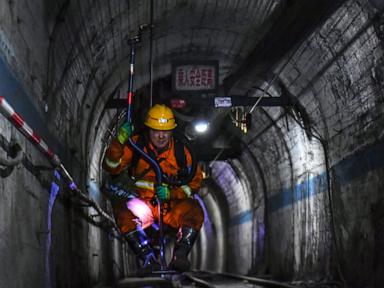
The headlines write themselves. A deadly gas explosion rips through a coal mine in China. Dozens of miners lose their lives. Within days, state media proudly announces that a top-level mine-safety official is under investigation for corruption.
The public nods in collective approval. The narrative is comforting, neat, and utterly wrong.
The lazy consensus among mainstream journalists is that mine disasters are primarily moral failures—the direct result of greedy, bribed officials turning a blind eye to safety violations. According to this view, the solution is simple: root out the bad apples, parade them in front of a tribunal, and the mines will magically become safer.
It is a beautiful lie.
I have spent years analyzing industrial supply chains, regulatory frameworks, and the brutal economics of heavy industry. Here is the uncomfortable truth nobody wants to admit: executing or imprisoning corrupt officials does absolutely nothing to fix the systemic risk of coal extraction. In fact, relying on anti-corruption crackdowns as a safety strategy actually makes mines more dangerous.
The Illusion of the Greedy Bureaucrat
When a gas explosion occurs, the immediate reaction is to look for a scapegoat. A local safety inspector took a payoff to sign off on a faulty ventilation system. Case closed.
But this hyper-focus on individual corruption misses the macro-economic reality of energy production.
Let’s look at the actual mechanics of the coal industry. In rapidly developing economies, coal is not just a commodity; it is the lifeblood of the power grid. When winter temperatures plunge, or when manufacturing demands surge, the state demands one thing above all else: output.
Mining companies face a brutal, conflicting mandate:
- Maximize production to prevent blackouts.
- Maintain perfect, zero-accident safety records.
When these two goals collide—and they collide daily—production wins. It has to. A local blackout can cripple a regional economy, shutter factories, and trigger widespread social unrest. A safety violation, on the other hand, is a theoretical risk until it isn't.
When we blame "corruption" for safety failures, we pretend that the system is designed to prioritize safety but is being subverted by bad actors. The reality is far more chilling. The system is designed to prioritize volume, and safety is a luxury constraint. An inspector who shuts down a major mine for a minor ventilation issue during a peak-demand crisis is not seen as a hero; they are seen as a bureaucratic nuisance sabotaging economic targets.
Why Anti-Corruption Campaigns Breed Worse Disasters
Let's run a thought experiment. Imagine a regional safety official who is terrified of being caught in the next anti-corruption sweep. He refuses all bribes. He inspects every shaft by the book.
Does the mine become safer? Not necessarily. Instead, the risk simply migrates.
When regulatory pressure becomes too intense without a corresponding drop in production quotas, operators do not magically find the budget to install state-of-the-art automated gas detection systems overnight. Instead, they invest their energy into compliance theater and information suppression.
The Paradox of Fear
Under extreme scrutiny, mine managers stop reporting minor incidents.
- A small gas leak that should have been logged and repaired is swept under the rug to avoid triggering an audit.
- Near-misses are covered up.
- Workers are incentivized—or threatened—to keep quiet about failing equipment.
By the time a disaster actually happens, it is catastrophic. The anti-corruption drive did not eliminate the risk; it merely blinded the operators and regulators to the warning signs. You cannot fix a problem you are legally terrified to acknowledge.
The Real Culprit: The "Safety Deficit" Formula
Safety is not a moral virtue. It is a capital investment.
To understand why mines explode, you do not need to look at a bureaucrat's bank account. You need to look at the cost of extraction.
The fundamental formula of mine safety is governed by physical and financial inputs:
$$S_t = \frac{I_c \cdot T_d}{P_q}$$
Where:
- $S_t$ represents the safety threshold of the operation.
- $I_c$ is the capital investment in safety technology (automated gas monitoring, advanced ventilation, robotic drilling).
- $T_d$ is the training days per miner.
- $P_q$ is the production quota pressure.
When the state demands cheap coal to fuel heavy industry, the price of coal is artificially suppressed. When coal prices are low, profit margins vanish. When margins vanish, the variables in our equation shift dramatically: capital investment ($I_c$) is slashed, training ($T_d$) is cut to save hours, and production pressure ($P_q$) is cranked to the absolute limit to make up for low margins through sheer volume.
No amount of anti-corruption policing can alter this math. If a mine is economically unviable while operating safely, it will either shut down or it will cut corners. If the economy demands the coal, it will cut corners. The bribe paid to the inspector is not the cause of the corner-cutting; it is merely the transaction cost of surviving in a broken economic landscape.
The "People Also Ask" Lie: Dismantling the Common Wisdom
Go to any search engine and look up mine safety. You will find a list of naive questions answered by PR departments and academic theorists who have never stepped foot in a shaft.
"Can stricter laws prevent mine explosions?"
No. The laws are already strict. China, Russia, and the United States all have incredibly dense, complex safety codes on paper. The issue has never been a lack of rules; it is the physical and economic impossibility of complying with those rules while meeting production demands under current market prices. Adding more pages to the regulatory handbook just increases the cost of compliance theater.
"Why don't mines just automate to save lives?"
Because automation requires massive, long-term capital expenditure. In volatile commodity markets, mining companies cannot justify 10-year payback periods on advanced robotics when they might be forced to shut down next year due to a sudden shift in government green energy targets. If you want automation, you need to guarantee long-term price stability—something no government has been able to do.
How to Actually Stop the Explosions (The Unpopular Solution)
If purging corrupt officials is a useless cosmetic exercise, how do we actually keep miners from dying in gas explosions?
The solutions are deeply unpopular because they require economic sacrifice, not just moral outrage.
| Traditional (Failing) Approach | The Real, Disruptive Solution |
|---|---|
| Arrest corrupt inspectors | Deregulate production caps, regulate price floors |
| Focuses on the symptom (bribes) rather than the disease (unrealistic production pressure). | Guarantees mining companies the profit margins required to actually afford modern safety infrastructure. |
| Increase safety fines | Mandate third-party, automated data streams |
| Encourages mines to cover up accidents to avoid ruinous penalties. | Bypasses human inspectors entirely. Feed real-time gas level data directly to public, unalterable servers. |
| Send state auditors | Transition to deep-bore methane pre-drainage |
| Creates a cat-and-mouse game where mines clean up for a day, then resume normal operations. | Require weeks of methane extraction before a single miner enters a new coal seam, sacrificing short-term speed for long-term survival. |
If you want to save lives, stop looking for villainous officials to lock up. The bad guy isn't a corrupt inspector taking a brown envelope in a dusty provincial office. The bad guy is the consumer who demands cheap, uninterrupted electricity while refusing to pay the true, premium cost of safe extraction.
We have built a global economy that runs on cheap energy, and we pay for the deficit in blood. The corrupt official is just the guy who signs the receipt.