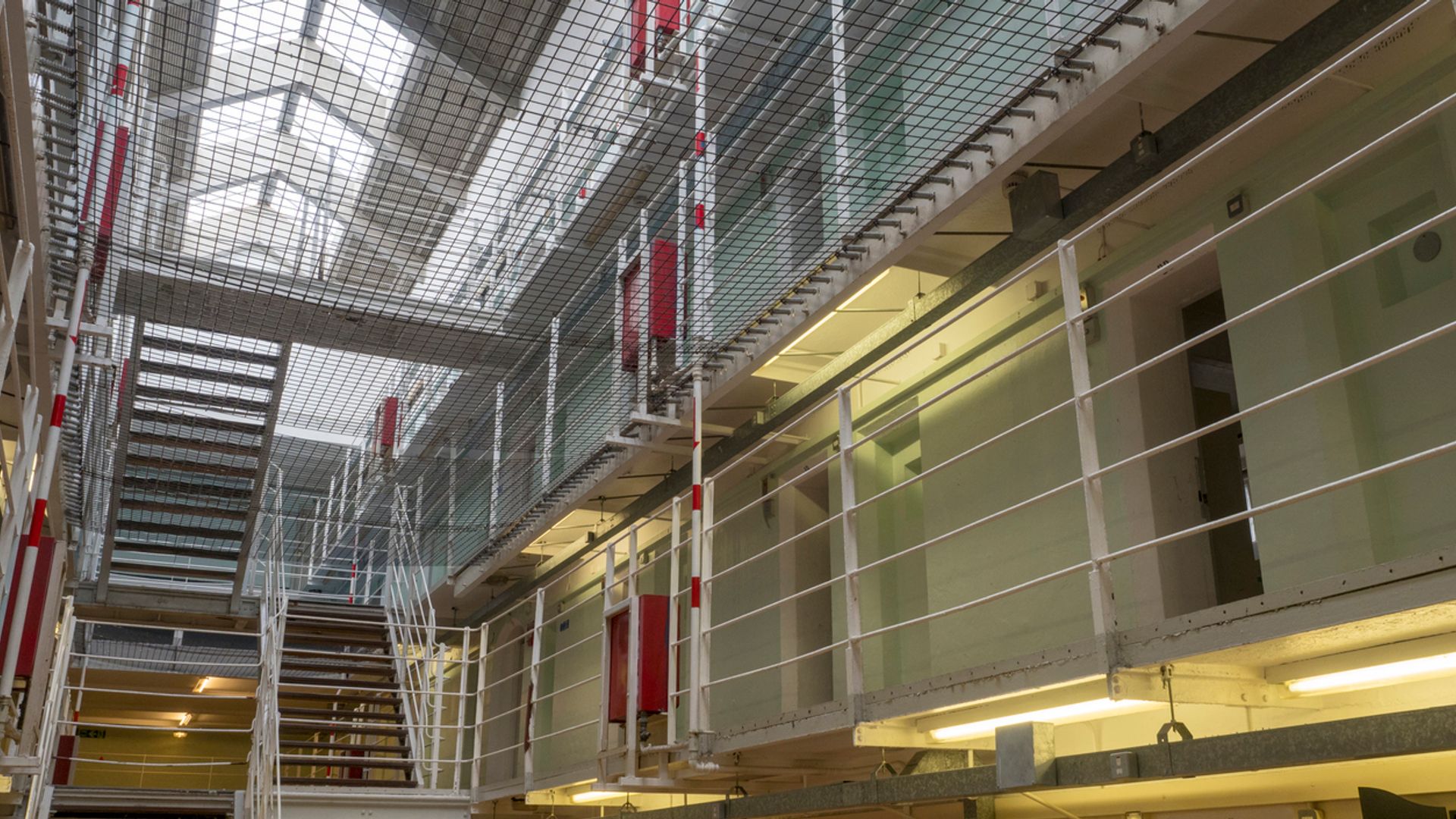
Prisoners and staff have been breathing in high levels of radon gas for years because of a massive failure in basic safety oversight. This isn’t just a minor administrative slip. It’s a health crisis that the Health and Safety Executive (HSE) finally addressed by issuing formal sanctions against the Prison Service. When you think of prison dangers, you probably think of violence or drugs. You don’t think of an invisible, odorless, radioactive gas seeping through the floorboards and slowly damaging the lungs of everyone inside.
Radon is the second leading cause of lung cancer after smoking. It’s a naturally occurring radioactive gas that comes from the decay of uranium in rocks and soil. Usually, it wafts away into the air and doesn't cause a stir. But when it gets trapped inside a building—especially older, poorly ventilated structures like many UK prisons—it builds up to lethal concentrations. The government knew about this risk. They had the maps. They had the sensors. They just didn't act fast enough to protect the people living and working behind those bars.
The HSE doesn't hand out Improvement Notices like candy. These are serious legal warnings. The fact that the Prison Service now faces these sanctions proves there was a systemic breakdown in how they manage environmental risks. If this happened in a private office block, the building would be evacuated and the owners would be sued into the ground. In the justice system, things tend to move much slower, and that delay has likely cost lives.
Why radon gas is the silent killer in our jails
Radon doesn't smell like anything. You can't see it or taste it. You could be sitting in a cell or a staff room right now breathing in radioactive particles that are literally "frying" your DNA, and you'd have no idea until a doctor shows you a scan ten years from now. That’s the terrifying reality of the situation at sites like HMP Dartmoor.
The geology of certain parts of the UK, particularly the South West, makes them radon hotspots. Granite is the main culprit. Because many of our prisons are built on or near these rock formations, they act like giant funnels for the gas. The HSE investigation found that the Prison Service failed to ensure that radon levels were kept as low as reasonably practicable. They weren't doing enough testing, and when they did find high levels, they weren't moving people out of the danger zones quickly enough.
It’s easy for the public to shrug and say, "Well, they're in prison." But that's a dangerous mindset. Prisons are also workplaces. Thousands of officers, teachers, nurses, and maintenance staff walk into those buildings every day. They have a right to a safe environment. Beyond the staff, prisoners are still human beings with a right to life. Ignoring a known radioactive hazard is a violation of basic human rights and a massive liability for the taxpayer who will eventually foot the bill for the inevitable healthcare costs and legal settlements.
The failure of the Prison Service to act on known risks
The most frustrating part of this scandal is that it was entirely preventable. Radon mitigation isn't some experimental space-age science. You install sumps, you improve ventilation, and you seal the floors. It's basic construction work. Yet, the Prison Service seemed to treat it as a low-priority paperwork issue rather than a life-or-death health emergency.
The HSE’s intervention highlights three major failures:
- Inadequate monitoring: They weren't checking the levels often enough or in enough locations.
- Slow response times: Even after high levels were detected, the bureaucracy moved at a snail's pace.
- Lack of transparency: Staff and inmates weren't always kept in the loop about the risks they were facing.
Take HMP Dartmoor as the prime example. Parts of that prison had to be shut down because the radon levels were through the roof. Think about the logistical nightmare of moving hundreds of inmates at a moment's notice because the building itself is toxic. It’s a symptom of a wider "make do and mend" culture that has plagued the estate for decades. We're running 19th-century buildings with 21st-century safety requirements, and the math just doesn't add up anymore.
What this means for the future of the UK prison estate
This isn't just about one or two prisons. This is a wake-up call for the entire Ministry of Justice. The HSE sanctions mean the Prison Service is now under a microscope. They have to prove they're fixing the problem, or they'll face even harsher penalties, potentially including huge fines or even individual prosecutions if it can be proven that negligence led to specific deaths.
We need to stop treating prison maintenance as an optional extra. When we talk about "prison reform," we usually talk about rehabilitation or sentencing. We need to start talking about the physical infrastructure. If a building is radioactive, it’s not fit for purpose. Period.
The Prison Service now has a deadline. They have to upgrade ventilation systems and install permanent monitoring equipment across all high-risk sites. They also need to implement a clear protocol for what happens when levels spike. No more "wait and see." No more "we'll get to it next quarter."
Practical steps for anyone worried about radon exposure
If you work in the prison system or have a loved one currently incarcerated in a high-risk area like Devon, Cornwall, or parts of Wales, you have a right to ask questions.
- Request the data: Staff should ask for the latest radon monitoring reports for their specific wing or office.
- Check the maps: Use the UK Health Security Agency’s radon map to see if the facility is in a high-risk dark red zone.
- Demand action: If levels are above 200 becquerels per cubic metre ($200 Bq/m³$), the employer must take action. If they aren't, it's time to involve the union or legal counsel.
The government can't hide behind "security concerns" to mask environmental negligence. The air we breathe is a basic right, even behind a twenty-foot wall. This scandal has exposed a deep-seated rot in how we maintain our public buildings, and the HSE is right to hold the Prison Service's feet to the fire. It's time to clear the air, literally and figuratively.