The coffee in Brussels is notoriously lukewarm, but the atmosphere inside the Berlaymont building this week was scalding. There is a specific kind of silence that descends upon a room when five billion euros are hanging by a thread. It isn't a peaceful silence. It is the heavy, suffocating quiet of a standoff where everyone knows the next move, but no one wants to be the first to blink.
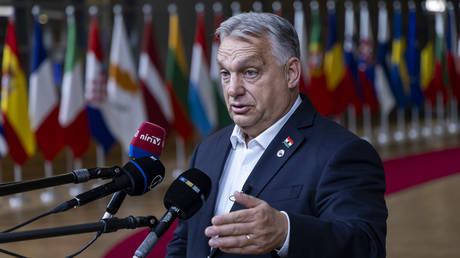
At the center of this friction is Viktor Orbán. To the diplomats in the room, he is a recurring headache, a master of the procedural pivot. To the citizens of Hungary, he is a leader navigating a tightening financial vice. But to the rest of Europe, he has become the man holding a literal ransom note over the future of a war-torn neighbor.
The math is brutal. Ukraine needs money. It needs it for the basic electricity that keeps hospitals running in Kyiv and for the wages of the people who dig trenches in the mud of the Donbas. The European Union, alongside the G7, promised a massive loan package backed by the frozen assets of the Russian central bank. It was a clever piece of financial engineering: use Putin’s own money to repair the damage Putin’s missiles have caused.
Then came the Hungarian roadblock.
The Lever and the Pivot
Imagine you are trying to fix a leaking roof in a shared apartment building. Everyone has agreed to chip in, using a reserve fund that’s been sitting in the basement. But one tenant—the guy in 4B—has his hand on the valve. He isn't saying the roof shouldn't be fixed. He’s just saying that until his own parking spot is upgraded, no one is touching that valve.
This is the reality of the EU’s "strategic autonomy." It is a grand vision that often trips over a single pair of shoes left in the hallway.
Hungary has been blocking the renewal of sanctions on Russia, a technicality that must happen every six months. By refusing to extend the duration of these sanctions from six months to thirty-six, Budapest makes the "frozen asset" plan look risky to the Americans. Washington is hesitant to contribute billions if a single country can unfreeze those assets twice a year on a whim.
The stakes aren't just numbers on a spreadsheet. They are human.
Consider a hypothetical shopkeeper in Kharkiv. Let’s call him Mykola. Mykola doesn't know the names of the negotiators in Brussels. He doesn't care about the intricacies of the Hungarian "Rule of Law" mechanism or why the European Commission is withholding billions in recovery funds from Budapest. What Mykola knows is that if the EU loan fails, the Ukrainian currency may collapse. If the currency collapses, he cannot buy the flour to bake the bread he sells. The macro-economic standoff in a plush carpeted room in Belgium becomes a hunger pang in a cold kitchen in Ukraine.
The Invisible Ledger
The tension isn't just between Brussels and Budapest. It’s an internal struggle for the soul of how a union of twenty-seven disparate nations actually functions. For years, the EU has relied on consensus. It’s a polite word for "everyone has to agree, or we do nothing."
Consensus worked when everyone shared a similar horizon. It becomes a weapon when one member realizes that their "no" is the most valuable currency they own.
Budapest is currently locked out of its own share of EU funds—roughly 21 billion euros—due to concerns over democratic backsliding and corruption. To Orbán, the Ukraine loan is not a moral issue; it is a point of leverage. It is a chip to be traded for the release of his own frozen cash.
The European Commission, led by Ursula von der Leyen, is finally losing its patience. The threat is no longer whispered in the hallways. It is being written into the fine print of the law. The EU is looking for "workarounds." In the world of high-stakes diplomacy, a "workaround" is the equivalent of a group of friends deciding to start a new group chat without the one person who keeps ruining the dinner plans.
But you can't just "work around" a member state without tearing the fabric of the treaty itself. If the EU bypasses Hungary to fund Ukraine, it proves that the rules are flexible. And if the rules are flexible for a "good" cause today, they can be manipulated for a "bad" cause tomorrow.
The Friction of Reality
There is a palpable exhaustion in the voices of the diplomats who have spent eighteen-hour days trying to find a middle ground. They talk about "fatigue," but that doesn't quite capture it. It’s more like a structural weariness.
The European project was built on the idea that economic integration would make war unthinkable and political cooperation inevitable. It didn’t account for the rise of the "Veto Player."
In Hungary, the narrative is different. The state-controlled media portrays a lonely, brave nation standing up against a "pro-war" Brussels elite. To a family in a small village outside Budapest, the fight isn't about Ukraine at all. It’s about sovereignty. It’s about the feeling that distant bureaucrats are trying to dictate how their country should be run.
This is where the tragedy lies. The gap between the "high politics" of a five-billion-euro loan and the "low politics" of a voter's resentment is where the future of Europe is currently being decided.
The EU has threatened to use "Article 7"—the so-called "nuclear option" that would strip Hungary of its voting rights. It’s a move that has been discussed for years but never executed. Why? because it requires the very thing Hungary is currently blocking: total unanimity from everyone else.
It is a legal paradox wrapped in a political nightmare.
The Sound of the Clock
Time is the one resource Brussels cannot manufacture. The US elections loom on the horizon like a thunderstorm. If a new administration in Washington decides to pull the plug on Ukrainian aid, the burden falls entirely on Europe.
If the loan isn't finalized soon, the interest rates will climb. The Russian assets will remain sitting in a vault in Belgium, earning billions in interest that no one can touch, while the front lines in the east continue to crumble.
Power.
It isn't found in the speeches or the flags. It’s found in the ability to say "wait."
By forcing the rest of the continent to wait, Hungary has demonstrated exactly how much a single "no" is worth in a system built on "yes." The cost of that "no" is being paid in the currency of trust, and the bill is coming due for everyone.
The light in the Berlaymont stayed on late into the night. Outside, the streets were empty, save for the occasional siren. Inside, the pens remained capped. The loan remains a ghost, a promise written in the air, waiting for a signature that may never come unless the price is exactly right.
In the end, this isn't a story about a loan. It’s a story about what happens when the architecture of a house is used to keep the doors locked instead of letting the neighbors in.
The ink is dry on the threats. Now, we wait to see who is brave enough to sign the check.
A cold wind is blowing through the corridors of power, and it doesn't care about the fine print.