The salt air in Bridgetown does not smell like history. It smells like diesel, frying plantain, and the sharp, clean brine of the Atlantic rolling into Carlisle Bay. Stand on the wooden boardwalk near the Careenage at noon, and the heat presses down on your shoulders like a heavy coat. Tourists in bright linen shirts stroll past pastel storefronts, snapping photos of luxury catamarans bobbing on turquoise water.
Beneath those hulls, three centuries ago, the bottom of the bay was paved with human cargo.
Imagine a man named Devon. He is a hypothetical composite, yet he walks down Broad Street every single morning. Devon is thirty-four, works two jobs—one maintaining air conditioning units for beachfront hotels, the other driving a delivery van—and lives in a concrete house three miles inland that floods every time a tropical storm brushes the coast. His great-great-great-grandmother was listed as an asset on a sugar plantation ledger in St. Philip parish, valued at forty-two British pounds. When Devon looks at the crumbling sea wall at the end of his parish road, or the underfunded clinic where his mother waits six hours for blood pressure medication, he does not see abstract economics. He sees an unpaid invoice.
Now, picture a different room, four thousand miles away in London.
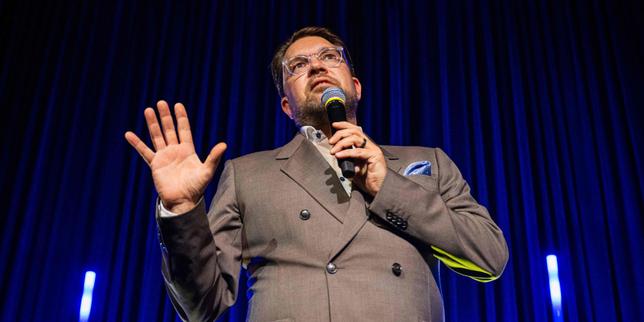
The wood paneling in the Foreign, Commonwealth and Development Office absorbs sound. Tea arrives in bone china. The air smells faintly of floor wax and damp wool. Here, Britain’s Foreign Secretary, David Lammy, sits across from diplomats and journalists, weighing words with the precision of a watchmaker. When asked about the transatlantic slave trade—a system that shipped over three million Africans on British vessels alone—the tone shifts. There is a softening. A hint that the United Kingdom might finally be ready to offer a formal, unreserved apology.
And then comes the wall. Financial payouts, the minister makes clear, are simply not feasible.
Sorry. Just do not ask for the receipt.
The Architecture of a Half-Measure
To understand why a British foreign minister hinting at an apology while shutting the door on reparations feels like a slap across the face to millions, you have to strip away the diplomatic polite-speak. You have to look at how ordinary people settle debts.
Suppose your neighbor’s grandfather stole the deeds to your family’s farm, burned down your barn, forced your grandparents to work the land for free for generations, and used the profits to build a gleaming mansion next door. Decades later, the neighbor walks over to your sagging porch. He looks genuinely pained. He says, "I am deeply sorry for what happened. It was a stain on our neighborhood." Then, before you can speak, he adds, "Of course, the mansion is mine now, the bank accounts are locked, and giving you back any of the money isn't practical. Let's focus on the future."
How would that apology taste in your mouth?
Words without restitution are not reconciliation. They are public relations. When the UK government floats the idea of a formal apology while declaring financial reparations "not feasible," it attempts to purchase moral absolution at zero cost. It wants the emotional relief of confession without the discomfort of penance.
I have sat in community halls from Kingston to London, listening to descendants of the enslaved wrestle with this exact contradiction. The exhaustion in those rooms is palpable. It is the fatigue of people who have spent generations proving their own humanity, only to be told that the ledger of history has been closed by the very people who wrote it. You watch elderly women clasp their handbags tightly in their laps, nodding slowly as politicians explain why budgets are tight, why modern taxpayers shouldn't bear the sins of their ancestors, why the past is a foreign country where the currency is no longer valid.
Yet the currency is still valid. It is sitting in British vaults right now.
The Ledger That Never Closed
Let us talk about 1833, the year Britain finally abolished slavery across most of its empire. For generations, British schoolchildren were taught to puff out their chests at this milestone. Britain, the narrative went, led the moral crusade against human bondage. The Royal Navy patrolled the West African coast; William Wilberforce became a secular saint.
What the textbooks quietly skipped was the bill.
To persuade plantation owners to give up their human property, the British government did not compensate the people who had been whipped, branded, and worked to death in the cane fields. Instead, Parliament borrowed twenty million pounds—roughly forty percent of the entire national budget at the time—to pay off forty-six thousand slave owners for the loss of their "assets."
Think about that number. Twenty million pounds in 1833 translates to tens of billions of pounds today. That debt was so massive that the British government did not finish paying off the loans until 2015.
Read that year again. 2015.
That means British citizens—including the Black descendants of enslaved Africans living in Brixton, Birmingham, and Bristol—were paying taxes toward the compensation of slaveholders well into the era of the iPhone, Netflix, and modern social media. The British state found the fiscal mechanism, the political will, and the administrative stamina to honor a debt to enslavers over nearly two centuries. When the invoice belonged to the powerful, the Treasury made it feasible.
Yet the moment Caribbean nations and the African Union ask for reparative justice—not necessarily giant checks mailed to individual mailboxes, as critics love to caricature, but debt cancellation, climate resilience funding, healthcare infrastructure, and educational investment—suddenly the calculators break. Suddenly, the checkbook slams shut.
What Reparations Actually Look Like
The word reparations triggers an immediate defensive reflex in Western capitals. Politicians picture an impossible accounting nightmare: lawyers with magnifying glasses tracing DNA strands back to seventeenth-century ships, trying to calculate how much cash to wire to a specific address in Jamaica or Ghana.
That framing is a deliberate distraction. It sets up a straw man so absurd that knocking it down looks like common sense.
In 2014, the Caribbean Community—CARICOM—unveiled a ten-point plan for reparatory justice. It is a sober, deeply practical blueprint that reads less like a demand for a windfall and more like a regional Marshall Plan. Look at what is actually on that list:
- A full formal apology, not expressions of "deep sorrow" or "regret," which lawyers carefully choose because sorrow carries no legal liability.
- Repatriation programs for those who wish to reconnect with their ancestral homelands in West Africa.
- Indigenous peoples development programs to heal communities decimated by colonial expansion.
- Cultural institutions such as museums and research centers, because the Caribbean currently lacks the basic facilities to house its own stolen history, while British museums display artifacts behind velvet ropes.
- Public health crisis intervention, addressing the staggering rates of hypertension and Type 2 diabetes across the Caribbean—chronic illnesses directly linked to generations of nutritional deprivation and trauma on sugar plantations.
- Illiteracy eradication and educational reform to undo centuries of deliberate underinvestment in colonial schools.
- An African knowledge program to rebuild severed cultural and linguistic bridges.
- Psychological rehabilitation to confront the generational trauma of systemic violence.
- Technology transfer, giving former colonies access to the industrial and digital tools Britain built using Caribbean raw materials.
- Debt cancellation, relieving small island nations crushed by sovereign loans they were forced to take out at independence simply to build basic roads, ports, and hospitals that Britain left behind in ruins.
None of this requires cutting personal checks to individuals. It requires structural repair. When you break someone’s legs and lock them in a basement for three hundred years, unlocking the door and saying "I'm sorry" does not make it a fair race. You have to pay for the physical therapy.
The Man Behind the podium
What makes this specific moment so charged is the messenger himself.
David Lammy is not a detached aristocrat from Eton whose family name graces a Georgian square in Mayfair. He is a Black Briton of Guyanese heritage, a son of the Windrush generation who grew up in Tottenham, North London, and went on to become the first Black Briton to attend Harvard Law School. In 2018, long before he became Foreign Secretary, Lammy stood in the House of Commons and delivered a blistering, unforgettable speech about the Windrush scandal, accusing his own government of treating Black citizens with cruelty and indifference. He knows, in his bones, how the machinery of British empire leaves scars across generations.
That is precisely why his cautious dance around reparations feels so jarring.
When a politician who understands the wound so intimately steps behind the government podium and declares financial restitution "not feasible," it reveals the sheer gravitational pull of the British state. Institutions have immune systems. They absorb reformers, hand them briefcases, brief them on Treasury limits and voter polling, and slowly convince them that radical justice is bad politics.
From a purely electoral standpoint, Lammy’s calculation is easy to see. Britain is grappling with a stagnant economy, creaking public services, and a cost-of-living crisis that has left millions of working-class families choosing between heating and eating. If a Labour government stands up in Westminster and announces billions of pounds in reparative payouts to overseas nations, the tabloid press will erupt before the ink dries. Opposition leaders will weaponize the headlines. Voters in post-industrial towns across northern England, struggling to keep their own local libraries open, will ask why their tax pounds are being sent abroad to pay for crimes committed before their great-grandparents were born.
I admit, when you look at it through the lens of a family in Sunderland watching their local hospital ward close, the hesitation makes a grim kind of political sense. Fear of voter backlash is a powerful sedative. It convinces leaders to offer symbolic gestures—a plaque here, a carefully worded speech at a Commonwealth summit there—while leaving the financial architecture untouched.
But leadership is not the art of telling frightened people what they want to hear. Leadership is telling the truth about how the house was built.
The Invisible Interest Rate
Walk through the financial district of London—the Square Mile—and look up at the glass towers soaring above ancient stone churches. Every major institution in that district—banks, insurance syndicates, shipping conglomerates, even venerable universities—has roots tangled in the soil of the transatlantic slave trade.
Lloyd’s of London grew into the world’s premier insurance market by underwriting slave ships and the human cargo packed into their holds. Barclays Bank absorbed institutions founded by prominent slave traders. The Bank of England itself owned plantations in Grenada, complete with hundreds of enslaved workers, in the 1770s.
Wealth does not vanish when laws change. It compounds.
Think of generational wealth like a snowball rolling down a snow-covered hill. Every decade it rolls, it picks up more mass, moving faster, crushing everything in its path. When Britain abolished slavery in 1833 and handed twenty million pounds to the enslavers, it gave those families a massive snowball at the top of a very steep hill. They used that capital to buy railway shares, build factories, endow elite boarding schools, and fund political dynasties. Their descendants today sit in Parliament, edit major newspapers, and manage hedge funds.
Meanwhile, the enslaved people who generated every ounce of that initial wealth were pushed off the plantations with nothing—not a single acre of land, not a shilling in wages, not even a pair of shoes. They started at the bottom of the hill, barefoot, in the mud, while the snowballs rolled over them.
Now consider what happens next. Today, Caribbean nations sit on the front lines of a climate catastrophe they did almost nothing to cause. Every autumn, supercharged hurricanes barrel across the warm Atlantic, tearing roofs off schools in Dominica, washing away coastal highways in Barbados, and drowning farmlands in Jamaica. To rebuild after each storm, these tiny island states have to borrow money at punitive interest rates from international banks—many of them headquartered in London, New York, and Paris.
They are literally paying interest to the financial descendants of their former captors to repair damage caused by the industrial emissions of the very countries that colonized them.
If that is not an ongoing crime, what is?
Beyond the Checkbook
Let us return to Devon, our air-conditioning technician in Bridgetown, and look closely at what happens if Britain insists on this half-baked bargain—an apology without action.
Suppose the Prime Minister flies to the next Commonwealth Heads of Government Meeting. Suppose he stands beneath the flags, clears his throat, and delivers a historic, tear-jerking speech. He uses the word sorry. He acknowledges the brutality of the Middle Passage, the whip, the auction block. The cameras flash. Commentators in London praise the maturity and grace of modern Britain.
Then the plane takes off, and the diplomats fly home.
Back in Bridgetown, the tropical rain begins to fall. Water creeps under Devon’s front door, soaking the cheap linoleum floor. His mother sits on the edge of her bed, her ankles swollen from untreated hypertension, waiting for a clinic appointment that is three months away because the island’s health budget is strangled by foreign debt repayments. Down at the port, a container ship unloads imported food because the island’s best agricultural land was stripped of nutrients by three centuries of monocrop sugar cultivation for British teacups.
Does the word sorry keep the floodwater out of Devon’s living room? Does it lower his mother’s blood pressure? Does it cancel the predatory interest rate on his country’s sovereign debt?
No. It does nothing at all. In fact, it does worse than nothing—it gives the debtor permission to walk away feeling virtuous while the creditor drowns.
True repair does not require bankrupting modern Britain. Nobody in Bridgetown, Kingston, or Accra is asking for British nurses or factory workers to be taxed into poverty. What they are asking for is honesty backed by structural commitment.Britain could lead an international coalition to cancel the crushing colonial-era and climate-induced debts of Caribbean states. It could redirect a fraction of its foreign aid and climate finance into direct grants—not loans—for Caribbean sea walls, solar grids, and hospitals. It could open its archives, return looted cultural treasures, and establish endowment funds financed by the very corporations and banks that profited directly from slavery and still operate today.
These mechanisms exist. Economists have already drafted them. Legal scholars have mapped out the treaties. The only missing ingredient is not feasibility. It is courage.
History is watching how Britain handles this moment, just as it watched in 1833. Back then, Parliament proved that when it truly values someone’s property, no sum is too large, no timeline too long, no fiscal obstacle too steep to overcome. Two centuries later, the descendants of the people who were once treated as that property are standing at the door, asking not for revenge, not for charity, but for the simple dignity of a settled account.
An apology without repair is just wind blowing across the Atlantic, carrying the sound of a promise that no one intends to keep, while the tide keeps rising against the door.