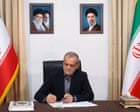
The table is heavy wood, dark and scarred, tucked into a room where the air smells faintly of old tea and fresh ozone. Mohammad sits with his hands flat on the surface. His fingers are stained with blue ink, the badge of a mid-level bureaucrat who has spent the last three months calculating things that cannot be replaced. Across the courtyard, the sirens are finally quiet. For one hundred and ten days, the sky above Tehran screamed. Now, the silence is so sudden it feels like a physical weight.
Mohammad looks at a single sheet of paper. It is a translated copy of the memorandum of understanding signed on June 17, 2026. The ink is dry. The war, at least this chapter of it, is over.
But in the quiet corridors of Iranian power, a new, far more dangerous calculation is beginning. The old men who built the Islamic Republic are gone or fading; Supreme Leader Ali Khamenei was wounded in the opening salvo back in February and has not been seen since. His son, Mojtaba, now stands in the shadow of a transition that defies decades of revolutionary protocol. Beside him is a new, younger cabinet, led by President Masoud Pezeshkian and Speaker Mohammad Bagher Ghalibaf. They are men who wear the scars of the front line but must now balance the ledger of a broken country.
They did not lose. That is the phrase being repeated in the state media offices and the barracks of the Islamic Revolutionary Guard Corps. They survived. In the brutal arithmetic of asymmetrical warfare, survival against the combined weight of the American and Israeli militaries is whispered as a victory. The ballistic missiles still sit in their underground silos. The regime did not collapse.
But look closer at Mohammad's ledger. The cost of that survival is etched into the daily lives of eighty-five million people.
One million jobs vanished in less than four months. A fifth of those losses were caused not by falling bombs, but by the regime’s own hand—the total internet blackout strangled the digital economy to keep protestors off the streets. The rial, already battered by years of sanctions, has plummeted into hyperinflation. It is a ghost currency. A father walks into a grocery store in south Tehran with a stack of bills that could have bought a week’s worth of meat in January; today, it covers a carton of eggs and a loaf of flatbread.
This is the invisible front line. The launchers have gone cold, but the dinner tables are empty.
Ghalibaf, a former commander who treats politics like a trench battle, admitted as much to a room of quiet journalists this week. He justified the bitter concessions of the Swiss memorandum not with the language of diplomacy, but with the pragmatism of a soldier who knows his supply lines are compromised. His goal, he said, was to relieve the fire on the people. The success of the state is no longer measured by how many drones it can fly across the desert, but by whether it can stabilize the price of onions.
The strategy of the new leadership is splitting along two fault lines, and the tension is high enough to snap.
On one side stand the hardliners, anchored by factions like Raja News. They look at the memorandum and see a betrayal written in the language of compromise. To secure an immediate waiver on oil sanctions from the US Treasury, Iran agreed to down-blend its stockpile of highly enriched uranium under the watch of international inspectors. Four hundred and forty kilograms of leverage, diluted into uselessness on Iranian soil. To the ideological purists, this is madness. They argue that the Americans cannot be trusted—recalling 2018, when Donald Trump walked away from the original nuclear deal with a stroke of a pen. They believe the only true security lies in the ultimate deterrent, built secretly beneath the mountains before the next warning shots fly.
But the new leadership is drawing a different, more sophisticated lesson from the 110-day war. They have discovered that geography is a more potent weapon than a nuclear warhead.
Consider the narrow, blue ribbon of water known as the Strait of Hormuz. During the conflict, Iran proved it could choke the world’s economic windpipe. By mining the strait and launching low-cost anti-ship missiles, they forced global oil prices into the stratosphere, sending shockwaves through Western financial markets. President Trump openly admitted he signed the truce to avoid an economic catastrophe that would mirror the Great Depression.
For the young strategists in Tehran, this is the grand revelation: geography can take revenge on technology. They do not need a bomb to threaten Washington; they just need to control the price of gasoline in Ohio. The memorandum leaves the future administration of the strait dangerously vague, allowing Iran to discuss extracting tolls and fees from commercial shipping in the coming months. It is a permanent knife held to the throat of global trade.
Yet, this leverage is a wasting asset if the domestic foundation crumbles. The regime knows that the public unity displayed during the bombardment was a temporary truce born of national pride, not love for the theocracy. The memory of the brutal crackdowns in early 2026, where thousands of protestors were silenced in the winter snow, is still fresh. If the oil cash flowing from the new US waivers goes into the pockets of the elite or the coffers of regional proxies rather than the local markets, the streets will burn again.
The shift in Tehran is not toward moderation, but toward a cold, authoritarian pragmatism. They are turning their backs on the West, convinced that Europe and America offer nothing but cyclical betrayal. Instead, they are locking their gaze eastward. China is the destination for the tankers now slipping past the old American blockade lines in the Gulf of Oman. Beijing wants cheap oil; Tehran wants a patron that does not ask questions about human rights or nuclear inspectors.
Mohammad closes his ledger. Outside, the afternoon sun hits the concrete walls of the city, where posters of the old leaders are peeling in the dry heat. The new men in power have survived the steel rain of a hundred-day war, but they are about to learn that peace has its own body count.
They are entering negotiations with a profound sense of defiance, convinced their military strategy forced the world to its knees. But the clock is ticking. Sixty days to turn a temporary truce into a permanent settlement. Sixty days to prove to a exhausted, hungry population that their sacrifice bought something more than the mere survival of the men who rule them. If they fail to put food on the tables, the victory they are celebrating in the shadows will taste exactly like defeat.