The coffee in the basement of the Geneva conference center always tastes like burnt cardboard. It is a deliberate choice, perhaps, designed to keep diplomats awake during the grueling, pre-dawn hours when the future of human architecture is quietly bartered away.
A few years ago, during a lull in a non-proliferation summit, an aging negotiator leaned over his lukewarm paper cup and pointed out a window toward the dark Swiss sky.
"We used to count missiles," he said, his voice scraped raw from days of arguing over definitions. "Now we count pennies. Because if you want to know what a nation truly fears, you do not look at its speeches. You look at its checkbook."
The global checkbook has never been heavier.
Last year, the world spent $119 billion on nuclear weapons. It is a number so vast that the human brain automatically detaches from it. We cannot visualize a billion of anything, let alone 119 of them. It becomes an abstract concept, a data point buried in a defense budget briefing that most citizens will never read.
But that money is not abstract. It is tangible. It is the sound of heavy machinery churning through the earth in Henan province. It is the hum of server farms in New Mexico calculating the degradation of tritium cores. It is the quiet, relentless reallocation of human genius away from curing disease or solving energy crises, directed instead toward perfecting the art of planetary erasure.
We are not just buying bombs. We are buying time, and the price is skyrocketing.
The Math of Doom
To understand where that $119 billion goes, we have to look past the mushroom clouds of historical footage and look at the modern assembly line.
Nuclear weapons are not statues. They do not sit on a shelf, static and permanent. They are volatile, complex ecosystems of chemistry, physics, and digital architecture. They decay. The radioactive isotopes inside them degrade, requiring constant, multi-billion-dollar maintenance just to ensure that if a button is pressed, the circuit connects.
Every second of every day, the nine nuclear-armed nations are spending roughly $3,770 on these arsenals. While you read this sentence, thousands of dollars vanished into the silos.
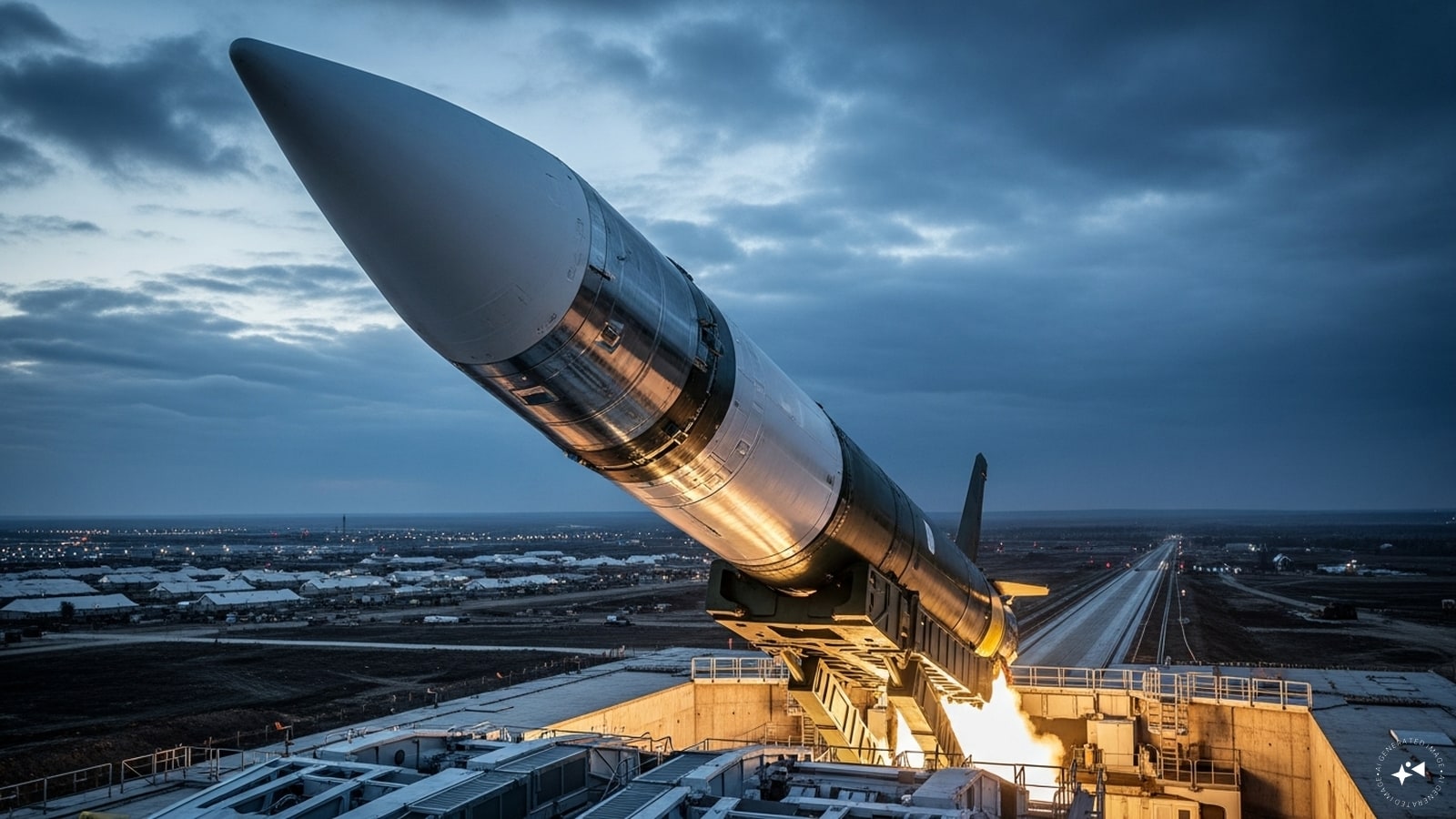
The United States leads this financial marathon, pouring over $51 billion annually into its strategic triad. It is a complete overhaul. Aging Minuteman III missiles, housed in underground silos across the American Midwest since the Cold War, are being replaced by a new system known as the Sentinel. The B-2 Spirit bombers are giving way to the sleek, digital-first B-21 Raider. Submarines are being rebuilt from the keel up.
It is an insurance policy where the premiums rise every year, paid for by taxpayers who will only ever know if the policy fails.
But the most dramatic shift is happening farther east.
The Desert Silos
If you were to fly a satellite over the Gansu desert in western China, you would see a grid of hundreds of concrete circles cutting into the arid earth. To the untrained eye, they look like industrial construction sites or perhaps the foundations for wind turbines.
They are missile silos.
China is currently expanding its nuclear capabilities faster than any other nation on Earth. For decades, Beijing maintained what military theorists call a "minimum deterrent." They kept a relatively small stockpile—around several hundred warheads—hidden in tunnels and on mobile launchers. The philosophy was simple: we only need enough weapons to ensure that if you hit us, we can hit you back once. It was a strategy of defensive restraint.
That strategy is dead.
Driven by deep anxieties over American missile defense systems and a shifting geopolitical landscape, China has broken ground on hundreds of new silos. It is estimated that their stockpile could surpass 1,000 warheads by the turn of the decade.
Think about the sheer human effort required for that transition. Imagine the engineers, fresh out of the top universities in Tsinghua or Shanghai, recruited not to build the next generation of green technology or medical imaging, but to calculate the optimal atmospheric reentry angle for a thermonuclear warhead. Imagine the logistics managers coordinating the transport of specialized fissile material across thousands of miles of high-security railways.
This is the hidden cost of the arms race. It is a brain drain of the highest order, wrapped in the flag of national security.
The Friction of Fear
Why now? Why, decades after the fall of the Berlin Wall, are we watching the ledger bleed cash at this unprecedented rate?
The answer lies in a psychological concept known as the security dilemma. When Nation A builds a shield, Nation B builds a sharper sword to pierce it. When Nation B builds a sharper sword, Nation A builds a thicker shield. Neither side intends to attack; both sides are terrified of being vulnerable.
The tragedy of the $119 billion is that it does not buy safety. It buys parity.
Consider a hypothetical engineer named Marcus. He works at a defense laboratory in the American Southwest. Marcus does not wake up in the morning wanting to destroy a city. He thinks about metallurgy. He thinks about how to make a casing more resilient against extreme heat. He tells himself—and his family—that his work makes war impossible because it makes the American deterrent credible.
Now consider his counterpart in China, a woman we will call Jing. She sits in a lab in Chengdu, analyzing satellite imagery of Marcus’s facility. She concludes that the American upgrades jeopardize China’s ability to retaliate. She drafts a proposal for a more agile hypersonic glide vehicle. She tells herself that her work prevents an American first strike.
They are locked in a dance, looking at each other through the distorted lens of worst-case assumptions. They are both entirely rational, entirely patriotic, and entirely trapped.
The Vanishing Dividends
When we look at the sheer scale of this spending, the natural temptation is to look for alternatives. What does $119 billion actually look like in the real world?
It is the cost of eradicating malaria globally, several times over. It is the funding required to provide clean drinking water to every human being on the planet. It is the price of rebuilding the crumbling infrastructure of dozens of major cities.
Instead, it is spent on hardware that everyone agrees must never be used.
It is the ultimate paradox of human governance: the most expensive items in our global budget are those we pray will remain functional but useless. If a nuclear weapon is ever used for its intended purpose, the system has failed. We are spending fortunes to maintain a state of permanent, agonizing suspense.
Furthermore, the technology itself is changing, introducing new layers of volatility that the old Cold War architects never had to contemplate. Artificial intelligence is creeping into command-and-control systems. Hypersonic missiles leave decision-makers with minutes, or even seconds, to verify an incoming attack before launching a counter-strike. The margin for human error is shrinking toward zero.
The money is no longer just buying steel and plutonium. It is buying algorithms that can decide the fate of civilizations faster than a human pulse can beat.
The Weight of the Ledger
We live with our heads turned away from this reality because looking at it directly induces a kind of existential vertigo. It is easier to focus on the daily fluctuations of the stock market, the latest political theater, or the minor dramas of our immediate lives.
But the silos remain, buried beneath the topsoil of North Dakota and the sands of Xinjiang, humming quietly, waiting for an order that must never come, eating through billions of dollars every single hour.
The old diplomat in Geneva was right. The checkbook does not lie. We are a species terrified of our own shadows, willing to starve our schools, our hospitals, and our environment to ensure that the balance of terror remains perfectly level.
In a quiet corner of the world, a child is born today who will inherit this bill. They will grow up in a world where the air is warmer, the seas are higher, and the geopolitical fault lines are deeper. And somewhere, deep underground, a technician will turn a wrench on a missile that cost more than that child’s entire education, ensuring that the clock stays fixed at a few seconds before midnight, paid for in full.