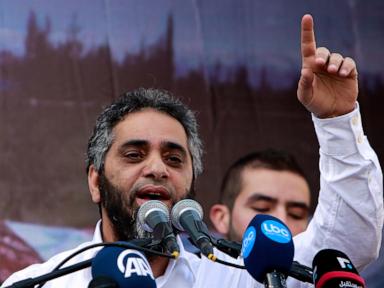
The decision to grant bail to a prominent singer-turned-militant linked to the 2013 Abra clashes reveals the deep paralysis within Lebanon's judicial framework. For over a decade, the investigation into the bloody confrontation between the military and sectarian insurgents in Sidon has served as a political bargaining chip rather than a pursuit of justice. By allowing individuals tied to an insurrection that killed eighteen soldiers to secure release while formal probes drag on indefinitely, the state reinforces a system where sectarian alignment and public profile dictate legal outcomes.
This development is not an isolated legal anomaly. It represents the standard operating procedure for a state that avoids accountability to maintain a fragile, armed peace between competing factions.
The Mechanics of Selective Justice in Beirut
Lebanon's judiciary does not operate in a vacuum. Every major judicial appointment, indictment, and bail hearing is filtered through a complex matrix of sectarian quotas and political vetoes. When a high-profile figure transitions from cultural icon to active participant in an armed rebellion, their subsequent legal trajectory becomes a litmus test for the authority of the state itself.
The 2013 clashes in Abra, a suburb of the southern port city of Sidon, pitted the Lebanese Armed Forces against followers of the radical cleric Ahmad al-Assir. The fighting was fierce, brief, and devastating. It left eighteen soldiers and dozens of civilians dead, fundamentally altering the security environment of southern Lebanon. In the immediate aftermath, the state promised swift and unyielding justice for those who took up arms against the national military.
The reality proved far more complicated. Over the years, the legal proceedings split into two distinct tracks. Ordinary followers faced rapid indictments and heavy sentences from military tribunals. High-profile figures, conversely, managed to evade capture or secure protracted legal maneuvers that delayed final sentencing for years. The granting of bail in an ongoing investigation regarding a decade-old armed conflict shows that the judiciary is shifting its stance. It suggests that time, combined with the right political climate, can erode even the most severe charges of armed insurrection.
Justice here is transactional. Power brokers use legal cases as currency, trading judicial leniency for civil quietude or sectarian compliance. When the state grants bail to someone heavily involved in a movement that explicitly targeted the military, it chips away at the institutional credibility of the armed forces, which are often viewed as the sole remaining cohesive institution in the country.
From Pop Stardom to the Trenches of Abra
The transformation of a celebrated romantic crooner into an armed militant remains one of the most jarring chapters in modern Middle Eastern cultural history. During the 2000s, this individual dominated the pan-Arab music industry, selling out concerts and projecting an image of secular sentimentality. The outbreak of the Syrian civil war in 2011 disrupted this existence entirely.
As the conflict across the border escalated, it ignited deep-seated sectarian fault lines within Lebanon. The singer abandoned music, denounced his past career as sinful, and aligned himself with Ahmad al-Assir, a previously obscure cleric who gained notoriety by delivering fiery sermons against regional armed factions and the Syrian government. This alliance was not merely symbolic. The former artist actively participated in rallies, raised funds, and eventually appeared in videos boasting about armed confrontations.
This shift highlighted a broader societal trend. The weakness of formal state institutions left a void that radical sectarian entrepreneurs filled with aggressive rhetoric. For a public figure, joining such a movement provided instant ideological validation, while the movement gained an unprecedented propaganda asset.
When the inevitable clash with the army occurred in June 2013, the militant group was dismantled within days. The leadership scattered. Some were captured quickly, while others retreated into the lawless security bubbles of Palestinian refugee camps, specifically Ain al-Hilweh near Sidon, where Lebanese security forces do not enter by long-standing agreement. Years of hiding inside these dense, volatile neighborhoods followed, creating a stalemate where the individual was technically a fugitive but practically out of reach.
How Political Compromise Outweighs Judicial Accountability
The Lebanese legal system relies heavily on military courts to try civilians accused of terrorism, espionage, and security offenses. These courts operate under distinct rules that offer fewer protections to defendants than civilian courts, yet they remain highly susceptible to political interference from the ruling elite.
The persistence of unresolved investigations serves a clear political purpose. By keeping a case open for over a decade without a final, irreversible resolution, the state retains leverage over the individuals involved and their respective communities. A definitive conviction risks provoking a sectarian backlash, while a full acquittal would outrage the families of the slain soldiers and undermine the military. Bail offers a convenient middle ground. It removes the immediate friction of imprisonment without resolving the core question of guilt.
This practice reflects a broader pattern of institutional evasion. From the investigation into the 2020 Beirut port explosion to trials involving political assassinations, the pattern remains identical. Cases are stalled, judges are recused, and files are shuffled between departments until public outrage fades into exhaustion.
+-------------------------------------------------------------------+
|               The Lifecycle of Sensitive Legal Cases              |
+-------------------------------------------------------------------+
|  1. High-Profile Event -> 2. Mass Arrests & Public Outcry         |
|                                 |                                 |
|                                 v                                 |
|  4. Conditional Bail    <- 3. Indefinite Delay & Postponements    |
+-------------------------------------------------------------------+
The human cost of this gridlock is staggering. It creates an environment where families of victims are denied closure, and the concept of equal protection under the law becomes non-existent. The state prioritizes the preservation of the sectarian balance over the enforcement of criminal statutes.
The Parallel Legal Track for the Well Connected
Ordinary citizens caught up in security sweeps face a harsh judicial reality. They routinely spend years in pre-trial detention in overcrowded facilities like Roumieh prison without access to proper legal representation or influential patrons. Their cases rarely make headlines, and their bail applications are routinely denied under the guise of national security.
The elite experience a completely different system. When an individual possesses significant financial resources or enjoys the protection of a major political faction, the legal machinery slows to a crawl. Lawyers file endless motions for recusal, medical exemptions are granted with minimal scrutiny, and detentions are converted into comfortable house arrests or conditional releases.
This dual track deepens public cynicism. It demonstrates that the law is not an objective standard but a flexible instrument used to manage dissent and protect the influential. The granting of bail in this instance is not evidence of a reforming judicial system that respects human rights; it is evidence of a system that accommodates those with the means to navigate its corridors.
Furthermore, the timing of these judicial decisions often coincides with broader political realignments. When regional tensions shift or when local factions seek to form new alliances, long-standing legal disputes are suddenly resolved or shelved. The judiciary acts as a barometer for political negotiations rather than an independent branch of government.
Why the Abra Investigation Remains Frozen in Time
The complete truth of what occurred in Abra during those forty-eight hours in 2013 has never been fully laid bare to the public. Conflicting narratives persist regarding who fired the first shot, the exact role of third-party armed groups during the battle, and the intelligence failures that allowed the militant network to accumulate an arsenal in an urban center.
A thorough, transparent investigation would require questioning not just the militants themselves, but also senior military officers, intelligence officials, and political figures who maintained ties with the group prior to the clashes. No political faction wants to risk that level of exposure. The current arrangement preserves a comfortable ambiguity that protects the state's intelligence apparatus and political establishment from embarrassing disclosures.
Consequently, the legal process is kept in a permanent state of suspended animation. Witnesses disappear, evidence degrades, and public memory fades. The trial becomes an exercise in bureaucratic box-checking, designed to produce an appearance of legal activity while ensuring that no structural reforms occur.
The release of figures tied to historical violence without a definitive trial damages the social fabric. It tells the public that accountability has an expiration date and that state institutions will eventually yield if a defendant waits long enough. Lebanon continues to govern through a series of unspoken exceptions, where the written code applies only to those who lack the power to defy it.