The air inside Roumieh prison smells of damp concrete, old tobacco, and the suffocating heat of too many bodies trapped in too little space. Built originally to house around 1,500 inmates, Lebanon’s most notorious correctional facility currently holds upwards of 4,000. Men sleep in shifts. They take turns standing so someone else can lie down on a thin, grime-crusted mattress.
Imagine a young man named Tariq. He is twenty-four, but his eyes carry the hollow fatigue of a man twice his age. Tariq is not a hardened cartel boss or a political mastermind. Three years ago, as Lebanon’s economy collapsed into a freefall that the World Bank ranked among the worst globally since the mid-nineteenth century, Tariq stole baby formula and medicine for his infant sister. He was arrested, thrown into Roumieh, and there he has stayed. He has never seen a judge. He has never been formally convicted. He is one of the thousands caught in Lebanon’s judicial purgatory, waiting for a trial that may never come because the courts are perpetually on strike, paralyzed by the same economic rot eating away at the rest of the country.
Now, the state is considering a desperate escape valve: its largest general amnesty bill in thirty-five years.
To Tariq and his weeping mother, who waits outside the prison gates every Tuesday with a plastic bag of home-cooked rice, the amnesty bill sounds like a decree from heaven. It is a chance to breathe. To start over. But outside those same gates, across the scarred and beautiful landscape of Beirut, another mother stands with a photograph pressed against her chest. Her son was a soldier, killed by an extremist group in the northern borderlands. To her, the word amnesty does not sound like mercy. It sounds like a betrayal written in the ink of political cowardice.
This is the razor-edge balance holding Lebanon captive. It is a crisis where mercy for one person feels like an injustice to another, and where the rule of law has become so frayed that even freedom feels like a threat.
The Mathematical Madness of the Cells
To understand why the Lebanese government is pushing so hard for an amnesty law, you have to look at the numbers. But numbers are cold. They do not capture the panic of a cholera outbreak in a cell block where the water runs brown.
Lebanon's prison population has ballooned to nearly double its intended capacity. The state budget has vanished into thin air, decimated by a currency that has lost over ninety-five percent of its value. The Ministry of Interior can barely afford to feed the inmates. There are days when the meals consist of nothing more than a piece of dry bread and a piece of processed cheese. Security forces, their own salaries reduced to the purchasing power of a few pocket coins, are deserting their posts. The prisons are tinderboxes waiting for a spark.
A general amnesty would instantly empty thousands of bunks. It would relieve a bankrupt state of the financial burden of keeping people locked up. It would defuse the literal anger boiling over behind prison bars, where riots have become a regular, bloody occurrence.
The logic seems simple on paper. If the state cannot afford the prisons, it must reduce the number of prisoners.
But the simplicity ends the moment you ask who gets to walk out of those heavy iron doors.
The Fractured Line of Forgiveness
In a country built on a delicate, often volatile mosaic of seventeen different religious sects, nothing is ever purely legal. Everything is political. Every decision is weighed on a scale to ensure no group gains too much power or suffers too much loss.
The proposed amnesty bill is a minefield of exclusions and inclusions. The draft legislation suggests releasing petty thieves, non-violent drug offenders, and those who have spent years in pre-trial detention for minor crimes. These are the people society forgot. The ones who cannot afford the bribes or the high-priced lawyers required to navigate the labyrinthine legal system.
Then come the clauses that make the blood run cold for many citizens.
Political factions are haggling over the definitions of crime. Should Islamists accused of fighting the army be released to appease one demographic? Should those accused of collaborating with historical enemies be pardoned to satisfy another? The moment you open the door to political compromise in a courtroom, justice ceases to be blind. It becomes a bazaar.
Consider the reality of the families of victims. For years, they have watched the state fail to provide basic electricity, clean water, or financial stability. The judicial system was the one place they held onto a desperate hope for accountability. If the government signs a piece of paper that wipes away convictions for violent offenses or terrorism just to clear out real estate in overcrowded prisons, it sends a clear, devastating message to its people: your suffering did not matter.
A Legacy Written in Ruin
Lebanon is no stranger to amnesties. The country was built modernly on the back of one. In 1991, at the end of the brutal fifteen-year civil war, the parliament passed a sweeping general amnesty law. It pardoned the warlords for crimes against humanity, transformed militia leaders into government ministers, and told a traumatized populace to simply forget the fifteen thousand missing people and the ruined streets of Beirut.
The argument then was identical to the argument now: we must do this to survive. We must clear the slate to prevent another explosion.
But the generation that grew up in the shadow of that decision knows the true cost of that bargain. When you pardon the crime without addressing the cause, you do not create peace. You merely create a pause. The culture of impunity that was institutionalized in 1991 is the exact same culture that allowed the corruption that caused the port explosion of August 2020, which leveled half the capital and killed hundreds. No one has been held accountable for that either.
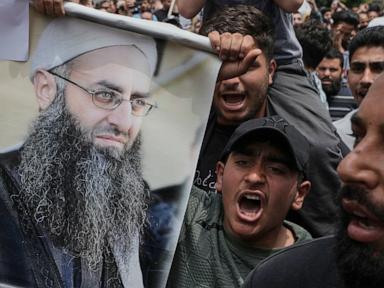
The current protest movement against the amnesty bill is driven by this collective memory. Activists, lawyers, and mothers of the fallen are not protesting out of a desire for cruelty. They are protesting because they know that when a state uses amnesty as a shortcut to fix its own administrative incompetence, it breaks the final moral contract between the citizen and the government.
The Human Verdict
Where does that leave the men inside the walls?
The tragedy is that people like Tariq are the human shields used by political elites. His genuine, heartbreaking need for freedom is weaponized by politicians who want to slide their own allies out of jail under the cover of a humanitarian gesture. If the bill passes in its current, compromised state, violent criminals may walk free alongside the boy who stole milk. If the bill fails, Tariq will continue to rot in a cell that feels more like a tomb every day, waiting for a trial date that exists only in his dreams.
The sun begins to set over the Mediterranean, casting a long, golden light that hits both the rusted bars of Roumieh prison and the balconies of the grieving families in Beirut. The sea looks peaceful from a distance, indifferent to the agonizing choices being made on its shores.
Lebanon is trying to decide whether it can afford to be merciful when it has forgotten how to be just. Until it figures out how to build a system where innocence is protected and guilt is punished based on evidence rather than political identity, freedom will remain a luxury bought at the expense of someone else’s grief. Tariq sits on his corner of the concrete floor, listening to the murmurs of three hundred men in a room meant for eighty, wondering if the law that saves his life will be the one that finally breaks his country.