The parchment in the National Archives at Kew does not smell like blood. It smells like dust, old tallow, and the dry, papery quiet of a vault kept at exactly sixteen degrees Celsius.
If you put on the white cotton gloves and turn the heavy ledger pages from 1835, you will not find the names of the people who cut the cane under the brutal Caribbean sun. You will find numbers. Neat, copperplate columns of pounds, shillings, and pence, tallied with the obsessive precision of an empire that treated human beings as line items on a balance sheet.
This ledger is the ghost sitting at the table whenever British and Caribbean leaders meet.
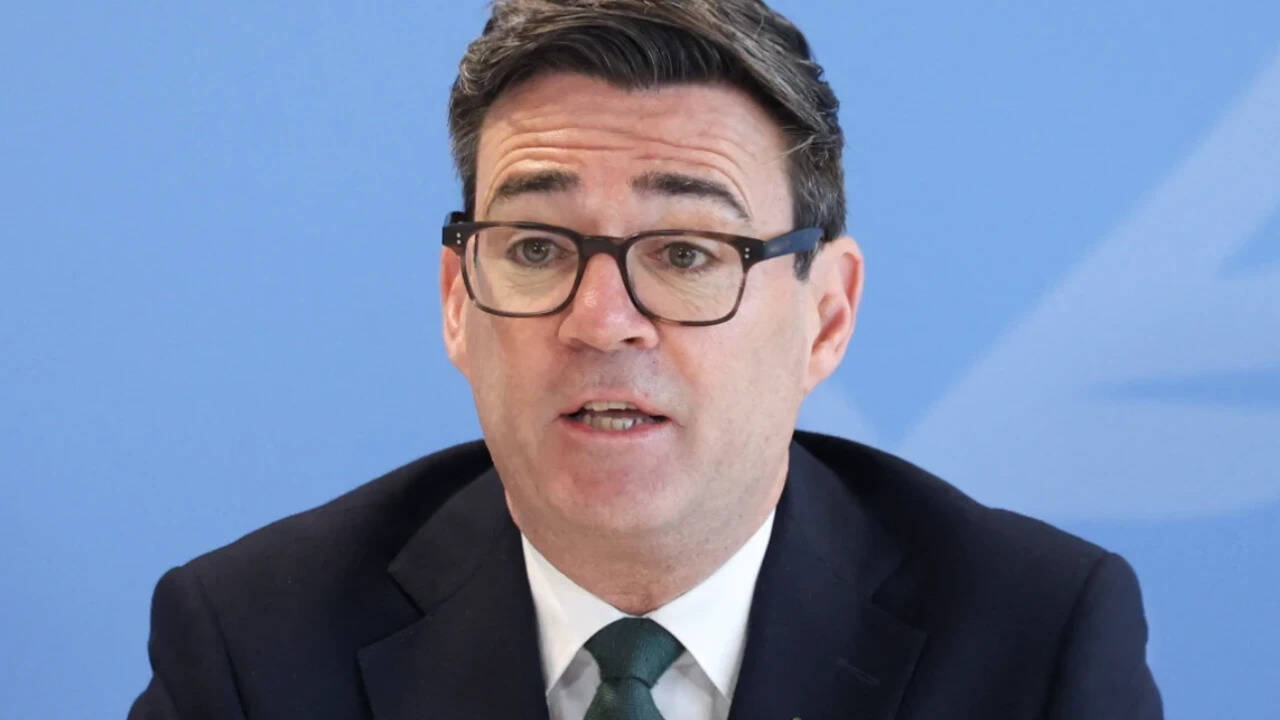
In late 2024, ahead of the Commonwealth Heads of Government Meeting in Samoa, that ghost stepped directly into the fluorescent glare of Downing Street. UK Prime Minister Keir Starmer, speaking through his official spokespeople and in carefully calibrated press briefings, drew a hard, unyielding line in the sand. Britain would not pay financial reparations for its role in the transatlantic slave trade. Reparations, Downing Street stated, were not on the agenda. Yet, in the same breath, the British government signaled it was open to discussing a formal apology and exploring non-financial forms of restorative justice.
On paper, it looks like a tidy diplomatic compromise. One side asks for money and contrition; the other offers the contrition and keeps the checkbook closed.
To understand why that offer landed across the Caribbean not as an olive branch, but as an insult, you have to step away from the podiums in London and look at what happens when history refuses to stay in the past.
The Ledger That Never Closed
Consider a hypothetical scene—a composite built from documented historical records and modern economic realities.
Imagine two families in 1834. One lives in a Georgian townhouse in Bristol, England; the other lives in a wooden shack on the outskirts of Spanish Town, Jamaica. When the British Parliament passed the Slavery Abolition Act, it faced a moral and financial dilemma. Emancipating roughly 800,000 enslaved Africans meant stripping wealthy British landowners, merchants, and institutions of their "property."
Britain chose to protect the property owners.
According to records digitized by University College London’s Centre for the Study of the Legacies of British Slavery, the British government borrowed £20 million to compensate roughly 46,000 slave owners for the loss of their human assets. That sum represented an astonishing 40 percent of the Treasury’s annual income—the equivalent of hundreds of billions of pounds in today’s economy.
The family in Bristol received a payout. They used that capital to buy railway shares, build textile mills, endow universities, and fund banks that still tower over the City of London today.
The family in Spanish Town received nothing. Worse, they were forced into an "apprenticeship" system that kept them working without pay for their former masters for years after they were declared legally free. And because the British government had taken out a massive loan from the Rothschild banking family to pay off the slave owners, British taxpayers—including the descendants of the enslaved who later migrated to the UK—continued paying off that debt until 2015.
Read that year again. 2015.
The debt incurred to compensate slaveholders was not fully settled until nine years before Keir Starmer stood at a lectern and declared that Britain must "look forward" rather than engage in "very, very long endless discussions about reparations on the past."
What an Apology Costs
Words are weightless.
When a politician offers a formal apology for an atrocity committed two centuries ago, the air in the room vibrates for a moment, cameras click, headlines are written, and then the motorcade drives away. For the person offering the apology, the cost is zero. No budgets are cut. No taxes are raised. No structural privileges are surrendered.
"You cannot eat an apology," has become a familiar refrain among activists across Bridgetown, Kingston, and Port of Spain.
The Caribbean Community, known as CARICOM, has spent over a decade building a legal and moral framework that moves far beyond a simple demand for cash handouts. Under the CARICOM Ten-Point Plan for Reparatory Justice, regional leaders—including Barbados Prime Minister Mia Mottley and Bahamian Prime Minister Philip Davis—have argued that the legacy of slavery is not an abstract emotional wound. It is a measurable, ongoing economic and public health crisis.
Look at the infrastructure of the Caribbean today. During the colonial era, Britain extracted immense wealth from islands like Barbados, Jamaica, and Trinidad, treating them purely as agricultural factories for sugar, rum, and cotton. When Britain finally withdrew and granted independence in the 1960s and 70s, it left behind economies intentionally designed to be dependent, lacking diversified industries, deep-water ports built for local trade, or comprehensive healthcare and educational systems.
Today, when a Category 5 hurricane tears through the eastern Caribbean, nations are forced to borrow money on predatory international markets just to rebuild roads and hospitals—spiraling into sovereign debt traps that prevent them from ever building resilience against the very climate crisis largely fueled by the Industrial Revolution that Caribbean slave labor financed.
To call this "the past" is like breaking someone's legs, taking their wallet, locking them in a basement for three hundred years, and then opening the door and telling them it is time to focus on the future.
The Fear Behind the Refusal
Why, then, did Starmer’s government shut the door so firmly on financial restitution, even as voices within his own Labour Party—and across the Commonwealth—urged a more open dialogue?
The answer lies in a mixture of domestic politics, legal terror, and sheer arithmetic.
First, there is the domestic reality in Britain. In 2024, the UK was grappling with stagnant economic growth, a strained National Health Service, and a cost-of-living crisis that left millions of British families struggling to heat their homes. For a newly elected Prime Minister already taking political heat for cutting winter fuel payments to pensioners, floating the idea of sending billions of pounds overseas for historical crimes would have been political suicide. Right-leaning newspapers in London framed the Caribbean demands as an attempt to bankrupt modern taxpayers for sins committed by people long dead.
Second, and far more quietly, is the legal trapdoor.
In international law, a formal, unqualified apology carries immense legal weight. If the British state formally apologizes for the transatlantic slave trade—an act that international legal scholars and the United Nations increasingly classify as a crime against humanity—it potentially opens the floodgates to litigation in international courts. An apology without a firm wall separating it from financial liability isn't just a gesture; it is an admission of guilt that lawyers can use to force settlements.
By saying "we are open to an apology, but we reject reparations," Downing Street attempted to thread an impossible needle: to appear morally evolved on the world stage while legally insulating the British Treasury from ever paying a single penny.
The Invisible Stakes in the Room
Think of reparatory justice like an environmental cleanup.
If a chemical factory dumps toxic waste into a river for two centuries, and then new management takes over the factory, the new managers did not personally pour the poison into the water. They bear no individual guilt for the actions of their predecessors. Yet, the company still owns the assets built on the profits of that unregulated dumping, and the town downstream is still drinking poisoned water. If the new CEO holds a press conference to say, "We deeply regret the historical dumping, and we are committed to looking forward," while refusing to pay to filter the water, the townspeople have every right to call the apology hollow.
This is the fundamental disconnect between London and the Caribbean.
British officials view reparations through the lens of individual guilt: I didn't own slaves, and you weren't enslaved, so why should I pay you?
Caribbean leaders view reparations through the lens of institutional inheritance: Your state, your monarchy, your banks, and your universities still hold the compound interest of wealth stolen from our ancestors, while our states are still paying the compound interest on the poverty you left behind.
Even the "non-financial" alternatives floated by British diplomats—things like debt restructuring, climate finance, and educational exchanges—run into a wall of skepticism when they are framed as charity rather than justice. Aid is something the powerful give to the weak out of generosity, and it can be revoked whenever political winds shift. Restitution is something owed to settle an unpaid bill.
A Reckoning Deferred
I remember standing once in the courtyard of Elmina Castle on the coast of Ghana, looking out through the "Door of No Return" at the Atlantic Ocean. The stone walls were thick, bleached white by salt and sun, and the air inside the dungeons was heavy and suffocating even centuries after the last chains were dragged across the floor. Just above the dungeon where hundreds of men were packed together in darkness stood the Portuguese—and later Dutch and British—church. You could hear the hymns sung upstairs while people suffocated below.
That architecture—a house of moral order built directly on top of a basement of unimaginable brutality—is not just a relic in West Africa. It is the blueprint of the modern global economy.
When Keir Starmer arrived in Samoa for the Commonwealth summit, he hoped to talk about trade, climate resilience, and modern partnerships. Instead, all 56 Commonwealth nations—defying Britain's initial resistance—agreed to include a clause in their final communique stating that the time had come for a "meaningful, truthful and respectful conversation" toward forging a common future based on equity.
Downing Street insisted this was not an agreement to pay reparations. Technically, they were right. No checks were written in Samoa. No trillion-dollar funds were established.
Yet the shift was unmistakable. For decades, Britain successfully kept the subject off the official diplomatic table altogether, treating it as a fringe demand that polite statesmen simply ignored. By forcing the issue into the formal record of the Commonwealth, Caribbean leaders proved that the ledger at Kew cannot simply be locked back in the vault.
You can refuse to pay a debt, and you can declare the conversation over. You can offer carefully drafted words of regret from behind a podium, hoping the cameras will capture your grace and miss your closed fist.
But the numbers in the ledger are still there, written in fading ink, waiting for someone with the courage to finally balance the books.


