They come for the global ranking but stay for the survival test. Every year, tens of thousands of mainland Chinese students cross the Shenzhen River to pursue higher education in Hong Kong. They are promised an international stepping stone, a bilingual environment, and a world-class credential just a bullet train ride away from home. What they actually find is a grueling economic pressure cooker that begins the moment they look for a bed.
The mental health crisis quietly brewing among mainland university students in Hong Kong is not a simple case of homesickness. It is the direct result of a crushing convergence of hyper-inflated housing costs, a shifting employment market that no longer guarantees a premium for an overseas degree, and a social environment that often leaves them isolated. While universities tout enrollment numbers, the infrastructure supporting these students is buckling under the weight of reality.
The Real Estate Premium on Mental Health
University dormitories in Hong Kong are a luxury reserved for a fraction of the student body. Most non-local postgraduate students, who form the bulk of the mainland intake, are explicitly excluded from campus housing. This pushes thousands of young adults into one of the most unforgiving real estate markets on earth.
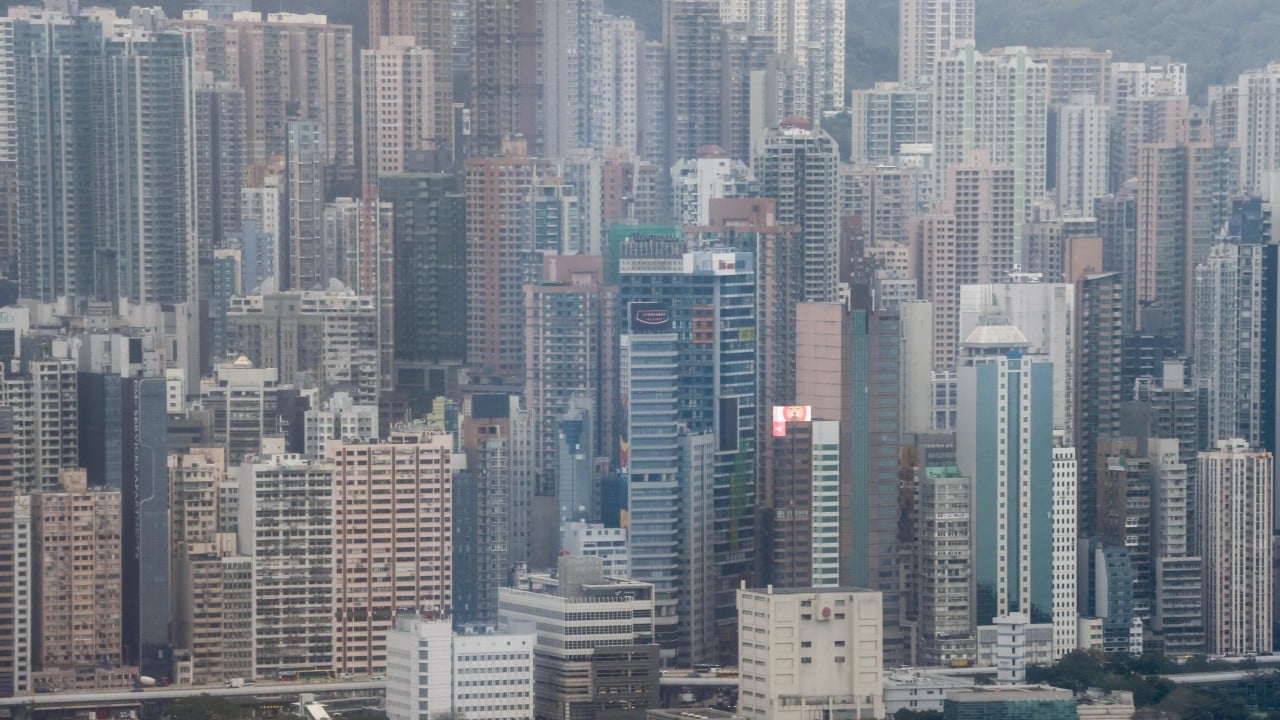
The numbers tell a stark story. A windowless, partitioned room in an aging tenement building in Hung Hom or Sha Tin regularly commands rents that would cover a luxury apartment in neighboring Shenzhen. Landlords frequently demand twelve months of rent upfront from mainland students, citing a lack of local credit history. This practice forces families to liquidate significant capital before the student even attends their first lecture.
Living under these conditions introduces a chronic baseline of stress. Students crowd into subdivided flats where the kitchen is inches from the toilet, sacrificing privacy and basic comfort to afford tuition. This spatial confinement directly correlates with elevated anxiety levels. When your living space resembles a cage, your mental bandwidth shrinks. The financial strain is not a background detail; it is the central organizing principle of their daily lives.
The Shrinking Premium of the Hong Kong Degree
For a generation, a degree from a Hong Kong institution was a golden ticket. It signaled to employers in Beijing and Shanghai that a candidate possessed international exposure and English fluency without the geopolitical risks associated with studying in the West. That calculation has fundamentally changed.
The mainland job market is experiencing a massive supply-and-demand mismatch. With record numbers of domestic graduates entering the workforce, the premium once placed on Hong Kong degrees has evaporated. Mainland human resource departments now look at a one-year taught master’s degree from Hong Kong with skepticism, sometimes viewing it as a shortcut rather than an elite qualification.
At the same time, the local Hong Kong job market presents its own formidable barriers. Fluency in Cantonese remains a prerequisite for many client-facing roles, a hurdle that many short-term mainland students cannot clear in twelve months. The post-graduation visa schemes look generous on paper, but finding an employer willing to navigate the bureaucratic realities of hiring non-local staff in a tightening economy is a different matter.
This creates a psychological trap. Students realize midway through their studies that the massive financial investment made by their families may not yield a proportional return. The fear of returning home as a failure weighs heavily on them, transforming academic pressure into an existential crisis.
Isolation in Plain Sight
Geographic proximity does not equal cultural integration. Despite sharing a land border, the cultural chasm between mainland students and the local Hong Kong population remains wide, exacerbated by years of political tension and social divergence.
Many mainland students report feeling like permanent outsiders. On campus, group projects frequently split along cultural lines. Local students gravitate toward Cantonese-speaking peers, while mainland students form insular enclaves out of necessity. This self-segregation protects them from overt hostility, but it also deprives them of a genuine support network.
When emotional crises hit, these students find themselves in a systemic blind spot. University counseling centers are overwhelmed, with waiting lists stretching into months. More critically, language and cultural nuances matter in therapy. A student processing deep-seated academic anxiety or familial pressure from a traditional mainland background often struggles to find common ground with a local counselor who views the world through a different cultural lens.
The Institutional Failure to Protect
Universities have treated international and mainland enrollment as a lucrative revenue stream without scaling up the corresponding pastoral care. Internationalization cannot stop at the admissions office.
The current institutional response relies heavily on superficial wellness workshops and self-help apps. These tools are useless against structural anxiety. A breathing exercise does not pay a security deposit. A mindfulness seminar does not rewrite a resume for a hostile job market.
What is missing is a coordinated strategy that addresses the material conditions of these students. Universities possess the financial leverage to negotiate block leases with private developers to secure affordable, safe housing for non-local students. They have the resources to build dedicated career counseling pipelines that bridge the gap between Hong Kong education and the specific demands of the mainland corporate sector.
They choose not to. Doing so would require acknowledging that the current model is unsustainable.
The Myth of Resilience
There is a dangerous assumption among academic administrators that mainland students are inherently resilient, conditioned by the brutal competitiveness of the domestic gaokao examination system to handle any hardship. This is a fundamental misreading of human psychology.
The pressure cooker of the mainland education system does not build immunity; it creates pre-existing vulnerabilities. By the time these students arrive in Hong Kong, many are already running on psychological fumes. Stripping away their familiar support systems, plunging them into financial precarity, and offering them diminishing career prospects is a recipe for systemic breakdown.
The cracks are showing in the rising demand for private psychological counseling outside the university system, services that students must pay for out of pocket, further compounding their financial stress. It is a cycle of anxiety that feeds on itself.
The illusion that Hong Kong is an easy, low-risk alternative to studying further abroad has been shattered. For the thousands of students currently navigating the high-rent districts of Kowloon, the reality is clear. The true cost of a Hong Kong education is written on the lease agreement and paid out in mental health.