The coffee in your mug is still warm, but thousands of miles away, the world’s most critical economic artery just developed a blood clot.
Seventy feet beneath the keel of a massive crude oil tanker, the Persian Gulf drops into a narrow, treacherous funnel. This is the Strait of Hormuz. At its narrowest point, the shipping lanes are just two miles wide. On a map, it looks like a fragile pinch-point, a tiny gap between the jagged coast of Oman and the dry, sun-baked cliffs of Iran. It is a geographic fluke. Yet, through this single maritime throat flows one-fifth of the world’s petroleum and a massive chunk of the liquefied natural gas that keeps global grids humming.
When two nations exchange fire near these waters, the ripples do not stop at the shoreline. They travel down the telegraph wires of global commerce, through the trading floors of London and New York, right to the grocery store down the street from your house.
Silence now rules the strait. It is an eerie, expensive kind of quiet.
The Invisible Wall
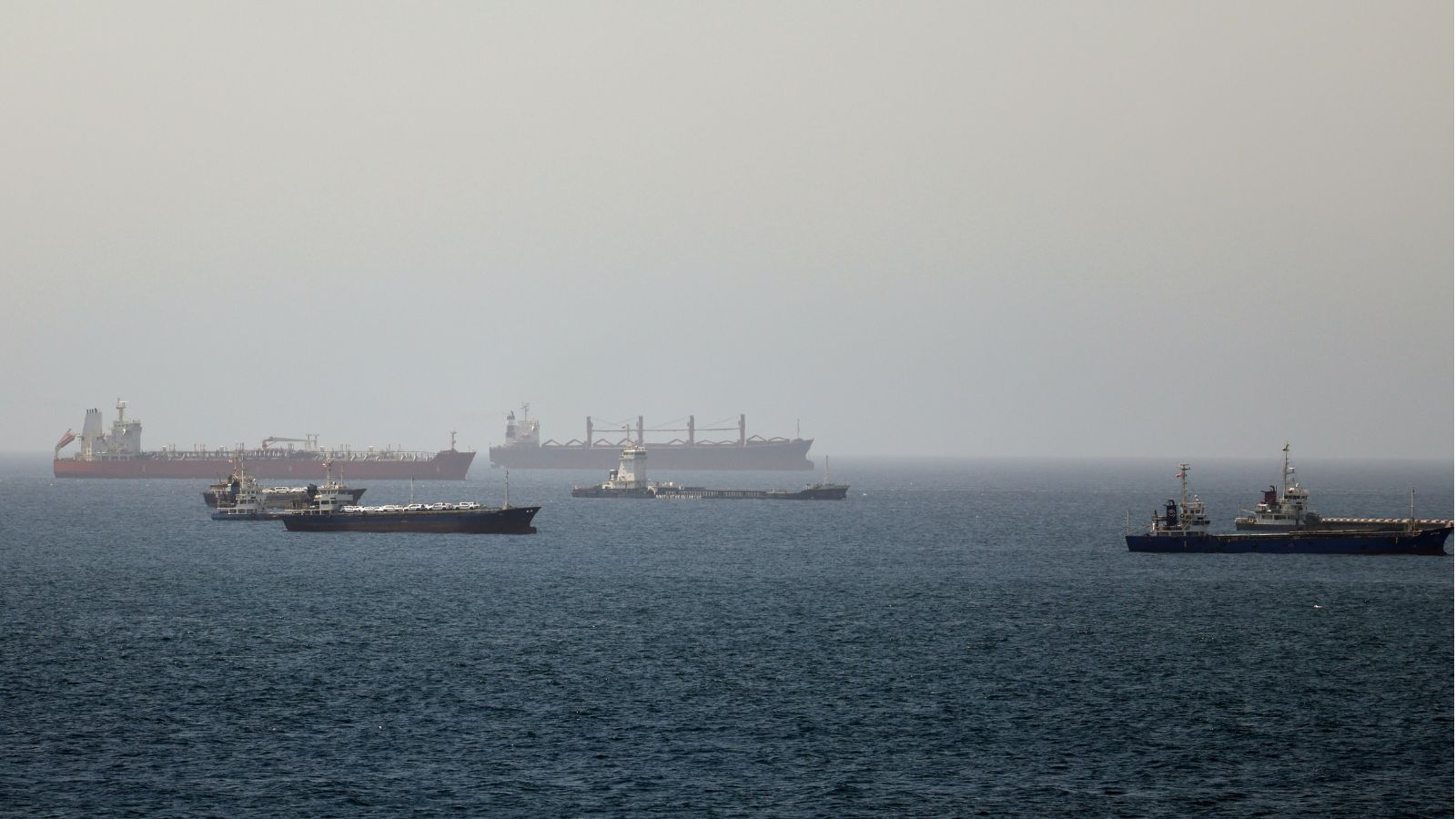
Consider the view from the bridge of a Very Large Crude Carrier (VLCC). Let us call her the Ocean Sentinel, a hypothetical but entirely accurate representation of the steel behemoths currently idling in the Arabian Sea.
The captain on the bridge is not looking at geopolitical maps. He is looking at radar screens and checking insurance premiums. Normally, the strait is a bustling highway, a non-stop parade of ships carrying millions of barrels of oil per day. You would see the steady wake of vessels churning through the water, their hulls heavy and low.
Today, the radar is frighteningly empty.
Following a sudden, sharp exchange of missile and drone fire between American naval assets and Iranian coastal batteries, the shipping lanes effectively closed. No official blockade was declared. No chains were stretched across the water. But the effect is exactly the same.
When munitions start flying over a two-mile-wide channel, underwriters in London do something immediate and devastating: they revoke war-risk insurance cover. Without that insurance, a hundred-million-dollar ship carrying a two-hundred-million-dollar cargo cannot legally move.
The Ocean Sentinel drops anchor. Then another ship stops. Then ten more. Within hours, a maritime traffic jam forms, stretching back into the Gulf of Oman. Huge engines that consume tons of fuel per hour are dialed back to a low, frustrated idle. The crews can do nothing but watch the horizon and wait for the sky to clear.
Why a Distant Flash of Light Dictates Your Local Prices
It is easy to view Middle Eastern maritime friction as a distant, abstract problem for politicians and generals to solve. That is a comforting illusion. The reality is that our modern world operates on a razor-thin margin of error called just-in-time logistics.
We do not keep massive stockpiles of everything we need. We rely on the fact that the ship moving today will arrive next week. When the Strait of Hormuz chokes, that assumption shatters.
The immediate reaction is a spike in Brent crude prices. Energy markets do not wait for the oil to actually run out; they price in the fear of it running out. If a tanker cannot exit the Gulf, the refinery in Rotterdam or Houston does not get its raw material. If the refinery slows down, the supply of diesel, gasoline, and plastics shrinks.
Think about the truck that delivers fresh produce to your local supermarket. It runs on diesel. When diesel prices jump because of a firefight five thousand miles away, the transport company charges the distributor more. The distributor charges the grocery chain more.
Suddenly, your loaf of bread costs fifty cents extra.
The connection is direct. The physics of global trade mean that a missile fired in the Persian Gulf hits the consumer's wallet with shocking velocity. It is a tax levied on the entire planet by instability.
The Human Cost of High-Stakes Posturing
Behind the cold statistics of barrels-per-day and maritime insurance points are human beings trapped in a volatile theater.
The sailors aboard these merchant ships are not combatants. They are civilians, often from developing nations, working long contracts to send money back to families in Manila, Mumbai, or Odessa. When a conflict flashes open around them, they become involuntary shields in a game of geopolitical chicken. They watch the sky for the low, buzzing silhouette of one-way attack drones. They listen to the radio for warnings from hostile navies ordering them to change course.
On the shore, the stakes are equally human. The nations surrounding the Gulf rely on these exports for their literal survival. For oil-producing economies, a halted strait means an immediate freeze on national revenue. For importing nations, particularly across Asia and parts of Europe, it means an immediate scramble for alternative, far more expensive energy sources.
The true friction of this conflict is not just the steel and fire exchanged between militaries. It is the friction imposed on everyday human life. It is the anxiety of a ship captain responsible for thirty lives in a zone of fire. It is the stress of a small business owner watching utility bills climb because energy markets are panicking.
The Illusion of Alternatives
Every time the Strait of Hormuz chokes, voices emerge pointing toward pipelines and alternative routes. Surely, in the modern era, we have bypassed this ancient geographic trap?
The math tells a harsher story.
There are pipelines that cross Saudi Arabia to the Red Sea, and others that cut across the United Arab Emirates to bypass the pinch-point. But these systems combined can only handle a fraction of the volume that typically moves through the water. They are small release valves on a high-pressure boiler. You cannot fit a roaring river through a garden hose.
The world remains stubbornly, terrifyingly dependent on that two-mile-wide strip of water.
We have built a dazzlingly complex global civilization, capable of instant communication and miraculous technological feats. Yet, it all rests on the fragile assumption that heavy ships can pass through a narrow gate unmolested. When that assumption fails, the veneer of modern stability peels back very quickly.
The ships in the Gulf of Oman remain at anchor. The smoke from the fire exchange clears into the hazy desert sky, but the economic fog is just beginning to roll in. On the bridge of the Ocean Sentinel, the captain sips lukewarm coffee, watching a blank radar screen, waiting for permission to sail into a volatile future.