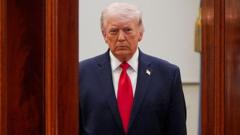
The modern American presidency has evolved into the world's most potent market-moving engine, capable of shifting billions in capital through a single post on Truth Social or a closed-door briefing. This concentration of influence creates a structural information asymmetry that transcends traditional insider trading definitions. While the media focuses on the optics of individual trades, a rigorous analysis reveals a deeper conflict: the "Presidential Arbitrage" function, where the timing, speed, and scale of market reactions to executive signaling provide a low-risk, high-reward environment for those with proximity to the source.
The core of the current controversy—highlighted by suspicious oil futures spikes 15 minutes prior to the March 23, 2026, Iran announcement—is not merely a question of ethics, but of systemic market failure.
The Mechanics of Information Leakage
Political insider trading operates through three primary transmission vectors. Understanding these "Pillars of Proximity" is essential for identifying how non-public information enters the market before official dissemination.
- The Administrative Lag: Policies regarding tariffs, military action, or diplomatic pivots require hours or days of staff-level coordination. Every person in the chain of command—from deputies to digital media interns—becomes a potential point of leakage.
- The Predictive Market Loop: The rise of platforms like Polymarket has created a new incentivized feedback loop. When a White House staffer or confidant places a bet on a policy outcome, they aren't just predicting; they are front-running a guaranteed event.
- The Direct Signal Arbitrage: In a "post-institutional" media environment, the President often communicates directly to the public. If a market-moving statement is scheduled for 7:00 AM, the "pre-announcement" window (usually 10–30 minutes) is the highest-value period for unhedged, high-leverage trades.
Quantifying the Iran Announcement Anomaly
The March 2026 volatility event serves as a textbook case of abnormal volume profiles. On March 23, the President announced a de-escalation in the U.S.-Iran conflict. However, at 6:49 AM—exactly 16 minutes before the post—oil futures saw a 400% surge in volume without any corresponding public news or technical break.
- The Velocity Gap: In a standard efficient market, news is digested in milliseconds. A 16-minute lead time suggests a human-speed leak rather than an algorithmic one.
- The Structure of the Trade: The specific trades identified by regulators were "naked" (unhedged) and highly leveraged. This indicates a confidence level that exceeds typical market speculation, which usually accounts for at least some downside risk.
- The Economic Surplus: Estimates suggest that the entities involved in these pre-announcement trades captured a surplus of approximately $850 million across oil, defense equities, and broad index futures.
The Regulatory Bottleneck: Why the STOCK Act Fails
The Stop Trading on Congressional Knowledge (STOCK) Act of 2012 was designed to prevent this exact scenario, yet it remains functionally toothless against the executive branch for several structural reasons.
The Definition of "Materiality"
Under the STOCK Act, information must be "material and non-public." However, a President’s intent to tweet is often categorized as a personal thought or political strategy rather than a formal government record. This creates a legal gray area where "intent" is not "official information" until the moment it is published.
The Enforcement Asymmetry
The Securities and Exchange Commission (SEC) and the Commodity Futures Trading Commission (CFTC) are executive agencies. Investigating the White House requires these agencies to probe their own superiors. While Michael Selig, the Trump-appointed CFTC chairman, has pledged a "crackdown" on prediction markets, the conflict of interest is built into the organizational chart.
The 45-Day Disclosure Lag
The STOCK Act requires reporting within 30 to 45 days. In the high-frequency environment of 2026, a 45-day lag renders the data useless for real-time market integrity. By the time a trade is reported, the capital has already been recycled into new positions, often through offshore entities or complex derivatives that obscure the original source.
The Cost Function of Political Uncertainty
Market participants now face a "Political Uncertainty Tax." When a market is perceived as "rigged" by insiders, liquidity providers widen their spreads to protect against being on the wrong side of an information-advantaged trade. This increases the cost of capital for all legitimate investors.
The correlation between Presidential communication and market volatility has reached its highest point in forty years. The "Truth Social Volatility Index" (an informal measure used by hedge funds) shows that the S&P 500 now experiences an average 1.2% swing within 60 minutes of a Presidential post regarding trade or foreign policy. This volatility is not a side effect; it is the product being traded by those with the "leak advantage."
Strategic Recommendations for Institutional Resilience
The current environment necessitates a fundamental shift in how institutional investors manage political risk. Passive diversification is no longer a sufficient defense against localized information leakage.
- Algorithmic Sentinel Deployment: Firms must deploy sentiment-analysis bots that scan social media metadata and prediction market movements in real-time. A spike in Polymarket odds for a specific geopolitical outcome should be treated as a lead indicator of a coming executive announcement.
- Shadow Delta Analysis: Large-scale, unhedged trades in the "pre-announcement window" should trigger automatic risk-off protocols. If the "smart money" is moving 15 minutes early, the retail and institutional "fast money" is already the exit liquidity.
- Push for Blind Trust Reform: The only structural solution to Presidential Arbitrage is the mandatory liquidation of all individual securities into broad-based, blind-managed index funds for the President and their immediate staff.
The integrity of the U.S. capital markets depends on the perception of a level playing field. If the "insider" status is moved from the boardroom to the West Wing, the very foundation of price discovery is compromised. The strategic play is to treat political signals not as news, but as a specific asset class with a unique, and often compromised, distribution curve.