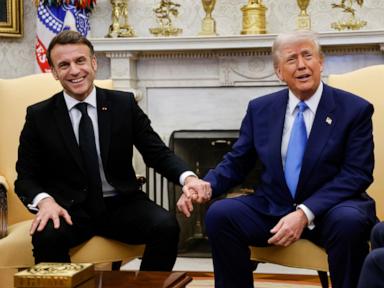
Emmanuel Macron and Donald Trump are skipping the standard diplomatic script for a private dinner at the Palace of Versailles following the G7 summit. This is not a routine post-summit debriefing. It is a calculated, high-stakes attempt by the French presidency to bypass the traditional multilateral gridlock and establish a direct transactional line with Washington.
Publicly, the meeting is framed as an extension of G7 hospitality, an opportunity to decompress after days of intense multilateral negotiations. Privately, Elysee sources indicate that the dinner serves a far sharper strategic purpose. Macron wants to isolate Trump from his more hawkish domestic advisors, using the historic, deeply symbolic backdrop of Versailles to appeal directly to the American president's preference for personalized, leader-to-leader diplomacy.
The strategy carries immense political risk. By elevating Trump to a solo state-level reception immediately after a fractured G7, Macron risks alienating his European partners, who favor a united, institutional front against Washington's protectionist trade policies. Yet, for a French president facing domestic political stagnation and a fragmenting European Union, the gamble of bilateral theater outweighs the safety of committee-driven consensus.
The Illusion of Grandeur as a Diplomatic Tool
Versailles is never chosen by accident. The palace is an architectural manifestation of absolute authority, designed by Louis XIV to project power and overwhelm visitors. When a French president hosts a foreign counterpart here, the intent is always to signal that France is not merely a middle power within a European bloc, but a sovereign global force capable of dealing directly with superpowers.
Historically, this room-by-room stagecraft has yielded mixed results. Macron tried a similar tactic early in his first term, hosting Vladimir Putin at Versailles in 2017 to establish a line of communication that ultimately failed to alter Moscow's geopolitical trajectory. The return to this venue for Trump reveals a persistent belief within the French diplomatic corps that personal chemistry, reinforced by historical opulence, can override structural national interests.
The dinner bypasses the institutional filters of the State Department and the National Security Council. Macron's team knows that Trump disdains lengthy policy briefings and multi-party communiques. By narrowing the room to two leaders and a handful of translators, Paris hopes to secure verbal commitments on tariff exemptions and security guarantees that professional diplomats would spend months blocking.
Trade Wars and the Tariff Threat
The immediate crisis driving this meeting is the looming threat of sweeping American tariffs on European goods. The G7 summit has long ceased to be an effective forum for resolving these disputes, as the consensus-driven format allows Washington to dismiss collective European complaints as bureaucratic obstruction.
France is particularly vulnerable to aggressive American trade policies. The agricultural sector, luxury goods, and aeronautics form the backbone of French export power, and all three sit squarely in the crosshairs of Washington's protectionist agenda. A blanket tariff on European steel or a targeted levy on French wine would trigger immediate domestic economic pain for Macron, compounding his existing political vulnerabilities at home.
The Agriculture Battleground
French farmers represent a fierce, highly organized domestic lobby capable of paralyzing the country through protests. If Washington imposes retaliatory tariffs on French agricultural products, Macron cannot simply absorb the economic blow. He will be forced to retaliate through European Union mechanisms, triggering a cyclical trade war that Europe is ill-equipped to win.
During the dinner, Macron is expected to pitch a bilateral regulatory truce. The argument will not center on the abstract benefits of free trade, which hold little sway in the current Washington climate. Instead, the French side will frame cooperation as a mutual benefit for American consumers who drive the demand for high-end European imports.
The Technology Tax Friction
Another undercurrent is the ongoing dispute over European taxation of American digital giants. Paris has consistently pushed for higher taxes on multinational tech firms, a move that Washington views as a direct attack on American corporate dominance. Macron must convince Trump that European regulatory autonomy is not an anti-American maneuvers, but a necessary step toward global market stability.
European Fractures and the Solo Gamble
By breaking ranks to host a bespoke dinner, Paris is exposing the deep divisions within the European Union's foreign policy apparatus. Berlin, currently wrestling with its own economic stagnation and political transition, views Macron's solo diplomacy with deep skepticism. The German chancellery prefers a unified approach handled through Brussels, fearing that bilateral deals will leave smaller EU nations exposed.
This friction is precisely what Washington exploits. American trade negotiators have long understood that the European Union is a economic titan but a geopolitical fragment. When individual leaders seek separate peace deals, the collective bargaining power of the bloc erodes.
Macron's calculation is brutally pragmatic. He recognizes that the concept of European strategic autonomy is still largely theoretical. With the war on Europe's eastern flank dragging into its fifth year and economic growth lagging behind both the United States and China, France cannot afford to wait for Brussels to find its voice. The Versailles dinner is an admission that in the current international order, bilateral leverage is the only currency that matters.
The Security Architecture Under Strain
Beyond trade, the dinner will inevitably confront the deteriorating security landscape in Europe. The future of NATO and the sustainability of Western aid to Ukraine are existential questions for Paris.
Trump's long-standing skepticism toward NATO is well-documented. He views the alliance as a financial burden on the American taxpayer, frequently criticizing European allies for failing to meet their defense spending commitments. Macron, who once famously declared NATO to be "brain dead," shares some of the frustration regarding the alliance's structural inertia, but his solution is radically different. Macron wants a European-led defense pillar; Trump wants a reduction in American liabilities.
The Ukraine Funding Dilemma
The immediate concern for the French military establishment is the potential for a sudden withdrawal or reduction of American military logistics and intelligence support in Eastern Europe. France has increased its own defense production, but it cannot fill the vacuum if Washington decides to pivot away from the conflict entirely.
- American Logistics: The backbone of satellite intelligence and heavy transport that European nations rely on.
- French Industrial Capacity: Growing, but currently incapable of matching the sheer volume of artillery and air defense systems required for long-term deterrence.
- The Financial Gap: European budgets are already stretched thin by social spending and domestic debt, making a sudden surge in defense funding politically explosive.
Macron will attempt to present European defense spending not as an alternative to NATO, but as a way to alleviate the burden on the United States. It is a delicate rhetorical line to walk. If he pushes too hard on European independence, he risks reinforcing the argument that America should leave Europe to its own devices.
The Architecture of the Deal
The success of the Versailles strategy hinges entirely on whether Macron can offer Trump a tangible, headline-ready victory that can be brought back to Washington. In the arena of transactional diplomacy, abstract commitments to the international rules-based order are worthless.
Paris is prepared to offer concessions on market access for certain American industrial sectors and potential alignment on geopolitical containment strategies outside of Europe. The question is whether these offers will be enough to satisfy an administration that views trade surpluses as the ultimate measure of national success.
The dinner will yield plenty of carefully curated photographs. The gold-leaf mirrors and manicured gardens of Versailles provide a perfect backdrop for the illusion of global harmony. The true measure of the meeting will not be found in the joint press statements issued late into the night, but in the subsequent tariff schedules published by the United States Department of Commerce and the deployment orders issued by the Pentagon. France has placed its bet on the power of the room; the rest of Europe can only watch to see if the house wins.