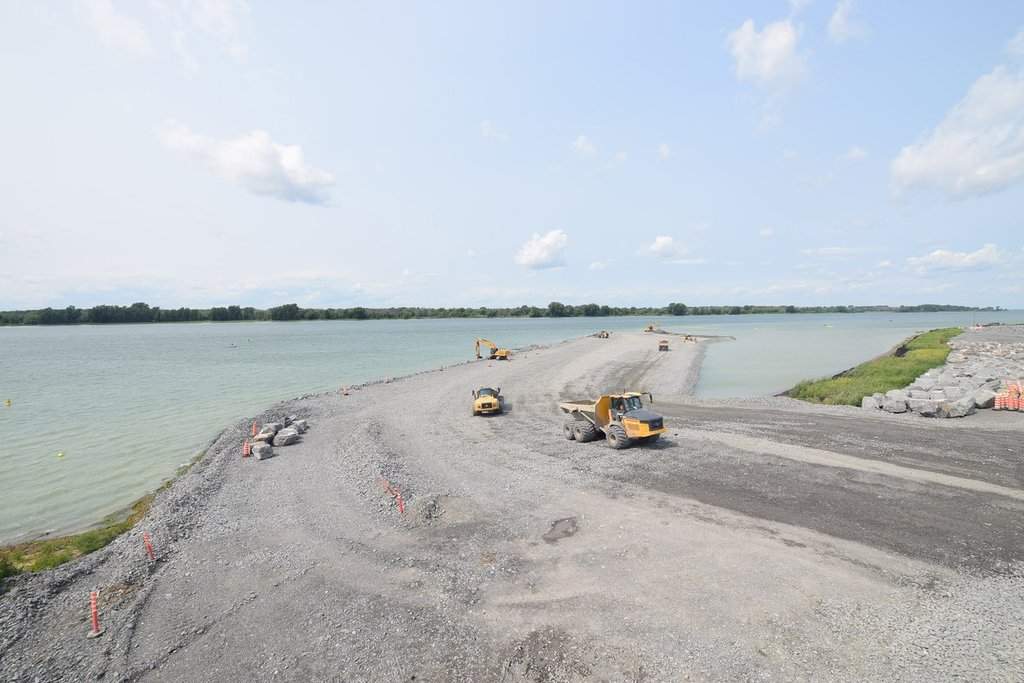
Canada's supply chains have been stretched thin for years. Everyone complains about bottlenecks, rising shipping costs, and unpredictable delivery timelines, but few massive infrastructure projects actually fix the root problem. Right now, on the shores of the St. Lawrence River in Contrecœur, Quebec, that reality is shifting. The Port of Montreal expansion project has cleared its preparatory phases and moved into active in-water construction.
Politicians love to throw around phrases like "nation-building," but this specific initiative carries weight. If you run a business that relies on imported goods or exports across international waters, you need to understand what this terminal actually means for your logistics.
Breaking Down the Contrecœur Terminal Build
For months, the site about 45 kilometres northeast of Montreal looked like a quiet staging ground. Crews handled site prep, cleared targeted trees, and built access roads. That phase wrapped up, and heavy machinery took over. Workers started dropping massive amounts of stone into the river to build a working jetty.
This isn't a small upgrade. The plan expands the Port of Montreal's container handling capacity by roughly 60 percent. When fully operational toward the end of the decade, the new terminal will handle 1.15 million twenty-foot equivalent units, known as TEUs, annually.
Let's look at what is physically going into the site:
- Two new deep-water berths for cargo ships.
- A sprawling container storage and handling zone.
- An intermodal rail yard tied directly into Canada's main rail network.
- A dedicated truck gate linked straight to regional highways.
More than 250,000 tonnes of stone sourced from local quarries have already been hauled in to build the river jetty and establish a solid base for future wharf construction. Steel casing piles are rolling in, and the scale of the operation is hard to ignore once you see the 300-tonne cranes parked on-site.
Why This Expansion Matters Right Now
Most people assume ports just expand because populations grow. That misses the point. Import-export hubs need redundancy. When a single port chokes or faces labor disruptions, the entire country feels the pinch in retail aisles and manufacturing plants.
The federal government fast-tracked Contrecœur as part of a broader push to insulate the economy against trade turbulence. Trade routes are shifting. Supply chain resilience isn't a buzzword anymore; it's a survival metric. By anchoring a world-class logistics hub directly in the St. Lawrence Valley, importers gain a direct pipeline into Canada's primary consumer markets without clogging downtown Montreal.
Quebec's provincial government chipped in $130 million to back the push, recognizing that regional competitiveness depends entirely on moving freight faster. DP World Canada is lined up to operate the terminal, bringing serious private-sector terminal management experience to the table.
Economic Impact Beyond the Docks
Numbers in press releases often sound inflated, but the scale here matches the price tag. Port activity across the Montreal network already generates billions in economic benefits and supports hundreds of thousands of jobs.
Once Contrecœur hits full capacity, it's projected to generate over 10,000 jobs annually. That means steady work for construction crews, rail operators, truck drivers, logistics coordinators, and administrative personnel.
Yet, building big infrastructure near waterways requires strict environmental balancing. The Montreal Port Authority spent considerable effort designing compensation measures for local aquatic vegetation beds, wetlands, and bank swallow habitats. Reforestation projects and real-time noise monitoring protocols are baked into the daily construction routine. Managing community impact while keeping heavy machinery moving seven days a week takes precise coordination.
What Logistics Managers Should Do Next
If you manage supply chains or freight forwarding in eastern Canada, don't wait until 2030 to factor this terminal into your long-term planning.
- Audit your rail and truck routes: Evaluate how your current distribution lines connect through the St. Lawrence corridor.
- Talk to your carriers: Ask your logistics partners how they plan to leverage the Contrecœur intermodal yard once it opens.
- Watch the timeline: Keep an eye on upcoming milestones, including the arrival of steel casing piles and the start of dredging work scheduled for next year.
Infrastructure takes time to build, but changes in trade patterns happen overnight. Prepare your supply chain now before the new capacity comes online.