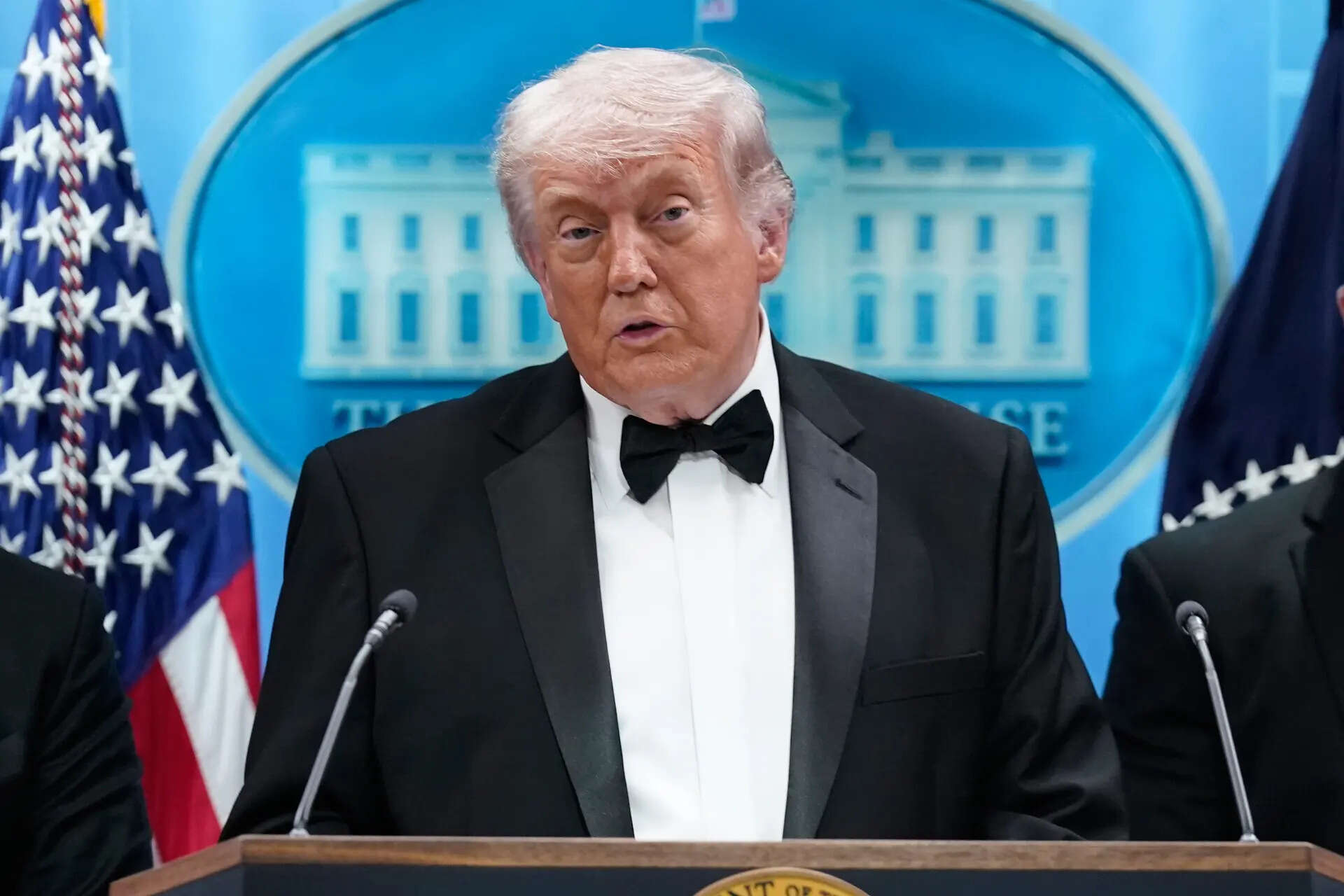
The black plastic of a desk phone can look remarkably heavy when it’s sitting in the Oval Office. It isn't just a piece of hardware. It represents the potential for a voice from thousands of miles away—a voice from Tehran—to bridge a chasm that has remained wide and jagged for decades. Donald Trump has made it clear that his door is unlocked and his line is open. But there is a toll for placing that call. It is a price measured in centrifuges and enriched uranium.
He isn't interested in the polite, slow-moving gears of traditional diplomacy. He wants a deal that cuts through the noise. His message to the Iranian leadership is blunt. Call me. We can talk. We can fix this. But if you come to the table with a nuclear program in your pocket, stay home.
The Empty Seat at the Table
Think of a high-stakes negotiation not as a series of dry memos, but as a dinner party where the host has set a beautiful table, yet the guests are stuck at the gate. The host—the United States—is checking his watch. He has the resources, the power, and the willingness to trade. Across the world, the Iranian leadership feels the weight of a crumbling economy and the restless energy of a young population that wants more than just slogans.
The tragedy of the current stalemate isn't found in the text of treaties. It’s found in the streets of Isfahan and the markets of Tehran. When a currency loses its value, a father can’t buy medicine for his daughter. When sanctions bite, the dreams of a generation are put on ice. Trump’s stance is built on the belief that the pain of those sanctions will eventually force a hand to reach for the receiver.
He is betting on a specific brand of leverage. By making the conditions for a meeting so stark—no nukes, period—he is attempting to bypass the "salami-slicing" tactics of old-school international relations. He doesn't want a ten-year plan. He wants a hard "no" on the atomic ambition before the first cup of coffee is even poured.
The Ghost of the 2015 Accord
To understand why this line in the sand is so deep, we have to look back at the wreckage of the Joint Comprehensive Plan of Action (JCPOA). For many in the West, that deal was a masterpiece of compromise. For Trump, it was a disaster. He saw it as a house built on sand—a temporary fix that allowed Iran to keep its infrastructure while merely pausing its progress.
Imagine you are trying to secure your home. The 2015 deal was like telling a burglar they can keep their lockpicks and crowbars as long as they promise not to use them for a decade. Trump wants the tools destroyed. He wants the blueprints burned.
This isn't just about security. It’s about the psychology of the deal. In the world of high-level property development and corporate takeovers where the President cut his teeth, you don't give the other side a "sunset clause" on their worst behavior. You demand a permanent change in the business model. This mindset has now been projected onto the global stage, creating a geopolitical standoff that feels more like a hostile takeover negotiation than a state department briefing.
The Human Cost of the Silence
Behind the headlines and the tough talk, there are real people living in the shadow of this "no nukes" ultimatum. Let’s consider a hypothetical student in Tehran, we'll call her Leila. She is brilliant, speaks three languages, and dreams of working in biotechnology. But because of the tension over the nuclear program, her university lacks the latest equipment. Her family’s savings are evaporating.
Leila doesn't care about the intricacies of uranium enrichment levels. She cares about a future that doesn't feel like a dead end. When Trump says there is "no point" in meeting unless the nuclear issue is settled, he is speaking to the leaders, but the echoes are felt by people like Leila.
The Iranian leadership is caught in a vice. To give up the nuclear program entirely is to surrender what they perceive as their ultimate sovereign insurance policy. To keep it is to guarantee that the pressure remains until something breaks. The "no point in meeting" comment isn't just a snub; it’s a declaration that the status quo of "talking about talking" is over.
The Art of the Ultimate Leverage
There is a certain irony in the way this drama unfolds. Trump often praises the Iranian people as "great" and "smart." He frames his hostility not toward the culture or the citizens, but toward the pursuit of a weapon that he believes would trigger a Middle Eastern arms race.
If Iran gets the bomb, Saudi Arabia will want the bomb. Then Turkey. Then Egypt. Suddenly, the most volatile region on Earth becomes a room full of people holding lit matches in a basement full of gasoline. This is the "invisible stake" that justifies the bluntness of the rhetoric.
He uses the threat of total economic isolation as a megaphone. He believes that if he yells loud enough and long enough, the pragmatic elements within the Iranian government will eventually overrule the hardliners. It’s a gamble. It assumes that the Iranian regime values survival more than its atomic identity.
The Sound of the Dial Tone
What happens if the phone stays on the hook?
We have seen this movie before. Tension leads to provocations in the Strait of Hormuz. Proxies clash in Yemen or Iraq. Tensions simmer until a single spark—a downed drone, a seized tanker—threatens to blow the whole thing wide open.
The President’s "no nukes" requirement is a filter. It’s designed to ensure that if a meeting happens, it’s not for a photo op or a vague statement of intent. It’s for a fundamental shift in the reality of the Middle East. He is effectively saying, "Don't waste my time with anything less than a surrender of your nuclear aspirations."
It is a high-wire act performed without a net. If it works, it could be the biggest diplomatic win of the century. If it fails, it leaves two nations staring at each other across a dark room, both waiting for the other to blink, while the clock on the wall ticks louder and louder.
The silence on the line is heavy. It’s the silence of a missed opportunity, or perhaps the silence before a storm. Everyone is waiting to see if the caller on the other side is willing to pay the price of admission. Until then, the phone sits on the desk, cold and quiet, a monument to a deal that hasn't happened yet.
The sun sets over the Potomac and rises over the Alborz mountains, and in both places, the people wait for a conversation that may never start, because the entry fee is nothing less than the very thing one side refuses to give and the other refuses to ignore.
:max_bytes(150000):strip_icc():focal(999x0:1001x2)/british-royal-family-tree-011e3df0a3db413680e6221eb1cda7fd.jpg)