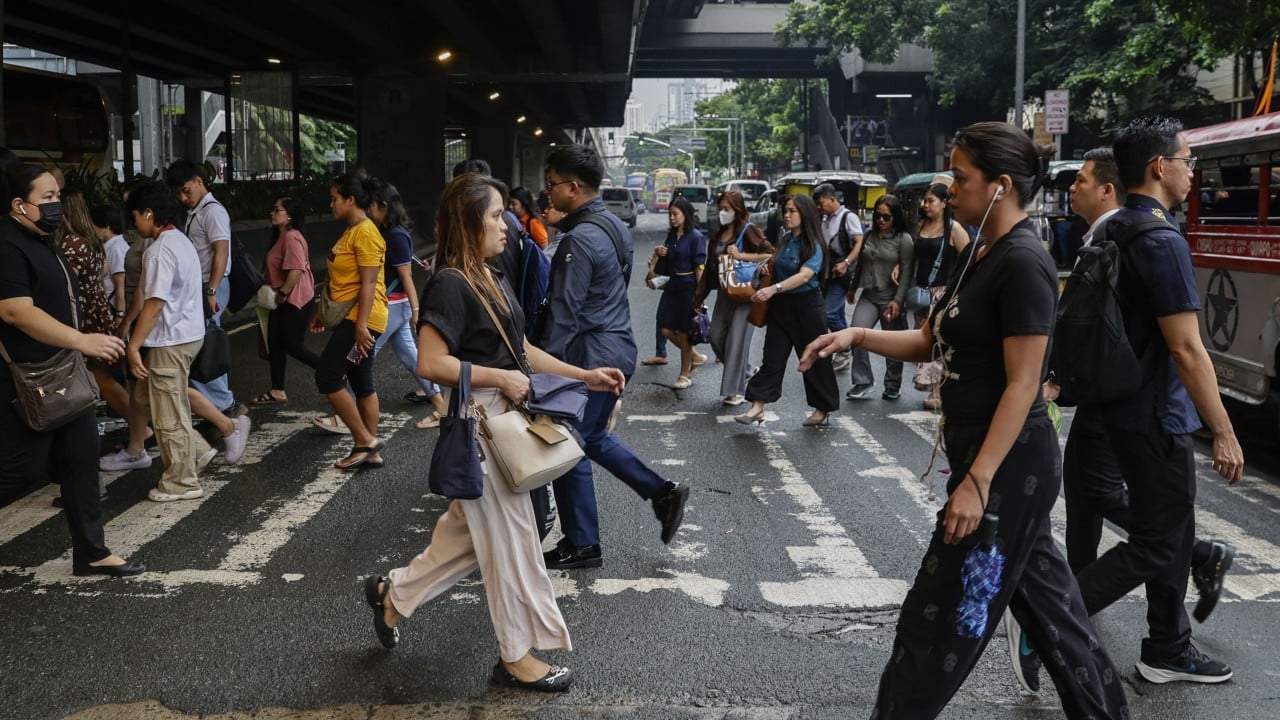
If you look at Southeast Asia on paper, the Philippines has every ingredient for explosive economic expansion. A young workforce, massive English proficiency, and a strategic geographic heartland should make it an unstoppable powerhouse. Yet, reality tells a different story. Gross domestic product growth recently slumped to a sluggish 2.1 percent, dragging down a five-quarter deceleration streak that has left economists scratching their heads.
While neighbors like Vietnam, Indonesia, and Malaysia push forward with aggressive industrialization and booming exports, the Philippine economy keeps stumbling over its own feet. You can't just blame global headwinds when structural bottlenecks at home remain completely unaddressed.
The Infrastructure Stall and Capital Flight
Infrastructure was supposed to be the great savior of the modern Philippine economy. Massive public spending projects promised to connect islands, cut logistics costs, and unlock rural productivity. But public construction took a massive hit following tighter budget controls and intense scrutiny over corruption scandals.
When public infrastructure spending stalls, private investment usually freezes right behind it. Fixed capital formation turned negative, and foreign investors adopted a "wait-and-see" stance. Investors don't like uncertainty. When regulatory processes drag, energy costs stay among the highest in the region, and basic connectivity remains unreliable, capital naturally flows to more stable neighbors.
Energy Dependence and the Import Trap
One of the most glaring vulnerabilities in the country's economic armor is energy security. The Philippines imports roughly 97 percent of its crude oil, leaving local markets completely exposed to global oil shocks and geopolitical conflicts.
When oil prices spike, the shock waves hit everything immediately. Transport costs rise, food prices climb, and manufacturing margins evaporate. Unlike other nations that maintain cushions or subsidies, domestic consumers and small businesses bear the full brunt of the cost.
This import dependency extends far beyond fuel. Decades of neglected local agricultural productivity mean the country relies heavily on imported food, creating a dangerous cycle where global supply chain disruptions instantly trigger domestic inflation crises.
The Consumption Myth and Remittance Reliance
For years, policymakers treated household consumption as an invincible economic engine. Remittances from overseas Filipino workers continuously pour tens of billions of dollars into the country, keeping retail trade, real estate, and shopping malls afloat.
Remittances are a blessing for family survival, but they are a terrible substitute for a robust industrial policy. Consumer spending driven by remittances mostly fuels imported goods rather than locally manufactured products. It stimulates retail activity without building deep, high-value productive capacity.
When inflation surges and eats away at purchasing power, this consumption model hits a hard wall. Families spend more just to buy basic food items, leaving zero room for discretionary spending or savings.
Escaping the Slowdown Trap
Fixing this underperformance requires brutal honesty from leadership. Pouring money into short-term band-aids won't fix structural decay.
First, the country must diversify its energy matrix to escape the brutal volatility of imported oil. Second, public infrastructure execution needs transparent, corruption-proof project management that doesn't halt entirely every time a political controversy erupts. Third, genuine investment in human capital—fixing foundational education, supporting agricultural research, and nurturing local manufacturing—is the only way to break free from the cycle.
Until these deep-rooted issues are tackled head-on, the Philippines will remain a country of immense potential that continually fails to cross the finish line.