The recent mainstream media panic claiming Iran has suddenly cracked the code to obliterating US fighter jets during ceasefire lulls is a masterclass in military illiteracy. The narrative is comfortable, sensational, and entirely wrong. It feeds on a lazy consensus that assumes static data and proximity equal capability.
Believing that a few months of monitoring regional airspace allows a legacy air defense network to reliably down a fifth-generation stealth platform is the defense procurement equivalent of thinking you can win an F1 race because you spent the weekend watching from the grandstands. It fundamentally misunderstands the physics of modern electronic warfare, low-observability engineering, and the brutal reality of integrated air defense systems.
The Myth of the Sovereign Sky
The core argument circulating through defense blogs is that Iranian forces used recent operational pauses to calibrate their radar systems, study American flight profiles, and map the radar cross-sections (RCS) of assets like the F-35 Lightning II and the F-22 Raptor.
This argument collapses under the weight of basic physics.
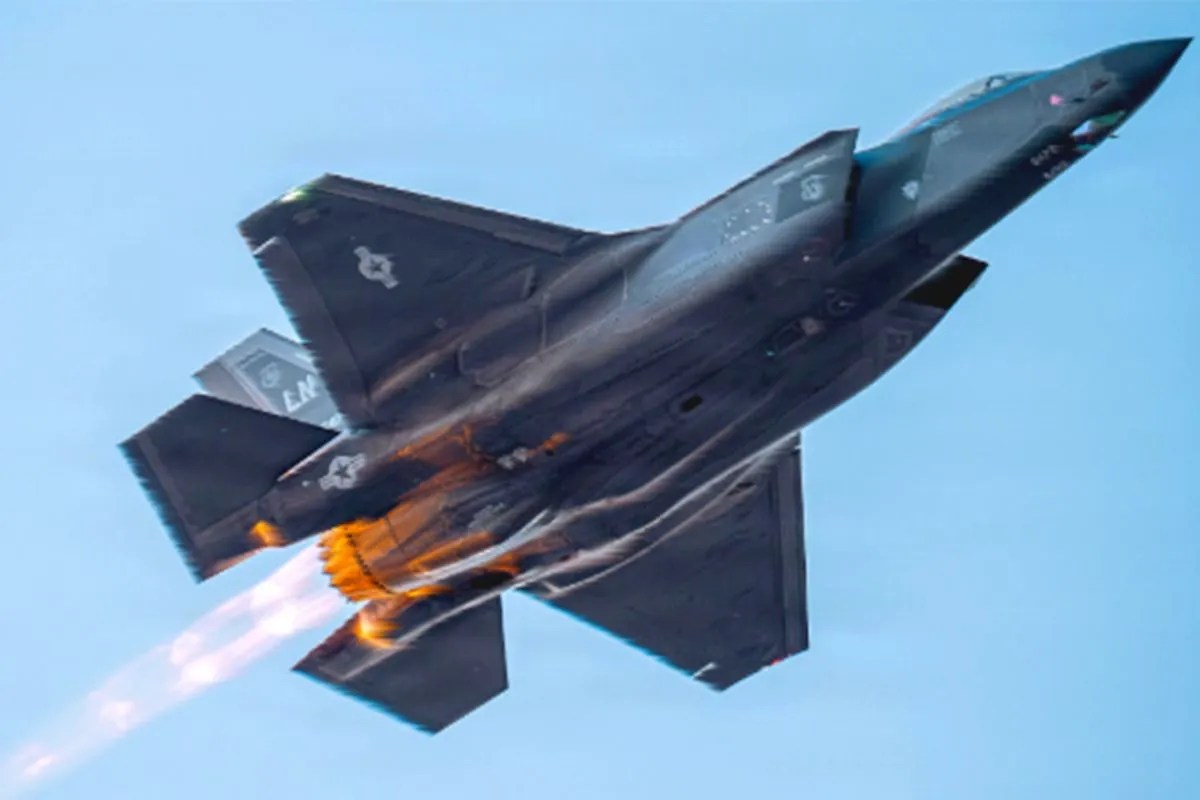
A fifth-generation fighter jet does not fly around in peacetime, or even during low-intensity patrolled ceasefires, showing its actual radar signature. When these aircraft operate in non-combat environments, they routinely carry Luneburg lenses. These are small, radar-reflecting devices attached to the airframe specifically designed to amplify its radar cross-section.
Iran's radar operators have not been cataloging the signature of a stealth fighter. They have been cataloging a deliberate, artificial distortion designed to mislead them. If a hot conflict starts, those reflectors come off. The radar profiles the Iranian military spent months meticulously logging will instantly vanish from their screens.
Furthermore, tracking an aircraft on radar is entirely different from achieving a weapons-grade lock. Mainstream analysts frequently confuse detection with engagement. You can know an object is in the sky using early-warning radar operating on the VHF or UHF bands. However, those wavelengths are too large to guide a missile to a target. To shoot a jet down, you need high-frequency X-band radar. The moment an active X-band radar illuminates a modern US fighter, the aircraft's Electronic Warfare (EW) suite, such as the AN/ASQ-239, detects the emission, pinpoints the source, and deploys targeted, algorithmic jamming to break the lock before a missile can even leave the rail.
The Russian Hardware Delusion
Much of the anxiety stems from Iran’s acquisition and integration of Russian-made air defense systems, specifically variants of the S-300 and chatter surrounding the S-400, alongside domestic copies like the Bavar-373. The assumption is that because these systems look formidable on paper, they are flawless executioners.
I have spent years analyzing integrated air defense networks, and the glaring vulnerability that armchair generals ignore is the breakdown of the sensor-to-shooter loop under heavy electronic attack.
Consider the real-world operational performance of these Russian systems in recent conflicts across Eastern Europe and the Middle East. We have repeatedly seen theoretical "super-weapons" bypassed, blinded, or destroyed by precise kinetic strikes and advanced electronic jamming.
An air defense network is only as strong as its weakest link. Iran’s network is a patchwork quilt of decades-old Western tech, reverse-engineered domestic platforms, and imported Russian systems. Making these distinct generations of technology speak to one another in real-time while under intense cyber and electronic bombardment is a logistical nightmare.
Imagine a scenario where an early-warning radar detects an anomaly, but the command-and-control node cannot verify the data due to localized data-packet injection from an overhead EW asset. The system hesitates. In modern aerial warfare, a three-second delay is the difference between survival and a smoking crater where your radar array used to be.
Why Stealth is Not a Binary Switch
The popular debate framing treats stealth as an invisibility cloak that has either been compromised or remains intact. This is a flawed premise. Stealth is not invisibility; it is about management of signatures and reducing the enemy's detection range to buy time and tactical advantage.
Even if we accept the premise that Iran has improved its passive detection capabilities through multi-static radar setups—using multiple transmitters and receivers to catch deflected signals—the operational loop remains broken.
- The Range Problem: A passive radar might tell an operator that an F-35 is roughly within a fifty-mile radius. It cannot provide the precise coordinates needed to guide a surface-to-air missile (SAM) like the Sayyad-4.
- The Kinetic Reality: The moment a SAM site turns on its engagement radar to refine that vague tracking data into a targeting solution, it broadcasts its exact location to every anti-radiation missile within a hundred miles.
- The Suppression Era: US doctrine does not involve sending lone fighter jets into contested airspace to play hide-and-seek. Any attempt to engage an American fighter jet occurs within the context of a Suppression of Enemy Air Defenses (SEAD) campaign. Legacy air defense systems face a swarm of decoy drones (like the ADM-160 MALD), high-speed anti-radiation missiles (HARM), and stand-off kinetic strikes simultaneously.
Iran's military planners are not stupid. They know they cannot win a war of attrition against fifth-generation assets. Their strategy is denial and deterrence through propaganda, creating a perceived risk high enough to make policymakers blink.
The High Cost of the Contrarian Truth
To be fair, relying entirely on technological superiority has a dark side. The downside to this reality is cost and scalability. A single F-35 costs tens of millions of dollars; the missiles used to protect it are worth millions more. Iran can manufacture hundreds of low-tech, asymmetric loitering munitions for the price of one advanced Western air defense interceptor.
If an adversary forces Western forces to expend high-end, expensive munitions against cheap, mass-produced targets, they are winning the economic war without ever needing to shoot a fighter jet out of the sky. That is the actual threat. Not a sudden, magical upgrade to Iranian radar capabilities, but the deliberate exhaustion of Western defense stockpiles through asymmetric pressure.
The report delivered to Washington regarding Iran's activities during the ceasefire isn't a warning that US jets are suddenly obsolete. It is an acknowledgment that the electronic signature environment in the Middle East is constantly shifting. Air forces adapt, update their threat libraries, and rewrite their jamming algorithms. The idea that Iran has achieved a permanent tactical upper hand is a fantasy designed to sell clicks and justify defense budgets.
Stop looking at static radar ranges on a map. Stop assuming that observing a target under restricted peacetime rules translates to killing that target in a hot war. The physics of low-observability and electronic suppression remain heavily weighted against legacy integrated networks. The sky isn't falling; the media just forgot how to read a sensor specification sheet.