Hungarians aren't known for doing things halfway when they finally decide to move. After sixteen years of Viktor Orbán’s tight grip on the country, the landslide victory of the Tisza Party on April 12, 2026, has left the political establishment in a state of shock. Peter Magyar isn't just winning; he's moving in.
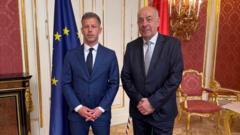
On Wednesday, April 15, 2026, Magyar emerged from a private meeting with President Tamás Sulyok with a clear message. He wants the keys to the castle, and he wants them now. For anyone following Hungarian politics, this isn't just a standard transition. It’s a race against time to prevent the outgoing administration from locking the doors on their way out.
The accelerated timeline for power
The usual post-election drag doesn't work for Magyar. Under Hungarian law, the new parliament must convene by May 12. But Magyar is pushing for an inaugural session on May 6 or 7. Why the rush? Because every day Orbán’s Fidesz party remains in a "caretaker" capacity is another day they can move assets, shred documents, or sign binding contracts that could hamper the incoming administration.
Magyar secured a two-thirds supermajority—roughly 136 out of 199 seats. That gives him the legislative muscle to rewrite the constitution, but he can't do a thing until he’s officially sworn in. He's made it clear that President Sulyok, an Orbán appointee, has little choice but to follow the "will of the people." Sulyok seems to have gotten the memo, reportedly assuring Magyar that he will be the nominee for Prime Minister in the first week of May.
Breaking the media monopoly
One of the most dramatic moments of this transition happened on Wednesday morning. For the first time in nearly two years, Magyar appeared on Hungary's public broadcaster. He didn't come for a friendly chat. He told the host—to their face—that his government would suspend the service’s news programming immediately upon taking power.
He calls it the "factory of lies." The plan is simple: shut it down until independent, objective standards are set. It's a bold, perhaps even controversial, move for a democratically elected leader. But in a country where the state media has functioned as a mouthpiece for a single party for over a decade, Magyar argues that "objective" isn't something you can fix with a memo. You have to reset the whole system.
The overhaul of a hollowed out state
Orbán’s governance style was famously lean on traditional ministries. He preferred centralized control from the Prime Minister's office. Magyar plans to blow that up. He’s already announced the creation of dedicated ministries for:
- Health
- Environmental Protection
- Education
These sectors have been starving for years. If you've spent any time in a Hungarian hospital lately, you know the "Bring Your Own Toilet Paper" jokes aren't actually jokes. Magyar is betting that by restoring these institutions, he can show immediate, tangible improvements in the lives of the 80% of voters who turned out to cast their ballots.
Dealing with the "puppets"
There’s a massive elephant in the room: the people Orbán left behind. From the Chief Prosecutor to the heads of various regulatory bodies, the "Orbán system" is deeply embedded. Magyar has already called for President Sulyok to resign, calling him "unworthy" of the office.
Sulyok said he’d "consider" it. Honestly, that’s diplomat-speak for "I’m looking for an exit strategy." If Sulyok doesn't go quietly, Magyar has the supermajority needed to change the rules and remove him anyway. He’s signaled a zero-tolerance policy for what he calls "puppets" installed to protect the old guard's interests.
What this means for Europe and the world
Brussels is breathing a massive sigh of relief. For years, Hungary was the thorn in the side of the EU and NATO. Whether it was blocking aid to Ukraine or stalling sanctions on Russia, Orbán used his veto like a sledgehammer.
Magyar is a different breed. He’s center-right, pro-European, and deeply critical of Russia’s invasion of Ukraine. While he’s cautious about direct military involvement—he’s not sending Hungarian troops or weapons across the border—he’s signaled that Hungary will no longer be the "useful outlier" for Moscow.
A warning to the far-right
The 2026 Hungarian election is a case study in populist burnout. Orbán’s defeat proves that even a system designed to be unbeatable can collapse when the economy stagnates and the corruption becomes too visible to ignore. Voters didn't just reject a man; they rejected a model.
Magyar’s challenge now is to prove that "center-right" doesn't have to mean "illiberal." He has to govern a country that is deeply polarized and economically fragile. The honeymoon period will be short.
If you’re watching this from the outside, keep your eye on the first week of May. The speed of this handover will tell you everything you need to know about how "total" this revolution actually is.
For those on the ground in Budapest, the next step is simple: stay vocal. The mandate is huge, but so are the expectations. Watch for the official announcement of the new cabinet members in early May and pay close attention to the first executive orders regarding the state media suspension. That’s when the real work begins.